

spielen
to play
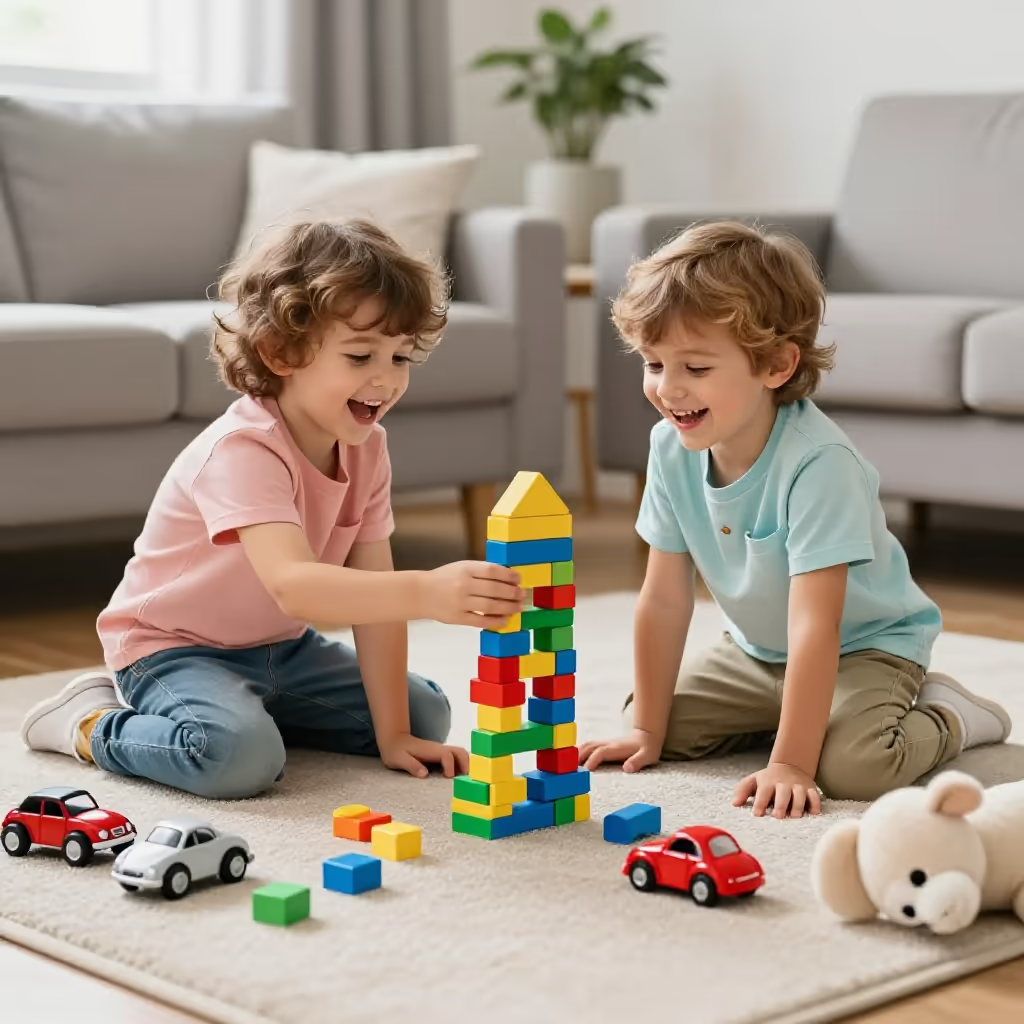
To occupy oneself for fun with a game, toy, or activity, often used for children.
EXAMPLE
Die Kinder spielen draußen im Sandkasten.
The children are playing outside in the sandbox.
to play
Loading your saved state.
to play
To occupy oneself for fun with a game, toy, or activity, often used for children.
Die Kinder spielen draußen im Sandkasten.
The children are playing outside in the sandbox.

to play
To practice a sport according to certain rules.
Jeden Samstag spielen wir mit Freunden Fußball.
Every Saturday we play soccer with friends.
to play
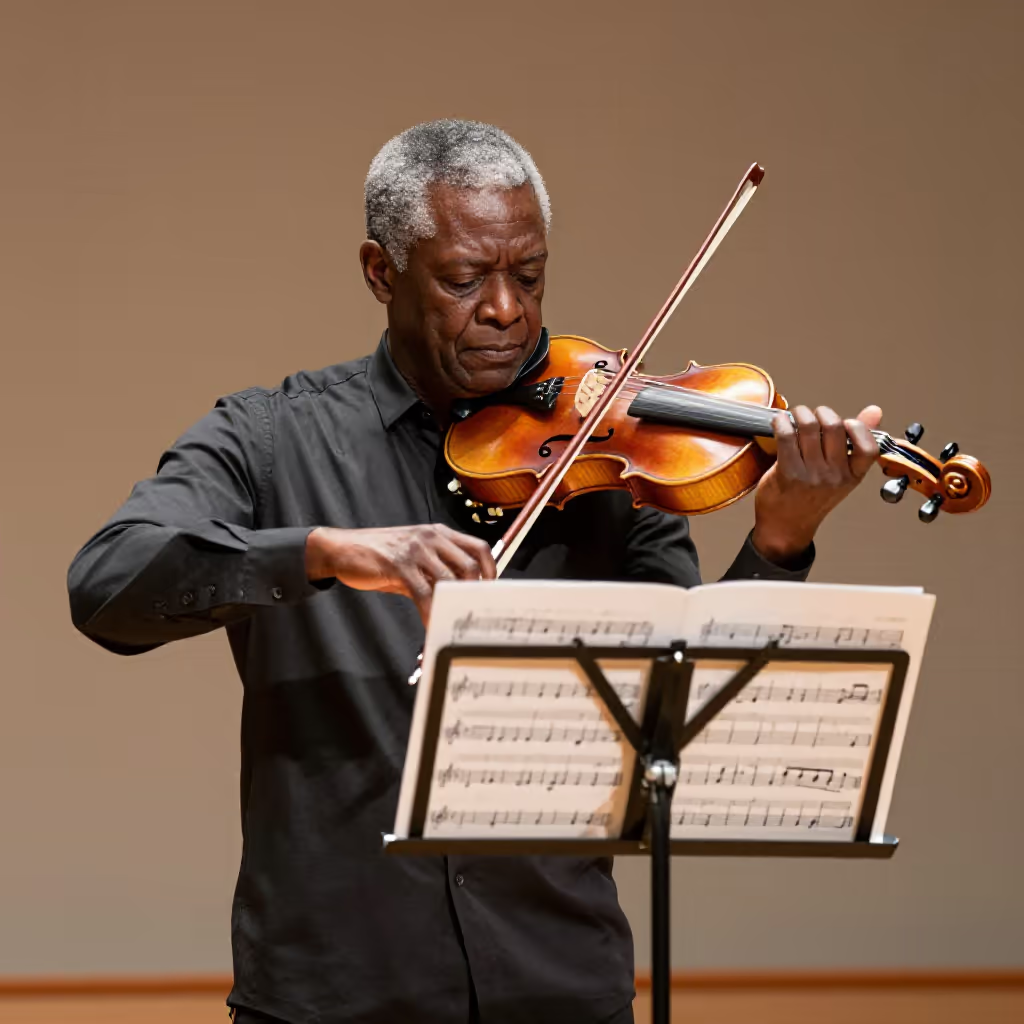
To use a musical instrument to produce sounds or melodies.
Mein Bruder spielt seit fünf Jahren Gitarre.
My brother has been playing guitar for five years.

to play
To portray a role in a play, film, or series; to act.
Dieser Schauspieler spielt oft den Bösewicht.
This actor often plays the villain.

to play a role
An idiom meaning to be important, relevant, or significant.
Bei dieser Entscheidung spielt Geld keine Rolle.
Money doesn't play a role in this decision.

to be set
The plot of a book, film, or play is located in a certain place or time.
Der Film spielt im mittelalterlichen Japan.
The film is set in medieval Japan.

to gamble
To take part in a game of chance in order to win money.
Er spielt regelmäßig Lotto in der Hoffnung auf den großen Gewinn.
He regularly plays the lottery in the hope of a big win.
to toy with the idea
To consider an idea or plan without having already decided on it.
Ich spiele mit dem Gedanken, nächstes Jahr eine Weltreise zu machen.
I'm toying with the idea of taking a trip around the world next year.

to act up
Colloquial for a device, body part, or system functioning incorrectly or unpredictably.
Mein Magen spielt heute total verrückt.
My stomach is really acting up today.
The exact meaning of 'spielen' depends strongly on the object or preposition. A musical instrument or a sport is used directly in the accusative. A setting takes 'in'. An idea that one is considering is used with 'mit dem Gedanken' (with the thought).
Sie spielt Geige.
She plays violin.
When children (or adults too) occupy themselves with a toy or another person, the preposition 'mit + dative' is used.
Der Junge spielt mit seinem neuen Auto.
The boy is playing with his new car.
With most ball sports and board games, 'spielen' is used directly with the accusative object. You don't need a preposition.
Spielst du gerne Basketball?
Do you like playing basketball?
When talking about musical instruments, 'spielen' is connected directly with the instrument in the accusative. You don't need a preposition as in English.
Er lernt seit einem Jahr, Gitarre zu spielen.
He has been learning to play guitar for a year.
When an actor portrays a character, that character is the direct accusative object of 'spielen'. Typical objects are: 'die Hauptrolle' (the leading role), 'eine Nebenrolle' (a supporting role), 'den Helden' (the hero), or 'den Bösewicht' (the villain).
In seinem nächsten Film spielt er einen Detektiv.
In his next film, he plays a detective.
The idiom 'eine Rolle spielen' means 'to be important' or 'to be relevant'. The negation 'keine Rolle spielen' is also very common and means 'to be unimportant'.
Das Alter spielt für diese Position keine Rolle.
Age doesn't play a role for this position.
To describe the place or time of the plot of a film, book, or play, you use the structure 'spielen in + dative'.
Der Roman spielt im Paris des 19. Jahrhunderts.
The novel is set in 19th-century Paris.
In the context of gambling, you use 'spielen um + accusative' to name the stake or prize. You can also use 'auf + accusative' to say what someone is betting on.
Sie spielen jeden Freitag Poker um Geld.
They play poker for money every Friday.
The expression 'mit dem Gedanken spielen, etwas zu tun' (to toy with the idea of doing something) means that one is considering an idea or plan but is still undecided. The preposition 'mit' and the infinitive construction with 'zu' are fixed components.
Sie spielt mit dem Gedanken, nach Australien auszuwandern.
She is toying with the idea of emigrating to Australia.
The phrase 'verrückt spielen' (to act up) is colloquial. It is used for devices, technical systems, or even body parts that are not functioning properly or are behaving unpredictably.
Mein Computer spielt in letzter Zeit ständig verrückt.
My computer has been constantly acting up lately.
to do / make
Machen and spielen can overlap when talking about sports activities. Machen is used generally with sports, while spielen is used for a specific sport with rules, such as soccer. Use machen for the activity as a whole and spielen when the specific game or sport is the focus.
Am Samstag spielen wir im Park Fußball.
We are playing soccer in the park on Saturday.
Am Samstag machen wir im Park Sport.
We are doing sports in the park on Saturday.