

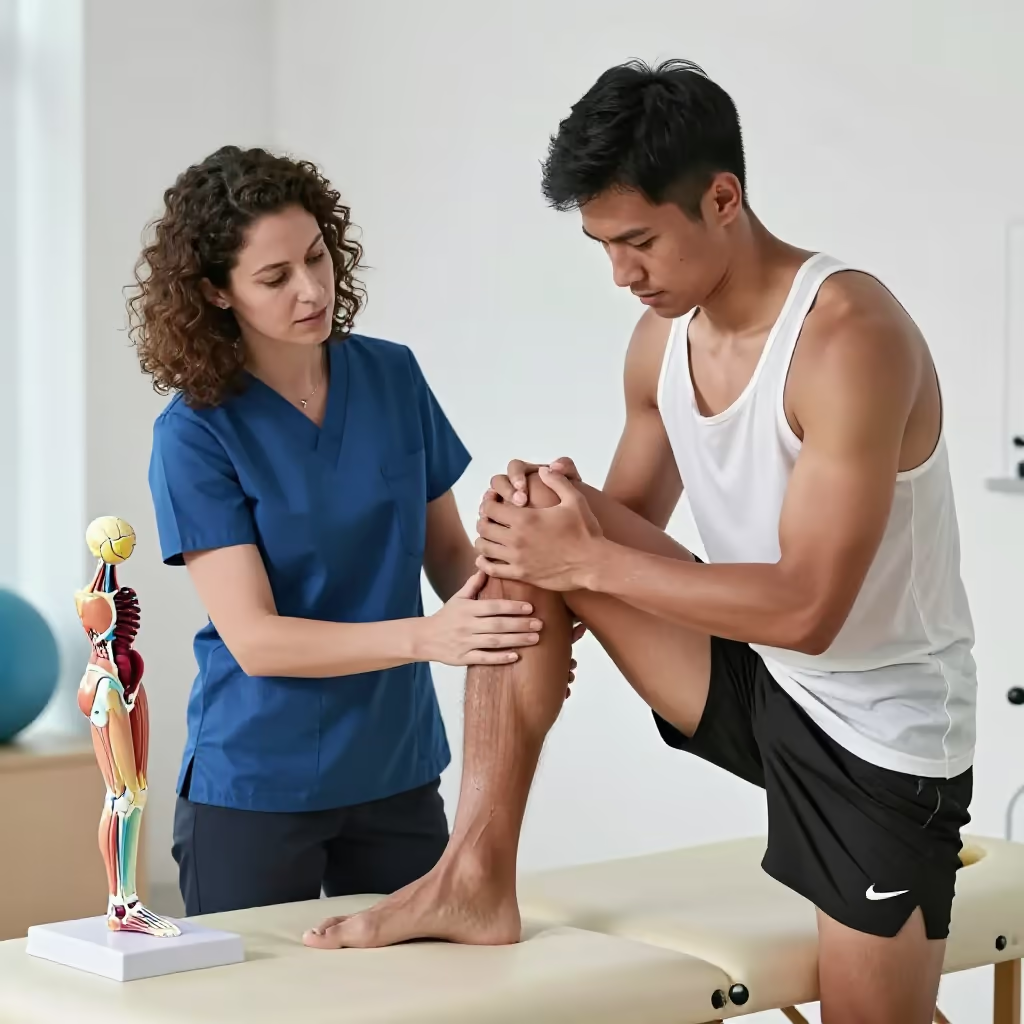
der Muskel
muscle
An organ made of contractile tissue in the body of humans and animals that enables movement by tensing and relaxing.
Nach dem intensiven Training schmerzte ihm jeder Muskel.
After the intense workout, every muscle in his body hurt.
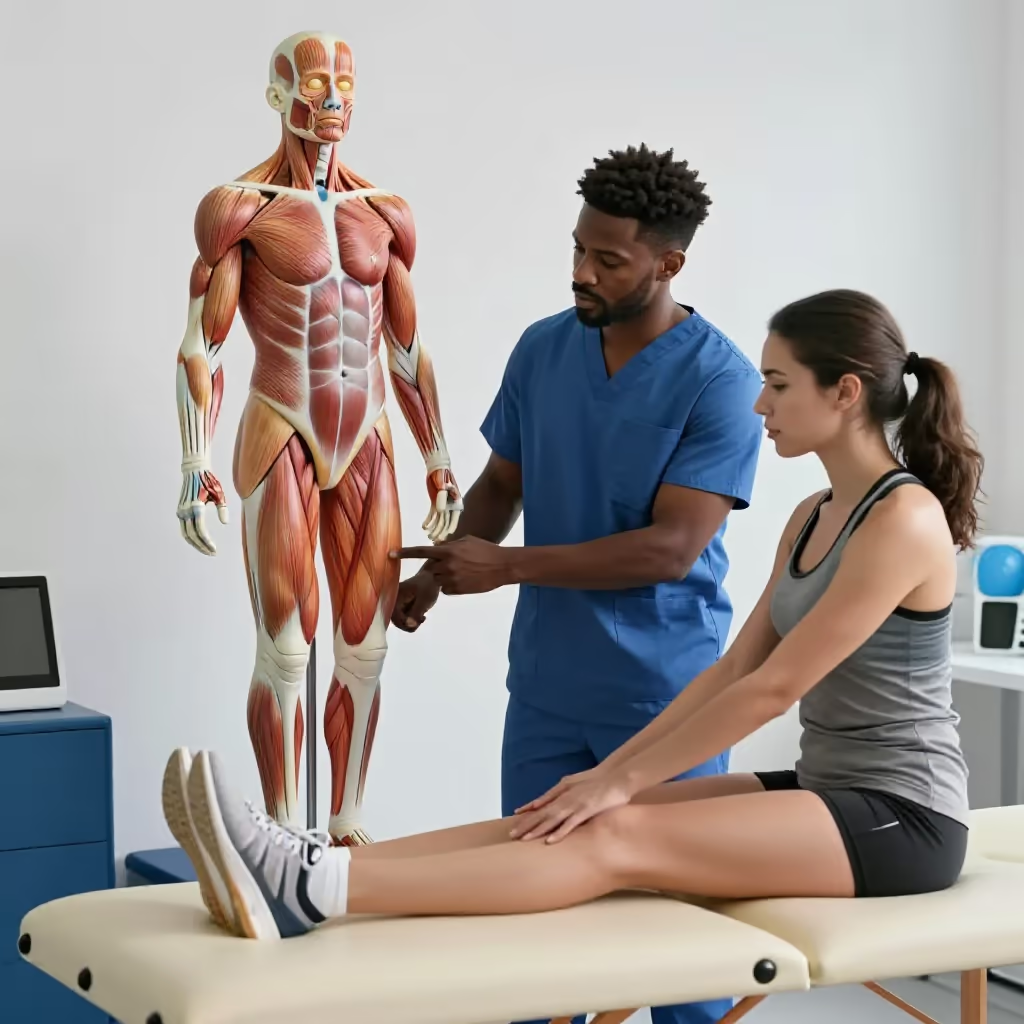
muscle
Loading your saved state.
muscle
An organ made of contractile tissue in the body of humans and animals that enables movement by tensing and relaxing.
Nach dem intensiven Training schmerzte ihm jeder Muskel.
After the intense workout, every muscle in his body hurt.

Other useful words are derived from 'Muskel' (muscle). These include the adjective 'muskulös' (muscular, with strong muscles) and the noun 'der Muskelkater' (muscle soreness after exercise).
Er ist sehr muskulös, weil er jeden Tag trainiert.
He is very muscular because he trains every day.
In connection with the body, 'Muskel' (muscle) is often used with verbs like 'trainieren' (to train), 'aufbauen' (to build up), 'anspannen' (to tense), or 'dehnen' (to stretch). A common result of exertion is that the muscles hurt.
Vor dem Sport sollte man die Muskeln gut dehnen.
Before exercising, you should stretch your muscles well.
The figurative meaning of 'Macht' (power) or 'Stärke' (strength) is almost always used in the plural ('die Muskeln'). The fixed expression is 'die Muskeln spielen lassen', which means to demonstrate one's power or strength.
Die Firma lässt ihre wirtschaftlichen Muskeln spielen.
The company is flexing its economic muscles.
strength / force
'die Kraft' and 'der Muskel' are closely connected because muscles make physical strength possible. Still, they do not mean the same thing. 'Kraft' describes how strong someone is or how much energy someone has. 'Muskel' means the part of the body that tenses and produces movement. In the plural, 'Muskeln' can also stand generally for physical strength. Learners may confuse the words because strong people often have many muscles. To be precise: you train muscles, and through that you gain more strength.

Nach dem Training spürt Lena jeden Muskel in den Beinen.
After training, Lena feels every muscle in her legs.
Zum Tragen der schweren Kiste braucht Nico viel Kraft.
Nico needs a lot of strength to carry the heavy box.