

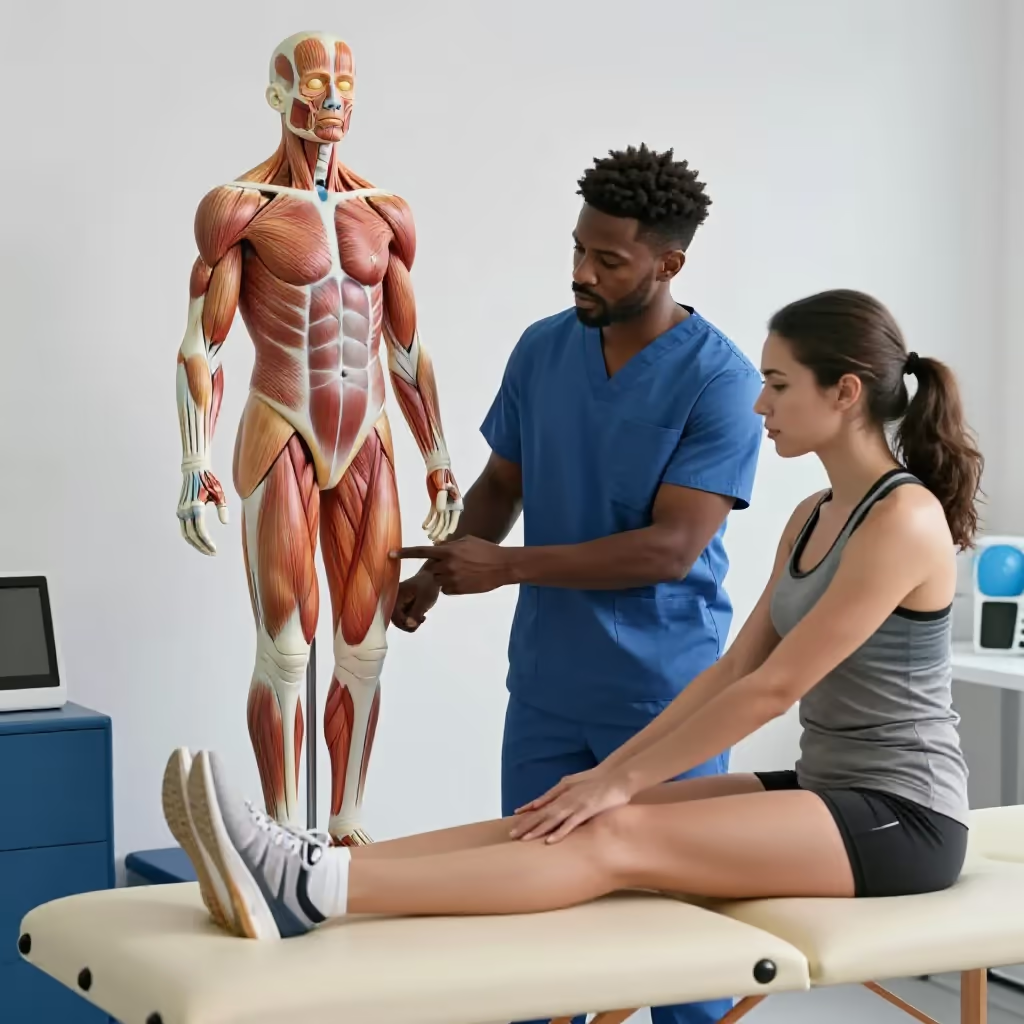
die Muskulatur
musculature
The entirety of the muscles of a living being or of a specific part of the body.
Regelmäßiges Training ist wichtig, um die Rückenmuskulatur zu stärken.
Regular training is important for strengthening the back muscles.
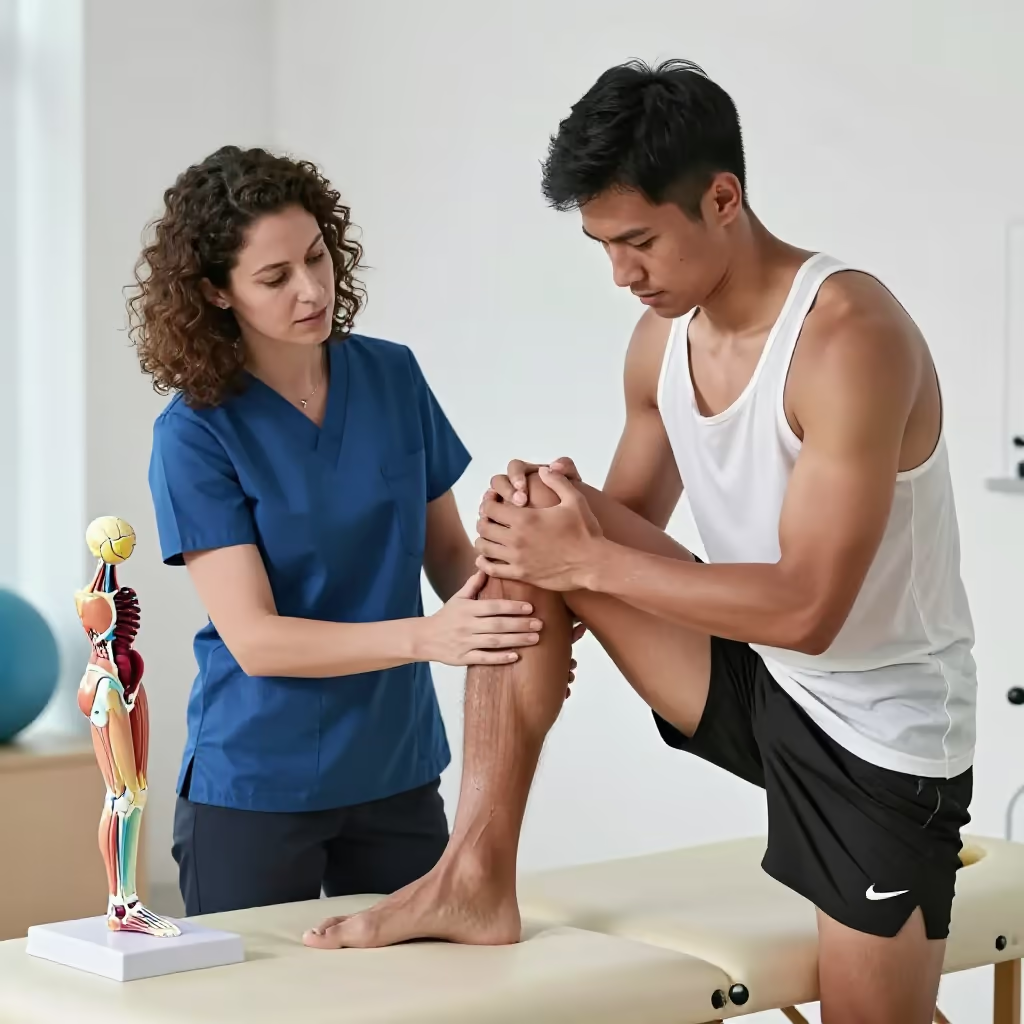
musculature
Loading your saved state.

musculature
The entirety of the muscles of a living being or of a specific part of the body.
Regelmäßiges Training ist wichtig, um die Rückenmuskulatur zu stärken.
Regular training is important for strengthening the back muscles.
The word is derived from 'der Muskel' (muscle). The ending '-atur' often refers to a system or a whole, here meaning the entirety of all muscles.
Eine gut ausgebildete Muskulatur schützt die Gelenke.
Well-developed musculature protects the joints.
'Muskulatur' (musculature) is a collective term and is almost always used in the singular, even when talking about many muscles. A plural form ('Muskulaturen') is very rare.
Die gesamte Beinmuskulatur war nach dem Marathon erschöpft.
The entire leg musculature was exhausted after the marathon.
Common verbs used in connection with Muskulatur (musculature) are 'stärken' (to strengthen), 'aufbauen' (to build up), 'lockern' (to loosen), or 'entspannen' (to relax). Adjectives are often 'schwach' (weak), 'stark' (strong), or 'verspannt' (tense).
Mit diesen Übungen können Sie gezielt Ihre Bauchmuskulatur aufbauen.
With these exercises, you can specifically build up your abdominal muscles.
muscle
Der Muskel refers to a single organ that enables movement. Die Muskulatur, by contrast, refers to several muscles of a person or of a specific body part as a whole. When talking about a specific muscle, Muskel is appropriate; for the body’s entire muscle system, Muskulatur is more precise.

Nach dem Training fühlt sich die Muskulatur in meinem rechten Arm müde an.
After the workout, the muscles in my right arm feel tired.
Nach dem Training schmerzt der Muskel in meinem rechten Arm.
After the workout, the muscle in my right arm hurts.