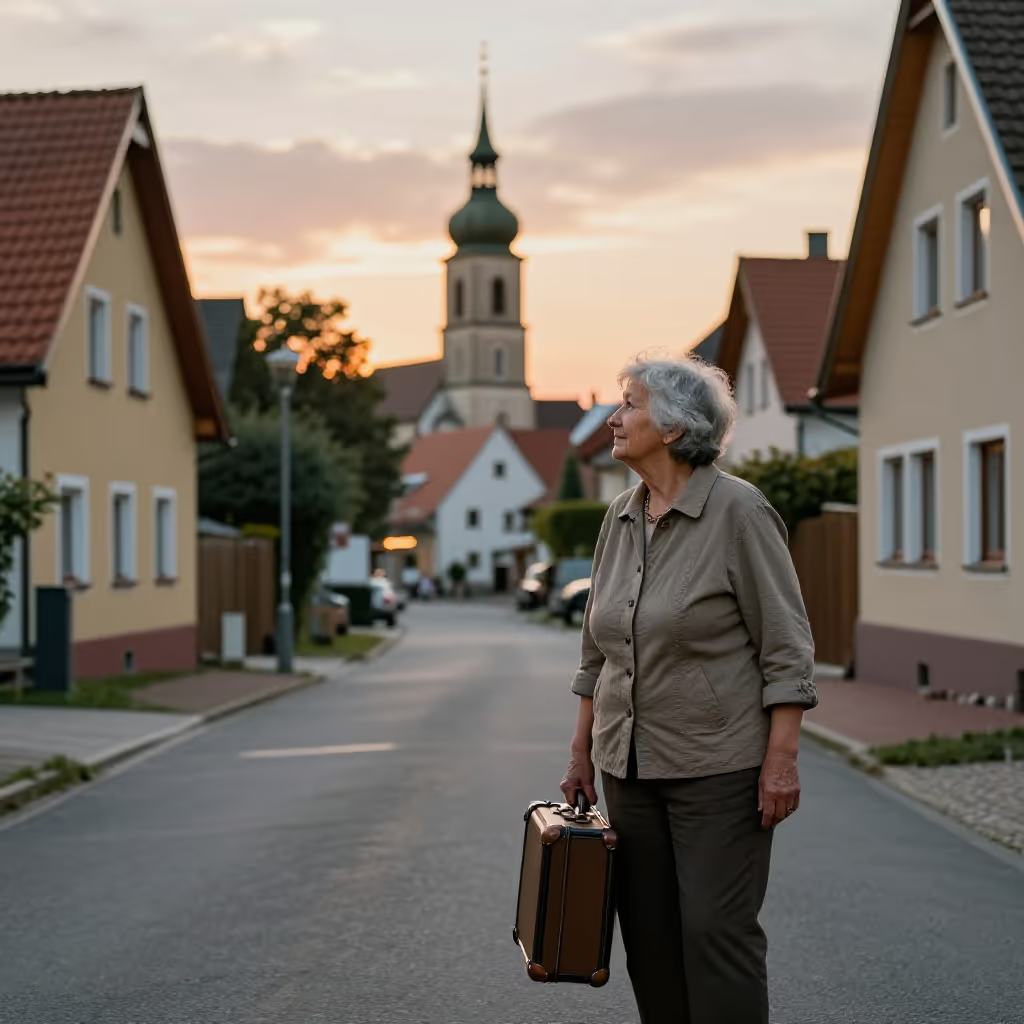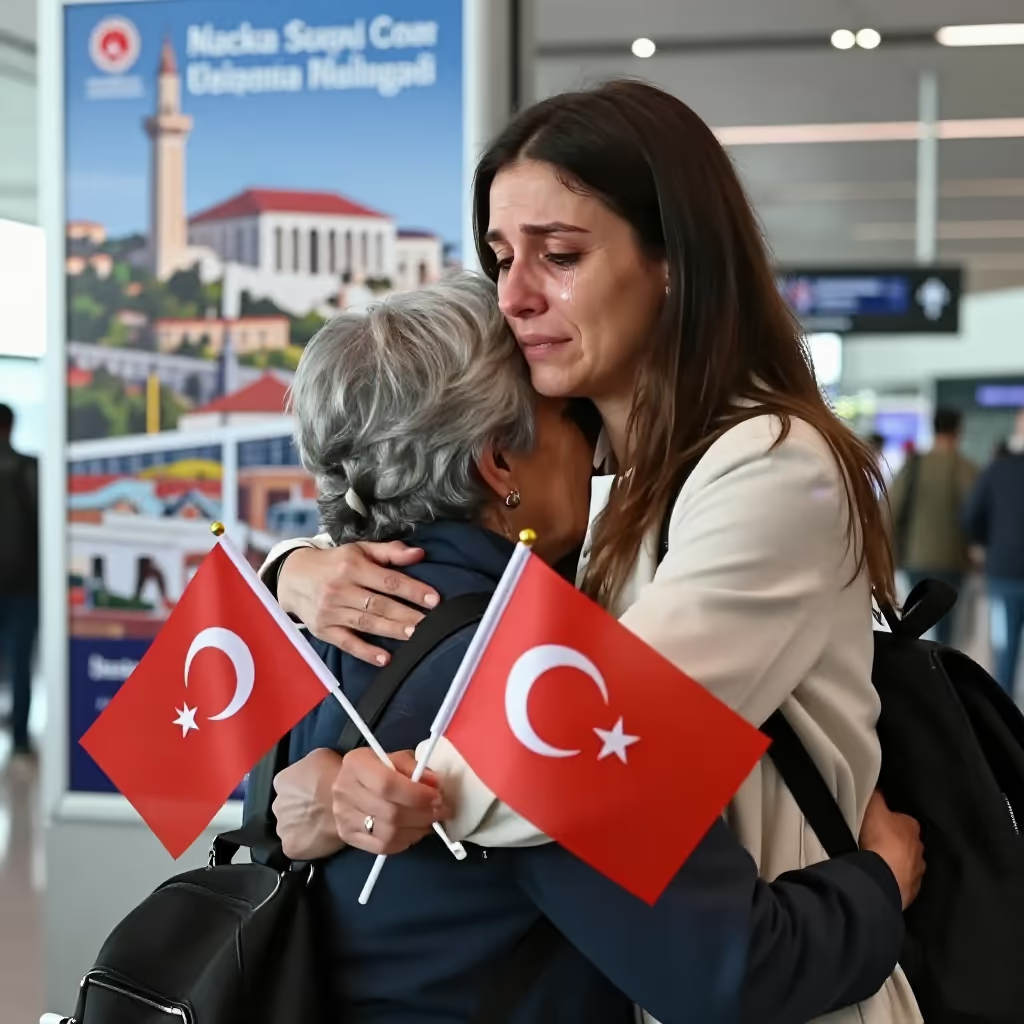
A person's country of origin; the homeland to which there is a strong emotional connection.
example
Obwohl sie seit Jahrzehnten in Deutschland lebt, bezeichnet sie Indien immer noch als ihr Mutterland.
Although she has lived in Germany for decades, she still refers to India as her motherland.
Usage tips
Compound structure
The word is a direct compound of 'die Mutter' (the mother) and 'das Land' (the country). It describes a relationship to a country that is as close and original as the relationship to a mother.
EXAMPLE
Für die Auswanderer blieb Deutschland immer ihr Mutterland.
For the emigrants, Germany always remained their motherland.
Context clue
The meaning depends strongly on the context. In a personal or emotional context, it refers to the homeland. In a historical or political context, especially with reference to colonies or empires, it refers to the ruling state.
EXAMPLE
Er besuchte nach 30 Jahren zum ersten Mal wieder sein Mutterland.
After 30 years, he visited his motherland again for the first time.
Style and register
In the meaning of 'Heimat' (homeland), 'Mutterland' (motherland) has a very emotional, sometimes also solemn or nationalistic connotation. It expresses a deeper bond than the neutral word 'Herkunftsland' (country of origin).
EXAMPLE
In seinen Gedichten schrieb er voller Sehnsucht über sein Mutterland.
In his poems, he wrote full of longing about his motherland.
Typical collocations
In the colonial meaning, 'Mutterland' (mother country) often stands in direct contrast to the 'Kolonien' (colonies), 'Überseegebieten' (overseas territories), or 'Tochtergesellschaften' (subsidiaries) of a company.
EXAMPLE
Die Gesetze des Mutterlandes galten auch in den Kolonien.
The laws of the mother country also applied in the colonies.
Compare with
near_synonym · confusable
Mutterland vs Heimat
homeland / home
'die Heimat' and 'das Mutterland' can both mean the country someone comes from and to which they have a strong attachment. However, 'die Heimat' is more flexible and more personal: it can be a country, a region, or even a place. 'das Mutterland' refers more to a country of origin and often sounds more solemn, political, or somewhat more distant. Learners may confuse the words because both can be connected with origin and feeling. In everyday language, 'Heimat' is usually more natural. 'Mutterland' fits better when the country of origin is explicitly meant.
Mutterland
Für viele Auswanderer bleibt das Mutterland ein wichtiger Teil ihrer Geschichte.
For many emigrants, the motherland remains an important part of their history.
Heimat
Frau Demir erzählt oft von ihrer Heimat und den Bergen dort.
Mrs. Demir often talks about her homeland and the mountains there.