

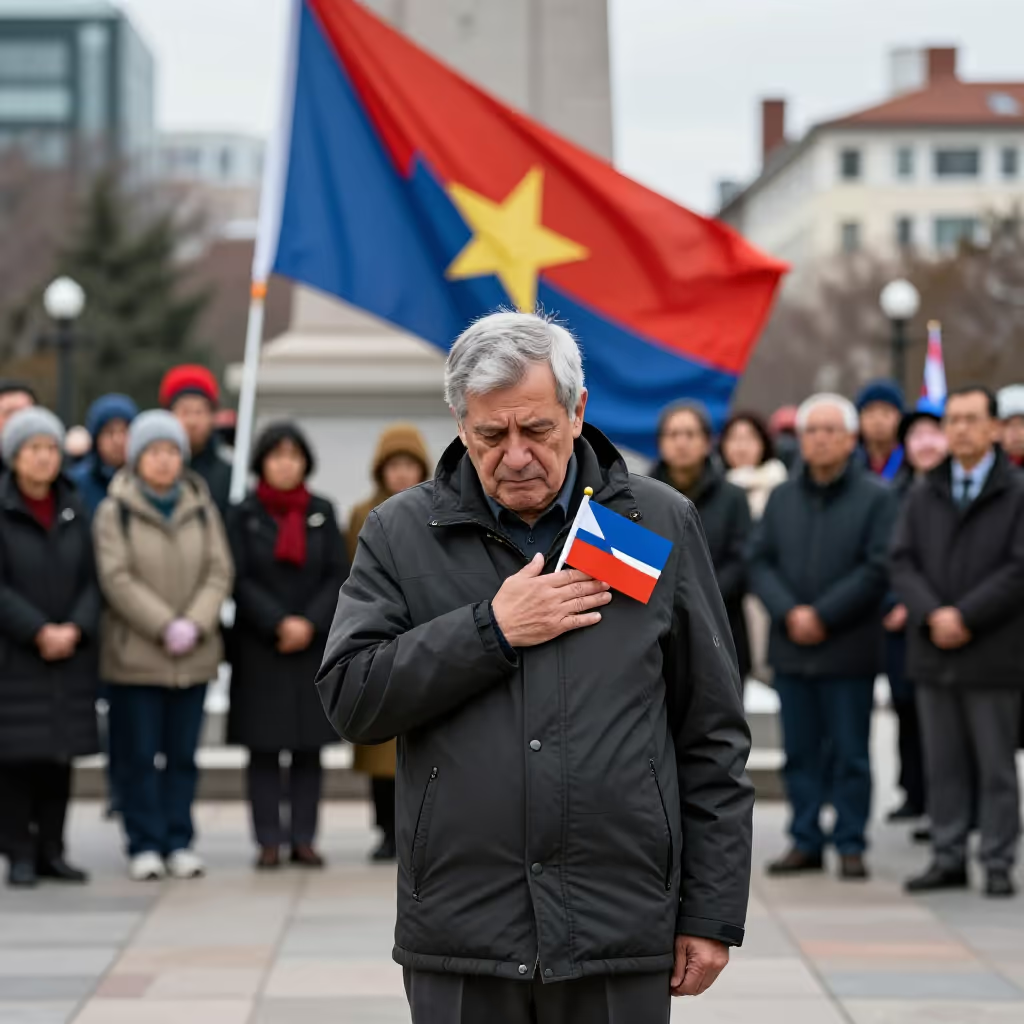
Refers to a person's country of origin, to which there is a strong emotional and often patriotic attachment. The term is historically and politically charged and is used less often today than the more neutral word 'Heimatland' (home country).
example
Im 19. Jahrhundert war die Bereitschaft groß, für das Vaterland in den Krieg zu ziehen.
In the 19th century, there was great willingness to go to war for the fatherland.

Usage tips
Word composition
'Vaterland' (fatherland) is a compound noun made from 'Vater' (father) and 'Land' (country/land). The literal meaning, 'land of the father', explains the strong emotional and traditional bond that the word expresses.
EXAMPLE
Der Begriff 'Vaterland' betont die Herkunft wie von einem Vater.
The term 'Vaterland' emphasizes origin as if from a father.
Register and style
This word has a strong historical and patriotic meaning. Today it is mainly used in political, military, or literary contexts and is not a neutral term for one's country of origin.
EXAMPLE
In alten Gedichten wird oft die Schönheit des Vaterlandes besungen.
In old poems, the beauty of the fatherland is often praised.
Typical collocations
Because of its meaning, 'Vaterland' (fatherland) is often used in fixed expressions with a patriotic or military character, for example 'für das Vaterland kämpfen' (to fight for the fatherland), 'dem Vaterland dienen' (to serve the fatherland), or 'die Liebe zum Vaterland' (love for the fatherland).
EXAMPLE
Die Soldaten schworen, ihrem Vaterland treu zu dienen.
The soldiers swore to serve their fatherland faithfully.
Compare with
confusable
Vaterland vs Staat
state
'der Staat' and 'das Vaterland' can both refer to a country, but they fit very different situations. 'der Staat' is neutral and means the political order of a country: its government, laws, authorities, and territory. It can also mean a constituent state within a federal state. 'das Vaterland' refers more to the country of origin to which someone has a strong emotional or patriotic attachment. Today, the word often sounds solemn, historical, or political. Learners may confuse the words because both have to do with country and belonging. In everyday language, politics, and administration, 'Staat' is usually more precise; 'Vaterland' is used only when the feeling of belonging is the main focus.
Vaterland
In seiner Rede sprach der alte Soldat mit viel Gefühl über sein Vaterland.
In his speech, the old soldier spoke with great emotion about his fatherland.
Staat
Der Staat bezahlt neue Straßen und Schulen aus Steuergeldern.
The state pays for new roads and schools with tax money.