

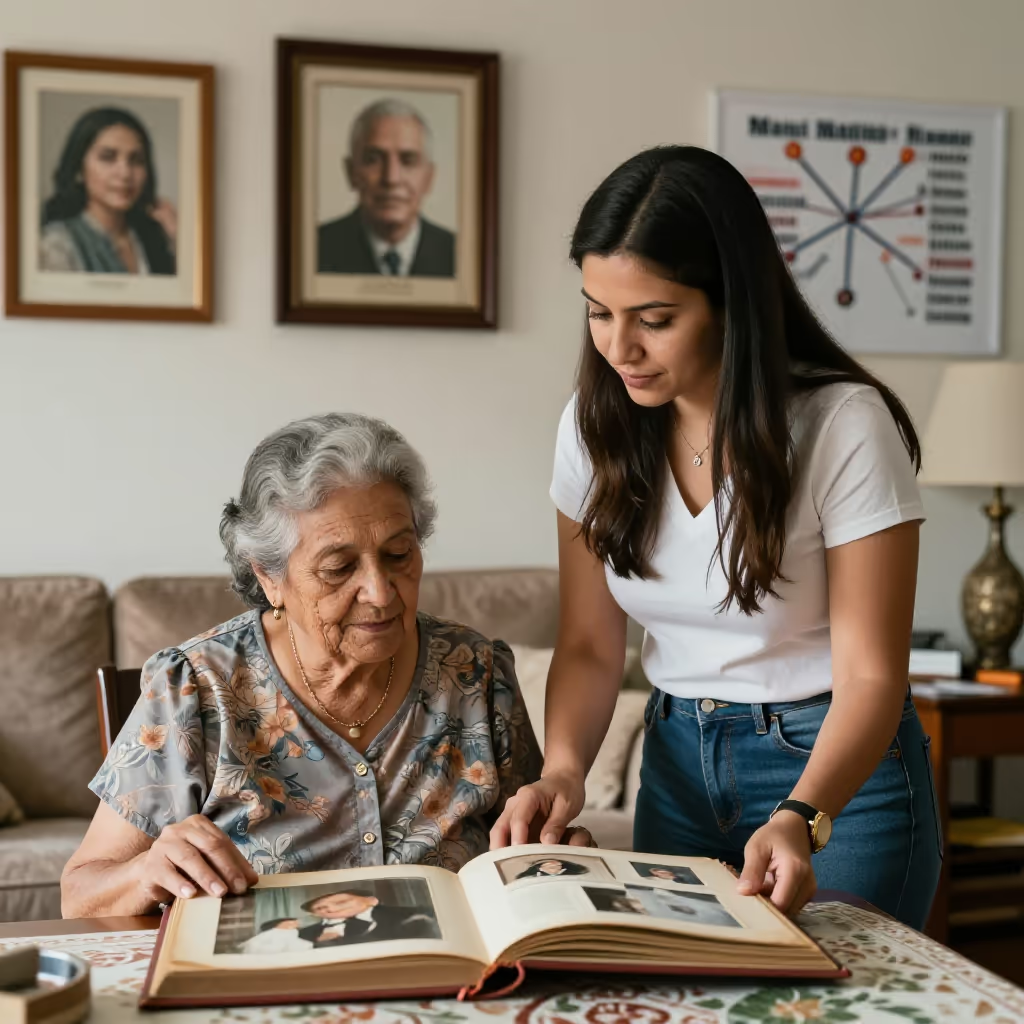
A person who is descended from another person or a group of ancestors; an offspring.
example
Er ist ein direkter Nachfahre eines berühmten Entdeckers aus dem 16. Jahrhundert.
He is a direct descendant of a famous explorer from the 16th century.
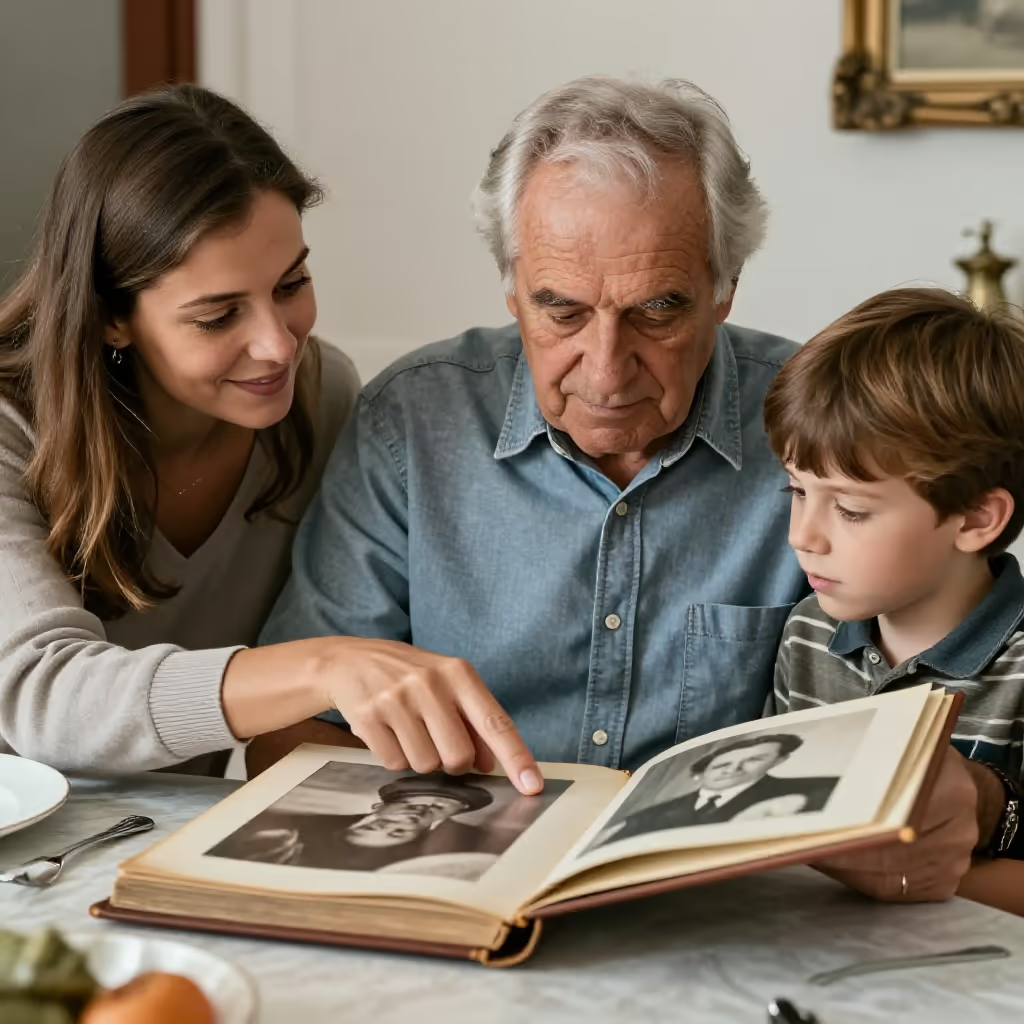
Usage tips
Word structure
The word is made up of the prefix 'nach-' (in the sense of 'after' or 'following') and the stem of 'fahren' (to drive/travel). A 'Nachfahre' (descendant) is therefore literally someone who 'travels after' or follows in the sequence of generations.
EXAMPLE
Die Nachfahren der Einwanderer leben heute in der dritten Generation hier.
The descendants of the immigrants now live here in the third generation.
N-declension
'Der Nachfahre' belongs to the N-declension. This means that the word takes the ending '-n' in all cases except the nominative singular, e.g. 'des Nachfahren' (of the descendant), 'dem Nachfahren' (to the descendant), 'den Nachfahren' (the descendant).
EXAMPLE
Das Museum sucht nach den Nachfahren des Künstlers.
The museum is looking for the artist's descendants.
Sentence structure with genitive or 'von'
To express descent, 'Nachfahre' (descendant) is usually used with the genitive or with the preposition 'von' + dative. The genitive is somewhat more formal.
EXAMPLE
Er ist ein Nachfahre eines berühmten Komponisten.
He is a descendant of a famous composer.
Compare with
near_synonym · confusable
Nachfahre vs Sohn
son
'der Sohn' and 'der Nachfahre' can both have to do with descent. 'Sohn' is very specific: it is the male child of particular parents, so the direct next generation. 'Nachfahre' is much more general. A descendant can be a son, but also a grandson, great-grandson, or a later person in the family line. Learners may confuse the words because both express a connection to ancestors. When you are talking about parents and their male child, 'Sohn' is correct. When it is about descent across many generations, 'Nachfahre' is more precise.
Nachfahre
In der Schule erzählt er, dass er ein Nachfahre einer alten Musikerfamilie ist.
At school, he says that he is a descendant of an old family of musicians.
Sohn
Ihr Sohn ist gestern mit der Kollegin im Supermarkt gewesen.
Her son was at the supermarket with his colleague yesterday.