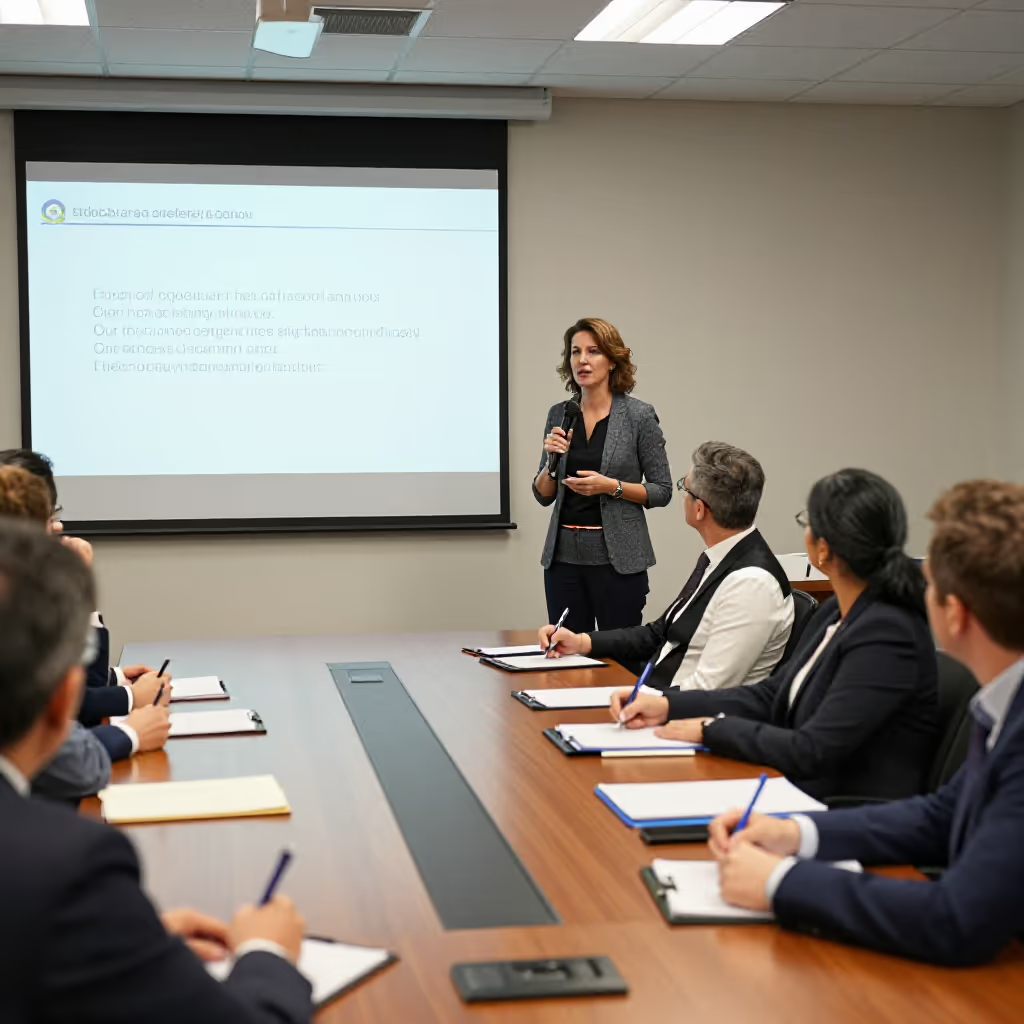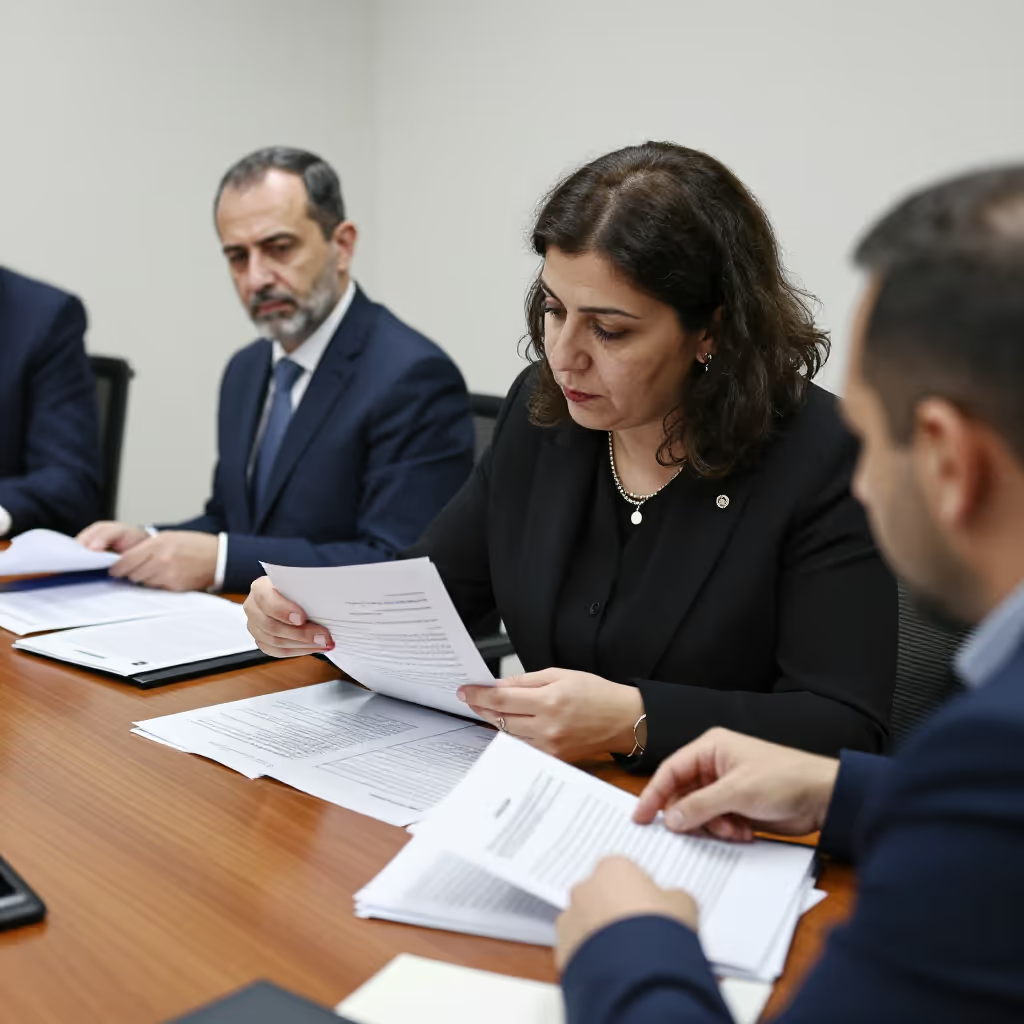
An action or process that takes place after an event in order to process, clarify, or conclude it. Often used in formal and administrative language.
example
Der juristische Nachgang zu diesem Fall wird sich noch über Monate hinziehen.
The legal follow-up to this case will drag on for months.
Usage tips
Word composition
The word is made up of 'Nach-' (after) and '-gang' (process, course). So it literally describes a process that takes place after an event.
EXAMPLE
Der Nachgang zu der Veranstaltung war sehr aufwendig.
The follow-up to the event was very time-consuming.
Formal usage
'Nachgang' (follow-up) belongs to formal official and business language. It is used mainly in professional or administrative contexts to describe follow-up measures.
EXAMPLE
Die Personalabteilung kümmert sich um den Nachgang des Bewerbungsgesprächs.
The HR department is taking care of the follow-up to the interview.
Fixed expression with dative
The fixed expression 'im Nachgang zu' (following / in the follow-up to) is always used with the dative. It connects an action with a preceding event.
EXAMPLE
Im Nachgang zu dem Gespräch schickte er allen eine Zusammenfassung.
Following the conversation, he sent everyone a summary.
Compare with
near_synonym · confusable
Nachgang vs danach
afterward / after that
'danach' and 'der Nachgang' both refer to something that comes after an event. 'danach' is an adverb and simply names the later point in time or the consequence: first something happens, then something else happens afterward. 'der Nachgang' is a noun and more often means the processing, clarification, or action taken after an event. The phrase 'im Nachgang zu' (following / as a follow-up to) is especially common. It sounds formal and fits well with meetings, projects, complaints, or official procedures. Learners may confuse the words because both express 'afterward'. In everyday life, people usually say 'danach'; for a formal follow-up action, 'im Nachgang zu' fits better.
Nachgang
Im Nachgang zur Besprechung schickt Anton allen Kollegen die Liste mit den Aufgaben.
Following the meeting, Anton sends all his colleagues the list of tasks.
danach
Wir essen erst zu Hause, danach sehen wir uns einen Film an.
We eat at home first; afterward, we watch a movie.