A technical connection to a supply or communication network such as electricity, water, telephone, or internet.
example
In der neuen Wohnung müssen wir noch den Internet-Anschluss freischalten lassen.
In the new apartment, we still need to have the internet connection activated.

Usage tips
From verb to noun
'Der Anschluss' (connection) is derived from the separable verb 'anschließen' (to connect). The prefix 'an-' often expresses a connection or an addition, which can be seen in all meanings of the noun.
EXAMPLE
Können Sie bitte den Monitor an den Laptop anschließen?
Could you please connect the monitor to the laptop?
Context clues
The context makes the meaning clear: Technical terms like 'Internet' or 'Strom' (electricity) point to a supply connection (m01). Means of transport like 'Zug' (train) or 'Bus' signal a travel connection (m02). The fixed expression 'Anschluss finden' always means social contact (m03).
EXAMPLE
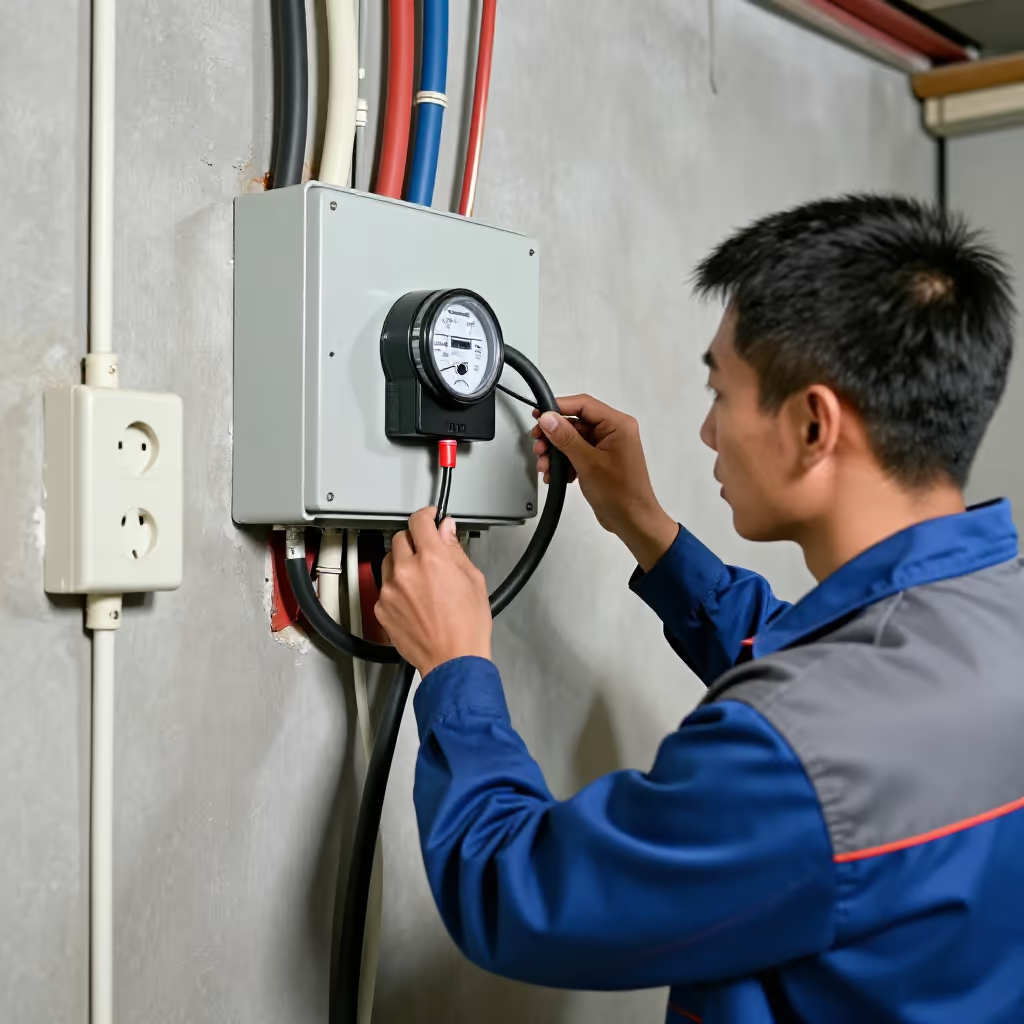
Der Techniker hat den Stromanschluss im Keller installiert.
The technician installed the power connection in the basement.
Technical connections
In technical contexts, 'Anschluss' is often used with verbs like 'legen' (to install/lay), 'haben' (to have), or 'freischalten' (to activate). Common compounds are 'Internetanschluss' (internet connection), 'Telefonanschluss' (telephone connection), and 'Wasseranschluss' (water connection).
EXAMPLE
Wir haben endlich einen schnellen Glasfaseranschluss.
We finally have a fast fiber-optic connection.
Transport connections
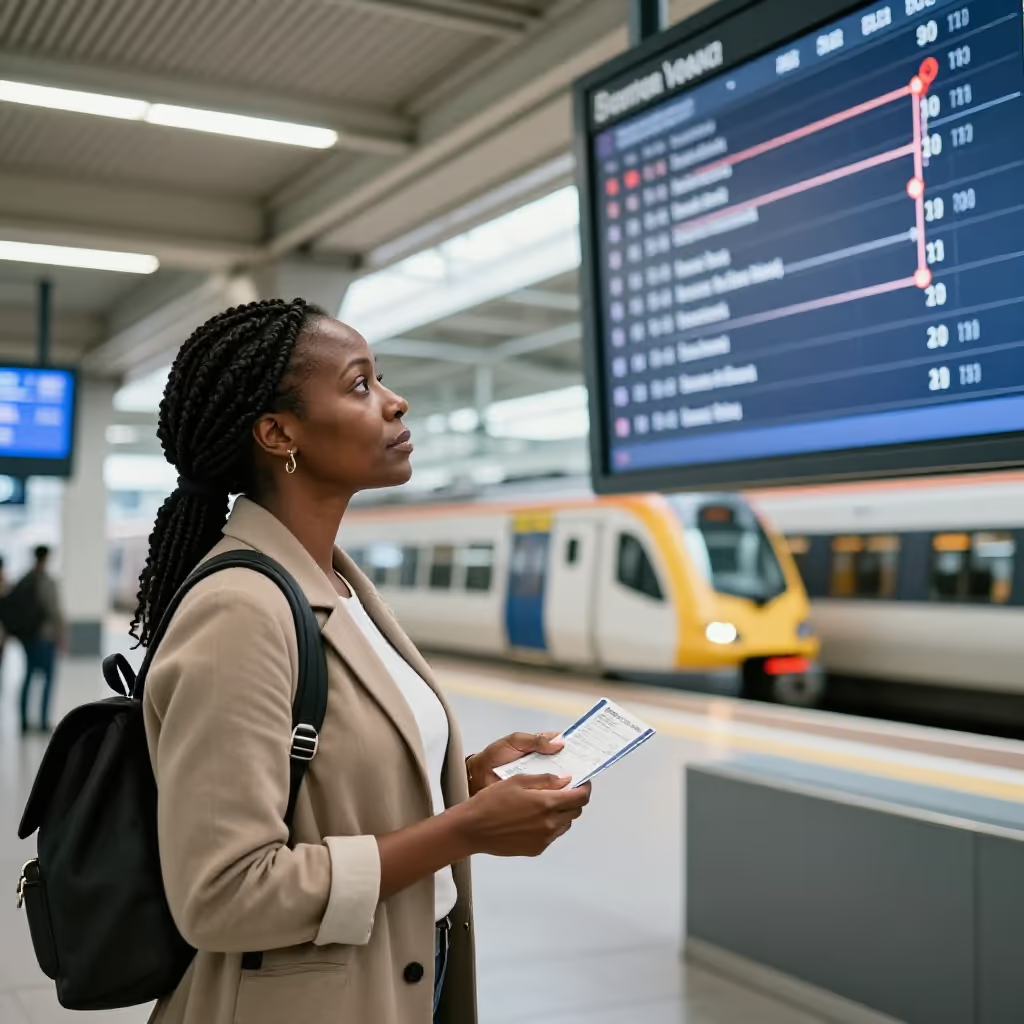
In travel contexts, you can 'erreichen' (catch/reach), 'bekommen' (get), or 'verpassen' (miss) a connection. The destination is often given with the preposition 'nach'.
EXAMPLE
Beeil dich, sonst verpassen wir den Anschluss nach Köln!
Hurry up, or we'll miss the connection to Cologne!
Fixed expression
The social meaning is used almost exclusively in the fixed expression 'Anschluss finden' (to make connections). It describes the process of making friends and integrating into a group.
EXAMPLE
Durch den Sportverein hat er schnell Anschluss gefunden.
Through the sports club, he quickly made connections.
Prepositional phrase
The temporal meaning is used in the fixed phrase 'im Anschluss an' (following), followed by the accusative. It means 'directly afterward' and is common in formal or written contexts.
EXAMPLE
Im Anschluss an die Präsentation können Sie Fragen stellen.
Following the presentation, you may ask questions.
Historical term
In this meaning, 'der Anschluss' refers to a specific historical event. The term is used almost only in historical or political texts about the Nazi period.
EXAMPLE
Im Geschichtsunterricht haben wir über den „Anschluss“ Österreichs gesprochen.
In history class, we talked about the 'Anschluss' of Austria.
Compare with
near_synonym · confusable
Anschluss vs danach
afterward / after that
'danach' and 'im Anschluss an' can both express that something happens after something else in time. 'danach' is a simple adverb and fits in many everyday sentences. 'im Anschluss an' is a fixed phrase with the noun 'Anschluss' and sounds somewhat more formal or planned, for example with appointments, courses, or events. Learners may confuse them because both describe a sequence in time. The grammar is important: you say 'danach', but 'im Anschluss an den Kurs' (following the course).
Anschluss
Im Anschluss an den Kurs beantwortet der Lehrer noch Fragen.
Following the course, the teacher answers a few more questions.
danach
Die Besprechung war kurz, danach gingen alle zurück an ihre Arbeit.
The meeting was short; afterward, everyone went back to their work.