


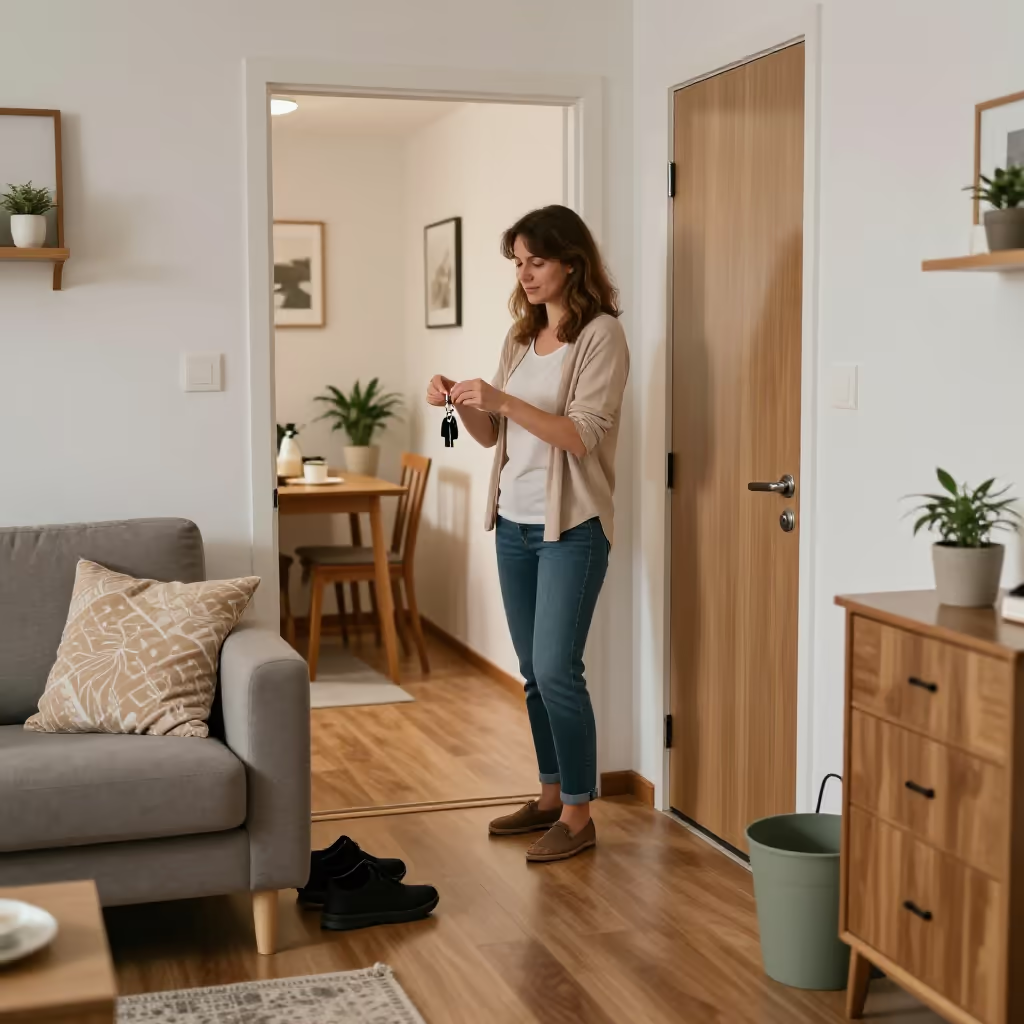
Expresses movement toward one's own home, apartment, or place of residence. It is an alternative spelling of 'nach Hause' (home).
example
Nach einem langen Arbeitstag freue ich mich darauf, einfach nur nachhause zu kommen.
After a long workday, I look forward to simply coming home.
Usage tips
Spelling
'Nachhause' is a correct but less common spelling of 'nach Hause' (home). The spelling recommended by Duden and the more frequent variant is the two-word spelling. Both forms are correct, however, and mean the same thing.
EXAMPLE
Ich gehe jetzt nach Hause.
I'm going home now.
Usage pattern
As a directional adverb, 'nachhause' (home) answers the question 'Wohin?' (to where?). It is always used with verbs of movement to indicate the direction toward one's own home.
EXAMPLE
Nach der Party fahren wir direkt nachhause.
After the party, we're going straight home.
Typical verbs
The most common verbs combined with 'nachhause' (home) are 'gehen' (to go), 'kommen' (to come), 'fahren' (to drive/go), and 'bringen' (to bring/take). The phrase 'sich auf den Weg nachhause machen' (to set off for home) is also very common.
EXAMPLE
Ich muss jetzt gehen, ich werde schon erwartet.
I have to go now; I'm already expected.
Compare with
confusable
nachhause vs zuhause
at home
'zuhause' and 'nachhause' both refer to one's own place of residence, but they describe different situations. 'zuhause' says where someone is: in their own apartment or house. 'nachhause' says where someone is going or traveling to: toward their own home. Learners easily confuse the words because both have to do with 'Haus' (house) and one's own place of residence. The simple rule is: location = 'zuhause', movement = 'nachhause'.
nachhause
Nach dem Training fährt Clara sofort nachhause.
After training, Clara goes home right away.
zuhause
Heute bleibe ich zuhause, weil ich mich ausruhen muss.