

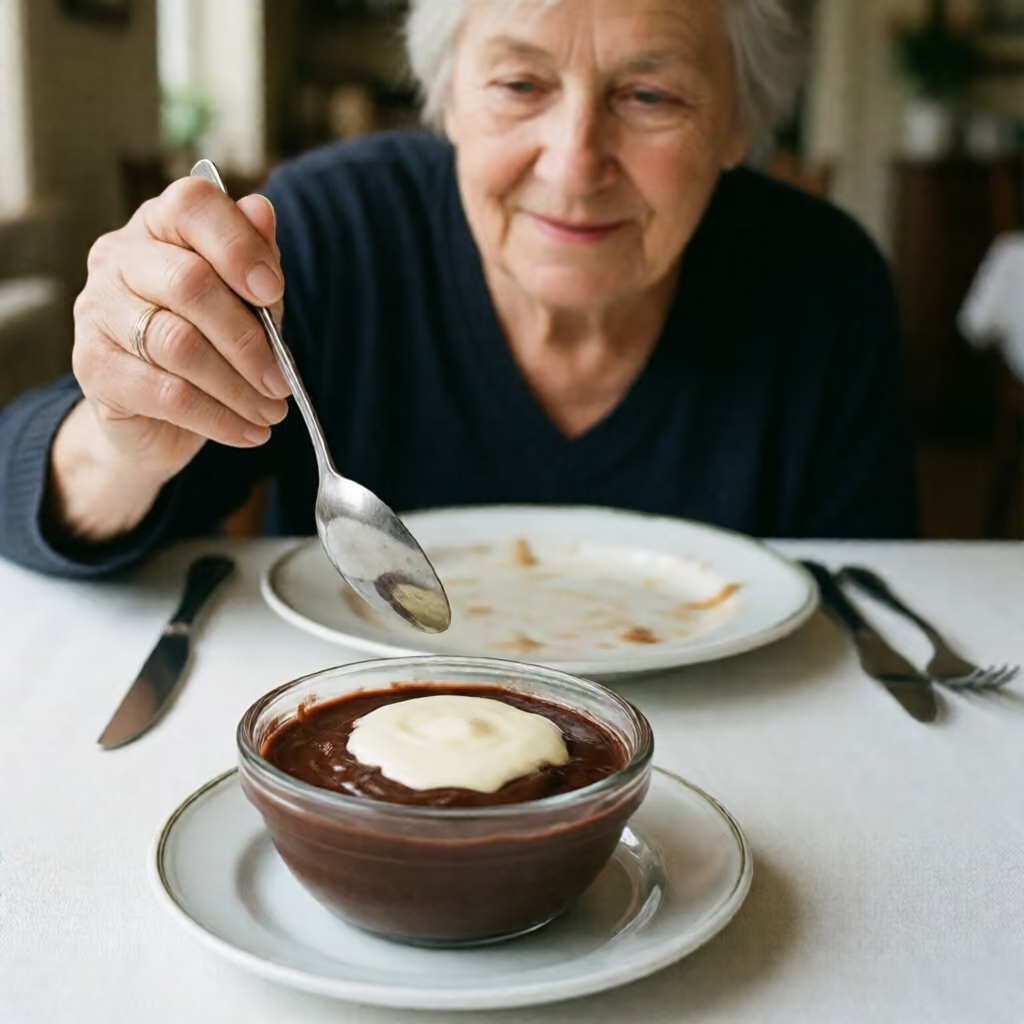
die Nachspeise
dessert
A usually sweet dish eaten at the end of a meal, after the main course.
EXAMPLE
Als Nachspeise gab es Schokoladenpudding mit Vanillesoße.
For dessert, we had chocolate pudding with vanilla sauce.
dessert
die Nachspeise, die Nachspeisen
Loading your saved state.
dessert
A usually sweet dish eaten at the end of a meal, after the main course.
Als Nachspeise gab es Schokoladenpudding mit Vanillesoße.
For dessert, we had chocolate pudding with vanilla sauce.
| gender | feminine die |
|---|---|
| plural | die Nachspeisen |
| genitive | der Nachspeise |
| singular | plural | |
|---|---|---|
| nominative | die Nachspeise | die Nachspeisen |
| accusative | die Nachspeise | die Nachspeisen |
| dative | der Nachspeise | den Nachspeisen |
| genitive | der Nachspeise | der Nachspeisen |
The article changes with the case; it is shown in colour.
'Nachspeise' (dessert) is made up of 'nach' (after) and 'Speise' (dish/food). The word therefore refers to a dish eaten after the main course.
Die Nachspeise war noch warm und frisch zubereitet.
The dessert was still warm and freshly prepared.
The phrase 'als Nachspeise' (for dessert) is often used to indicate a meal's final course. It announces what will be served or eaten at the end of the meal.
Als Nachspeise bestellten wir Eis mit frischen Früchten.
For dessert, we ordered ice cream with fresh fruit.
'Nachspeise' (dessert) is often used with verbs such as 'servieren' (to serve), 'bestellen' (to order), 'essen' (to eat), and 'anbieten' (to offer). Combinations with descriptions of flavors or ingredients are also very common.
Das Restaurant bietet heute eine Nachspeise mit Beeren und Sahne an.
The restaurant is offering a dessert with berries and cream today.