

nähen
to sew
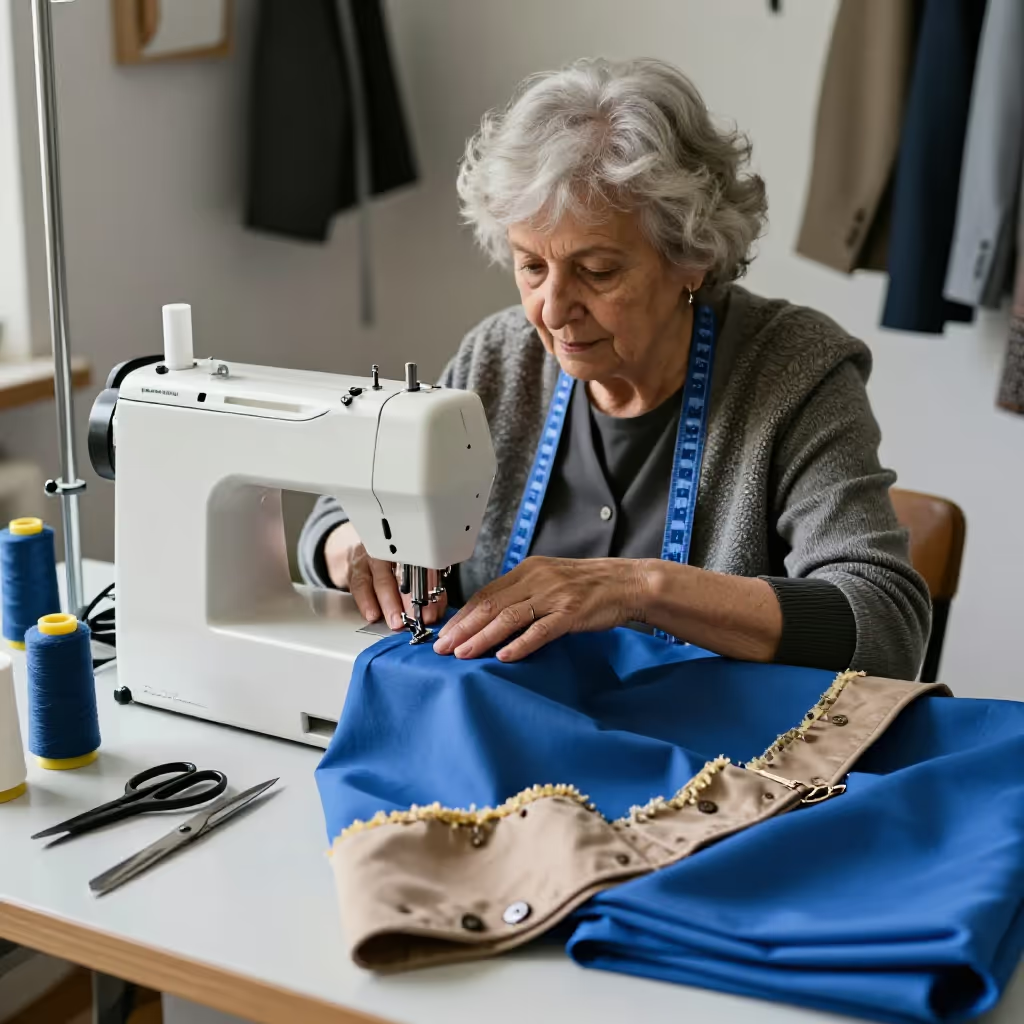
To join or work with fabric, leather, or other materials using a needle and thread in order to make or repair clothing or other objects.
EXAMPLE
Sie hat gelernt, ihre eigenen Kleider zu nähen.
She learned to sew her own dresses.
to sew / stitch
Loading your saved state.
to sew
To join or work with fabric, leather, or other materials using a needle and thread in order to make or repair clothing or other objects.
Sie hat gelernt, ihre eigenen Kleider zu nähen.
She learned to sew her own dresses.
to stitch
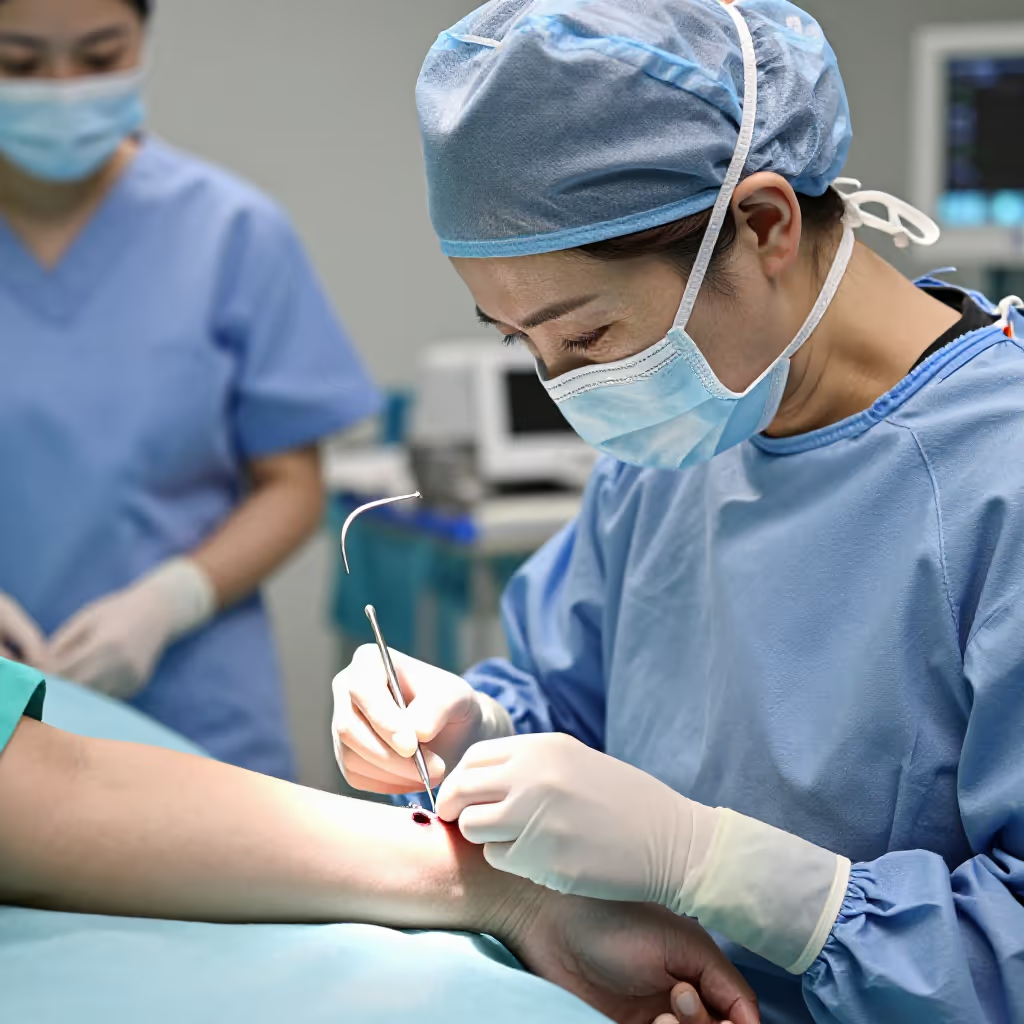
In medicine, to close a wound with a special needle and surgical thread.
Die tiefe Schnittwunde am Arm musste im Krankenhaus genäht werden.
The deep cut on his arm had to be stitched at the hospital.
The verb 'nähen' (to sew / stitch) is the base for other useful words. 'Die Naht' (the seam) is the line where two pieces of fabric are joined, and 'die Nähmaschine' (the sewing machine) is the device used for sewing.
An meiner Jacke ist eine Naht aufgegangen.
A seam has come undone on my jacket.
The object of the verb makes clear which meaning is intended. If you sew 'ein Kleid' (a dress), 'einen Vorhang' (a curtain), or 'einen Knopf' (a button), the craft activity is meant. If you stitch 'eine Wunde' (a wound), the medical procedure is meant.
Der Arzt erklärte, dass er die Wunde sofort nähen müsse.
The doctor explained that he had to stitch the wound immediately.
Different prepositions describe the sewing action more precisely. You sew something 'an' something (a button onto a shirt), 'auf' something (a patch onto a pair of trousers), or 'aus' something (a dress out of linen).
Kannst du mir diesen Knopf wieder an meine Jacke nähen?
Can you sew this button back onto my jacket for me?
In a medical context, 'nähen' (to stitch) is very often used in the passive, because the person with the wound does not perform the action themselves. A typical formulation is: 'Die Wunde musste genäht werden.' (The wound had to be stitched.)
Nach dem kleinen Unfall musste sein Kinn mit drei Stichen genäht werden.
After the small accident, his chin had to be stitched with three stitches.
to stuff / darn
Nähen is the general practice of working with a needle and thread and can also involve repairing textiles. Stopfen more specifically means closing a hole in a textile with thread. You can sew a tear or an open seam; stopfen is more precise for a hole in a sock.
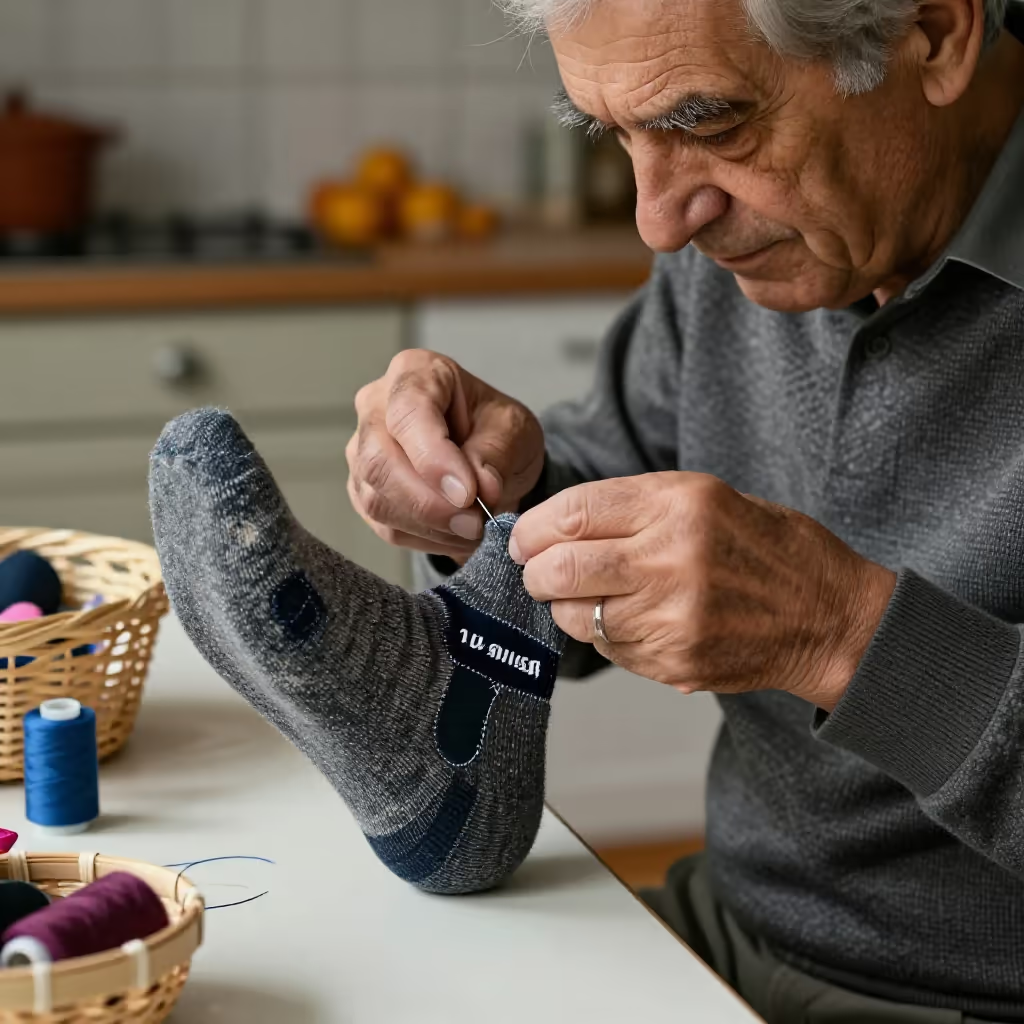
Sie näht den Riss in der Socke mit einigen Stichen zusammen.
She sews the tear in the sock back together with a few stitches.
Sie stopft das Loch in der Socke sorgfältig mit passendem Garn.
She carefully darns the hole in the sock with matching yarn.