

stopfen
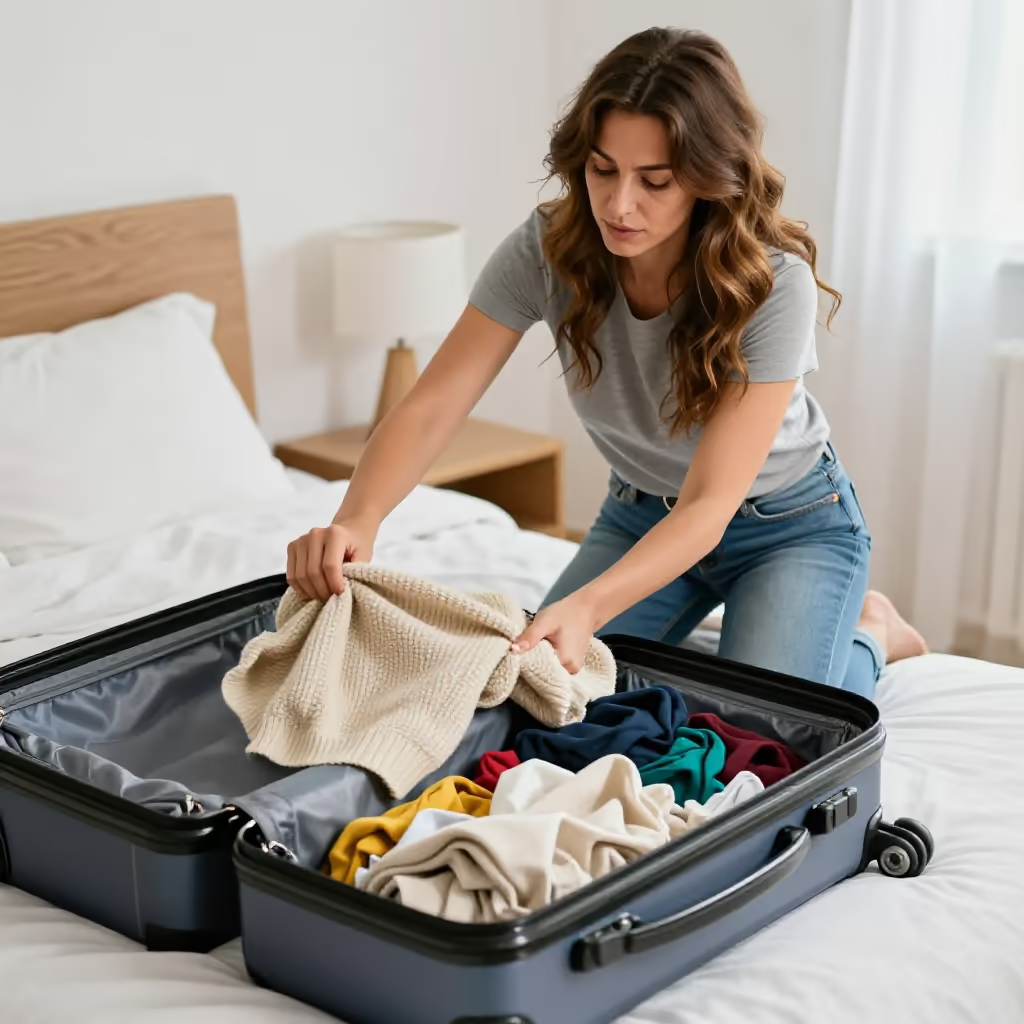
to stuff
To press or force something with pressure into a narrow opening or a limited space.
EXAMPLE
Er stopfte seine schmutzige Wäsche einfach in den Rucksack.
He simply stuffed his dirty laundry into the backpack.
to stuff / darn
Loading your saved state.
to stuff
To press or force something with pressure into a narrow opening or a limited space.
Er stopfte seine schmutzige Wäsche einfach in den Rucksack.
He simply stuffed his dirty laundry into the backpack.
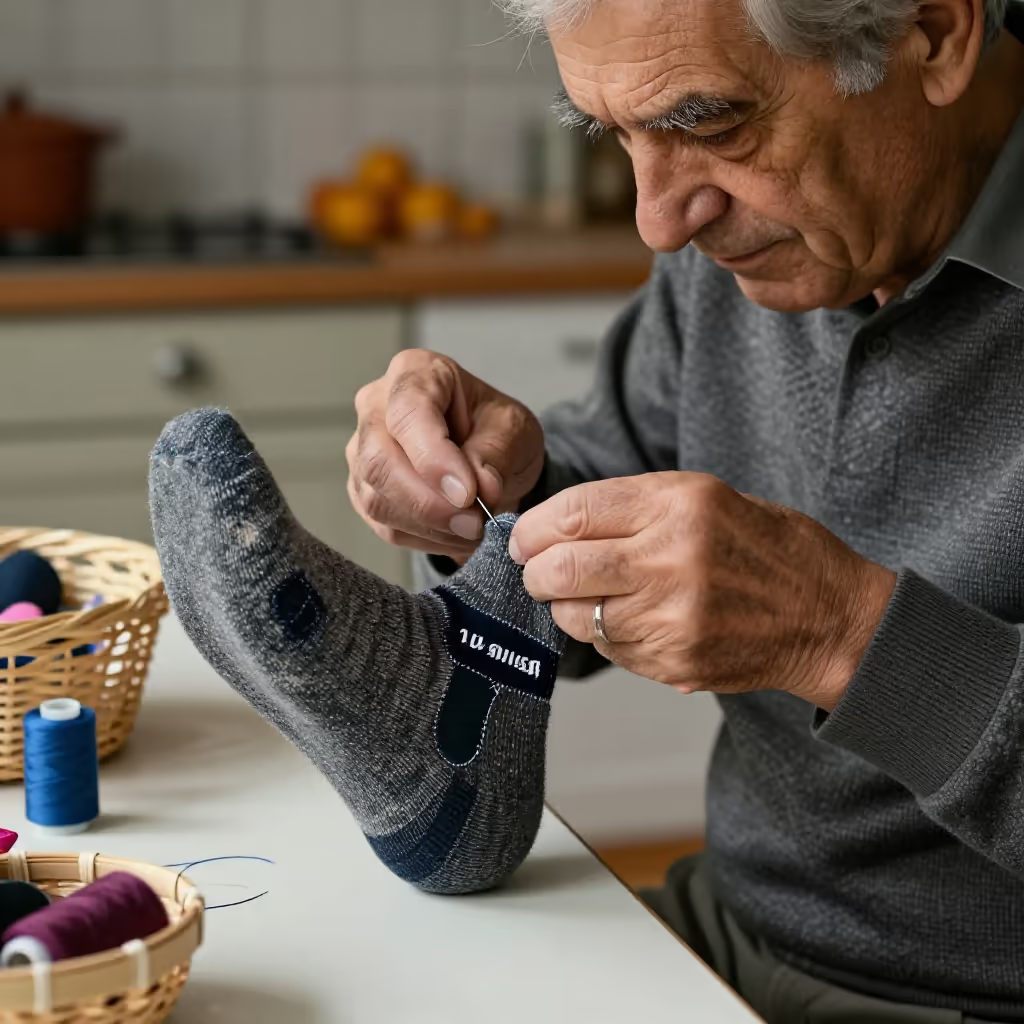
to darn
To close a hole in a textile, usually a sock or stocking, by sewing it with thread.
Früher lernte man in der Schule, wie man Socken stopft.
In the past, people learned at school how to darn socks.
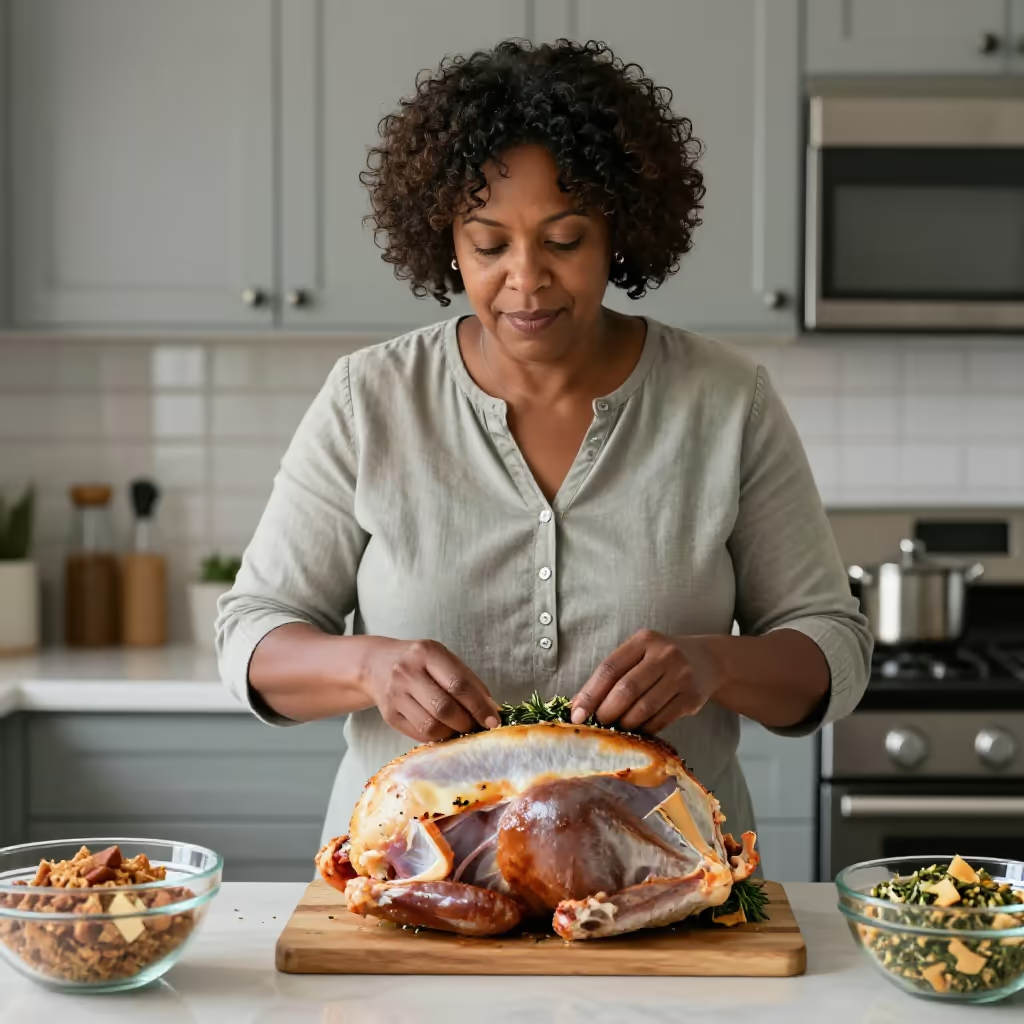
to stuff
To fill a food item, for example poultry, with a stuffing.
Zu Weihnachten stopfen wir die Gans traditionell mit Äpfeln und Zwiebeln.
At Christmas, we traditionally stuff the goose with apples and onions.

to stuff oneself
Colloquial for eating a lot and greedily; to fill oneself up.
Am Buffet hat er sich mit Kuchen gestopft, bis ihm schlecht wurde.
At the buffet, he stuffed himself with cake until he felt sick.

to constipate
To have an inhibiting effect on digestion and lead to constipation.
Bananen und weiße Schokolade sollen angeblich stopfen.
Bananas and white chocolate are supposedly constipating.
'Stopfen' does not mean 'stoppen' (to stop) or 'anhalten' (to halt). It does look similar to the English 'to stop', but its actual meaning is 'etwas mit Druck irgendwo hineinpressen' (to stuff, to cram something somewhere with pressure).
Ich muss noch alle meine Kleider in den kleinen Koffer stopfen.
I still have to stuff all my clothes into the small suitcase.
The verb 'stopfen' (to stuff) is related to the noun 'der Stopfen' (cork, plug). Both words share the basic idea of filling or closing an opening.
Er benutzte einen alten Lappen, um das Loch in der Wand zu stopfen.
He used an old rag to plug the hole in the wall.
When you want to express that something is being pressed into a tight space, use the preposition 'in' followed by the accusative.
Sie stopfte schnell das letzte T-Shirt in die bereits volle Tasche.
She quickly stuffed the last T-shirt into the already full bag.
In the meaning 'ein Loch flicken' (to mend a hole), 'stopfen' (to darn) is used almost exclusively for textiles. The most common combination is 'Socken stopfen' (to darn socks).
Meine Großmutter hat mir gezeigt, wie man Löcher in Socken stopft.
My grandmother showed me how to darn holes in socks.
The colloquial meaning 'gierig essen' (to eat greedily) is used reflexively: 'sich stopfen' (to stuff oneself). It is often supplemented with the preposition 'mit' plus the dative to say what is being eaten.
Die Kinder haben sich auf der Party mit Süßigkeiten gestopft.
The children stuffed themselves with sweets at the party.
When 'stopfen' (to constipate) describes an effect that inhibits digestion, the subject of the sentence is a food item and the verb is used without an object. It describes a property of the food.
Man sagt, dass zu viel Kakao bei kleinen Kindern stopft.
People say that too much cocoa is constipating for small children.
to stick / to be stuck
Stecken and stopfen can both mean putting something into a limited space. Stopfen, however, emphasizes pushing the object in with force because there is little room, while stecken is more neutral. Use stecken for putting something in normally and stopfen when forcing it in.
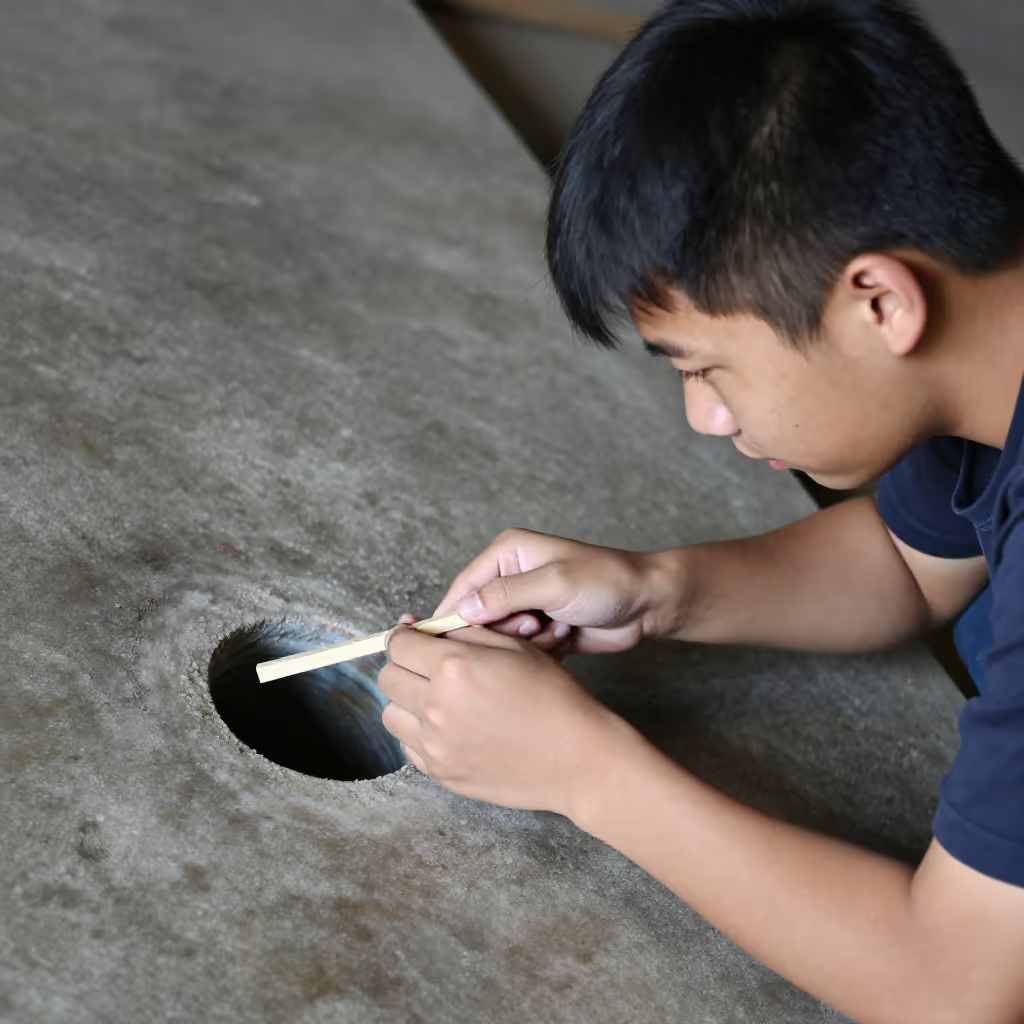
Sie stopfte die Jacke in den vollen Rucksack, weil kaum noch Platz war.
She stuffed the jacket into the full backpack because there was hardly any room left.
Sie steckte die Jacke in den Rucksack, weil noch genug Platz war.
She put the jacket in the backpack because there was still enough room.