

nagen
to gnaw
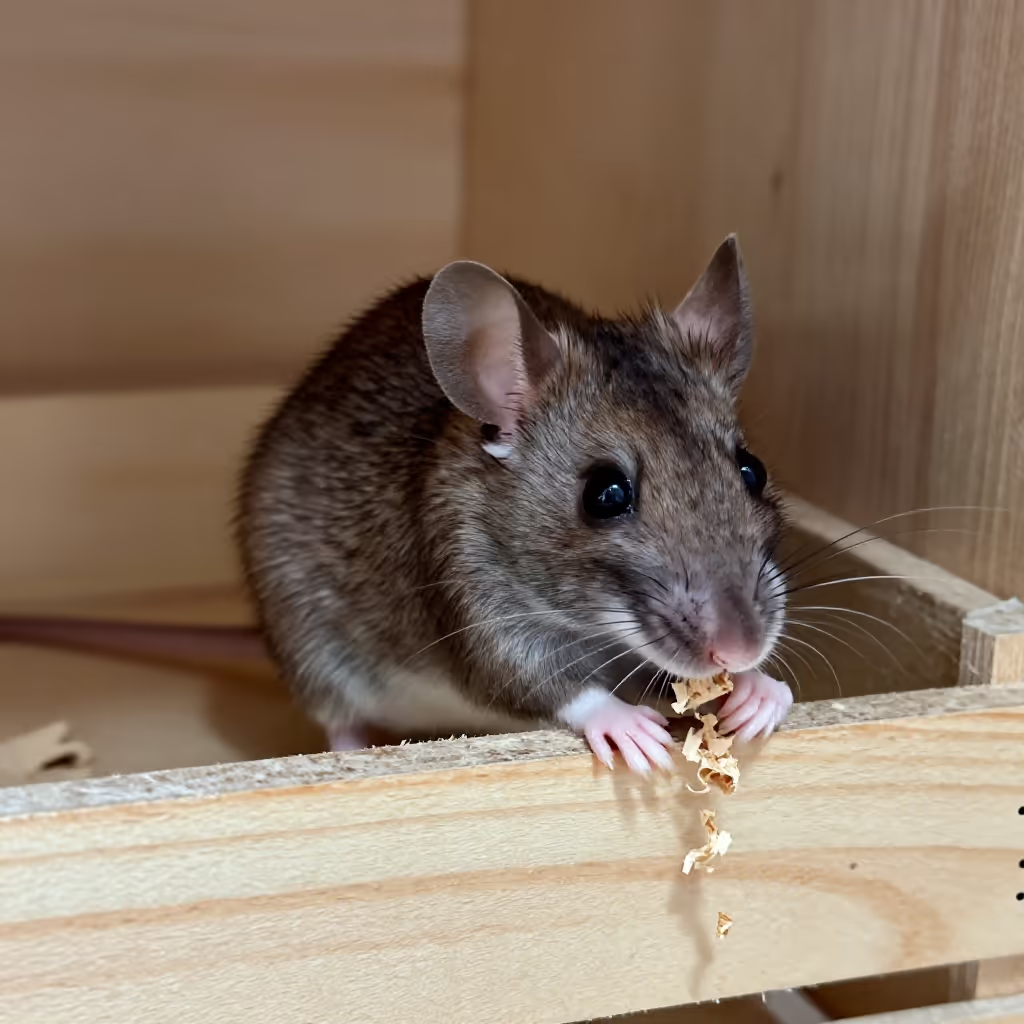
To repeatedly scrape at something hard with the teeth or bite off small pieces of it, as is typical for rodents.
EXAMPLE
Die Maus nagt ein Loch in die Holzwand.
The mouse gnaws a hole in the wooden wall.
to gnaw
Loading your saved state.
to gnaw
To repeatedly scrape at something hard with the teeth or bite off small pieces of it, as is typical for rodents.
Die Maus nagt ein Loch in die Holzwand.
The mouse gnaws a hole in the wooden wall.

to gnaw at
In a figurative sense: to torment a person inwardly or constantly trouble them. Refers to feelings such as doubt, hunger, or worries.
Das schlechte Gewissen nagte an ihm.
His guilty conscience gnawed at him.

to gnaw at
To slowly but steadily destroy or wear something away. Often used in connection with natural forces or the passage of time.
Der Zahn der Zeit nagt an den alten Ruinen.
The ravages of time gnaw at the old ruins.
to be dirt-poor
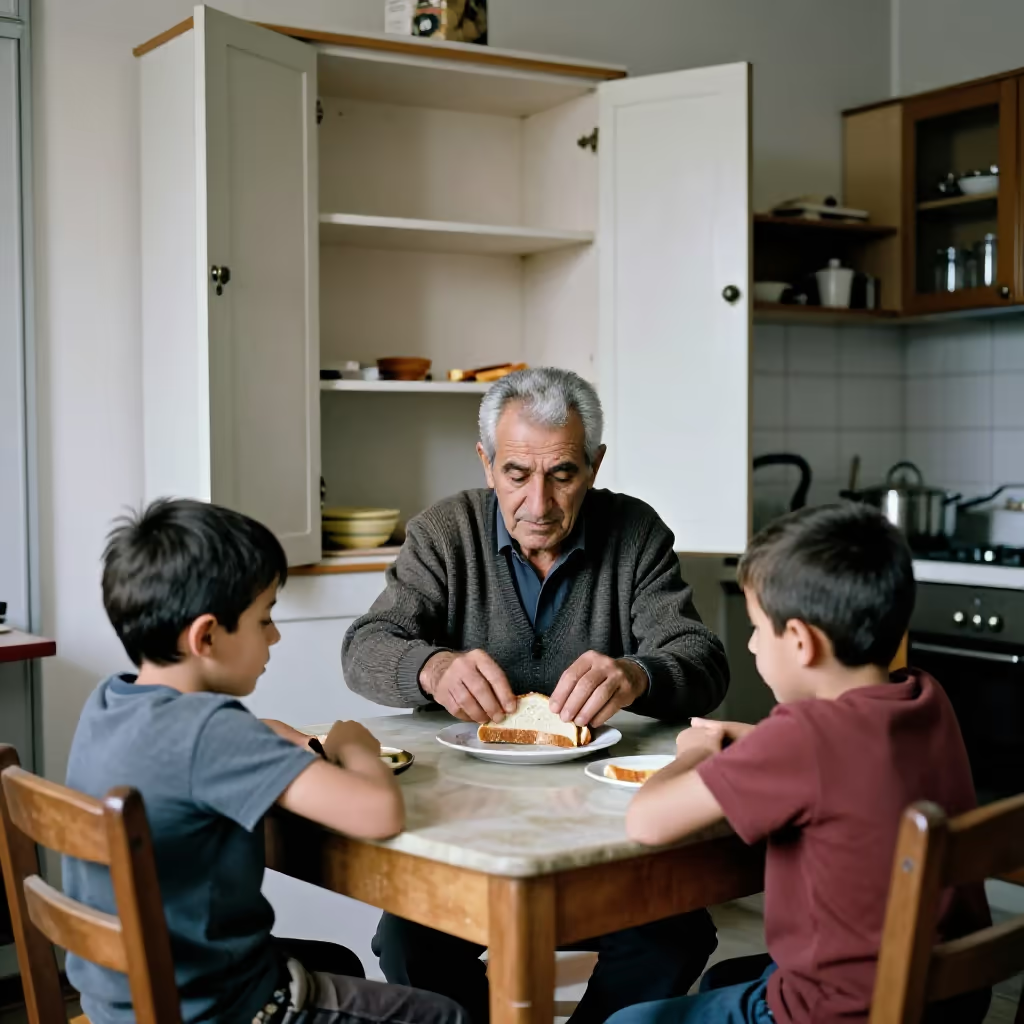
A fixed expression meaning to be very poor and not have enough to eat.
Nachdem er seine Arbeit verloren hatte, musste seine Familie am Hungertuch nagen.
After he lost his job, his family had to live in poverty.
The verb 'nagen' (to gnaw) is almost always used with the preposition 'an' and the dative. This applies to both the literal and the figurative meaning.
Der Hund nagt an einem alten Knochen.
The dog gnaws on an old bone.
The verb 'nagen' (to gnaw) is the base word for the noun 'der Nager' (the rodent). It describes the typical action of this animal.
Man hört, wie die Mäuse auf dem Dachboden nagen.
You can hear the mice gnawing in the attic.
You can tell whether 'nagen' (to gnaw) is meant literally or figuratively from the subject. If the subject is an animal, it is literal. If the subject is a feeling or an abstract idea (e.g., doubt, hunger, conscience), it is meant figuratively.
Der Biber nagt an einem Baumstamm.
The beaver gnaws on a tree trunk.
In the figurative meaning, 'nagen' (to gnaw) is often connected with negative feelings and states. Typical subjects are 'der Zweifel' (doubt), 'die Sorge' (worry), 'das Gewissen' (conscience), or 'der Hunger' (hunger).
Die Sorge um ihre Zukunft nagt an den Studenten.
Worry about their future gnaws at the students.
The idiom 'am Hungertuch nagen' is a fixed unit. It means to be very poor and is always used in this form.
In den Kriegsjahren mussten viele Menschen am Hungertuch nagen.
During the war years, many people had to live in extreme poverty.
to plague / to bother
Plagen and nagen can both express that worries or doubts place a lasting burden on someone. Plagen presents the problem more strongly as the cause of the suffering; nagen particularly describes a quiet, persistent inner unease. Use plagen for a tormenting burden, and especially nagen for something that continues to work away silently inside.

Seit der Entscheidung nagt ein leiser Zweifel an ihm.
A quiet doubt has been gnawing at him ever since the decision.
Seit der Entscheidung plagen ihn starke Zweifel.
Strong doubts have plagued him ever since the decision.