

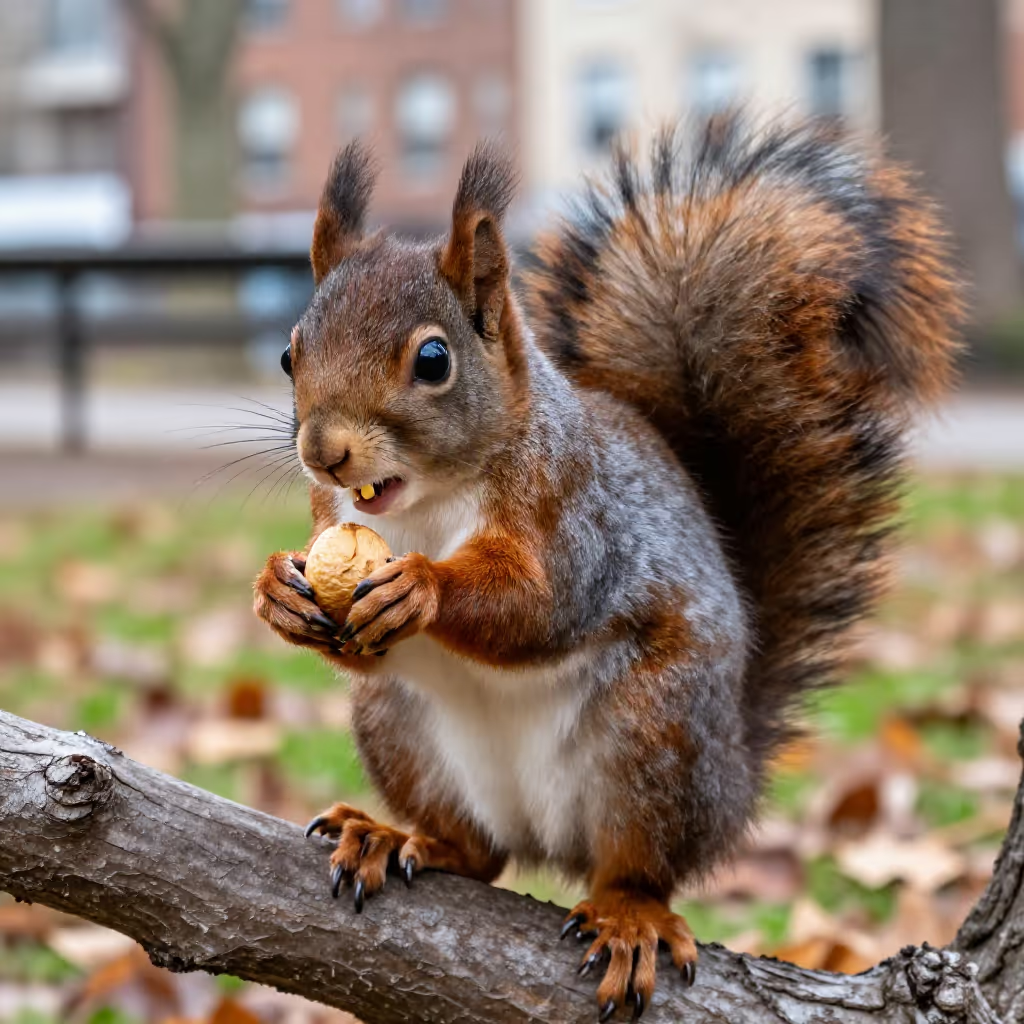
A mammal that belongs to the order of rodents and is characterized by constantly growing incisors. Examples include mice, rats, beavers, and squirrels.
example
Der Biber ist der größte Nager Europas.
The beaver is the largest rodent in Europe.
Usage tips
Word family
The word 'Nager' (rodent) comes directly from the verb 'nagen' (to gnaw). So a 'Nager' is literally an animal that gnaws. This connection helps you remember both words.
EXAMPLE
Ein Hamster ist ein beliebter Nager, den man als Haustier halten kann.
A hamster is a popular rodent that can be kept as a pet.
Use as a general term
'Nager' (rodent) is a biological umbrella term for an entire group of animals. The word is often used to group together animals such as mice, beavers, and squirrels.
EXAMPLE
Mäuse, Ratten und Biber sind allesamt Nager.
Mice, rats, and beavers are all rodents.
Typical adjectives
'Nager' (rodent) is often combined with adjectives that describe size or behavior. Typical examples are 'kleiner Nager' (small rodent), 'flinker Nager' (nimble rodent), or 'scheuer Nager' (shy rodent).
EXAMPLE
Im Garten haben wir einen kleinen Nager entdeckt.
We discovered a small rodent in the garden.
Compare with
confusable
Nager vs Kaninchen
rabbit
'Kaninchen' and 'Nager' can be confused because both can be small mammals, and some pets are kept in similar ways. However, a 'Kaninchen' is a specific animal from the hare family. A 'Nager' is a more general animal group that includes, for example, mice, rats, beavers, and squirrels. Important: in everyday language, rabbits are sometimes mentioned together with rodents, but they do not belong to the rodent order. If you mean this specific animal with long ears, say 'Kaninchen'. If you mean the animal group, say 'Nager'.
Nager
In der Tierhandlung gibt es Futter für verschiedene Nager wie Mäuse und Hamster.
At the pet shop, there is food for different rodents such as mice and hamsters.
Kaninchen
Unser Kaninchen frisst gern Karotten und frisches Gras.