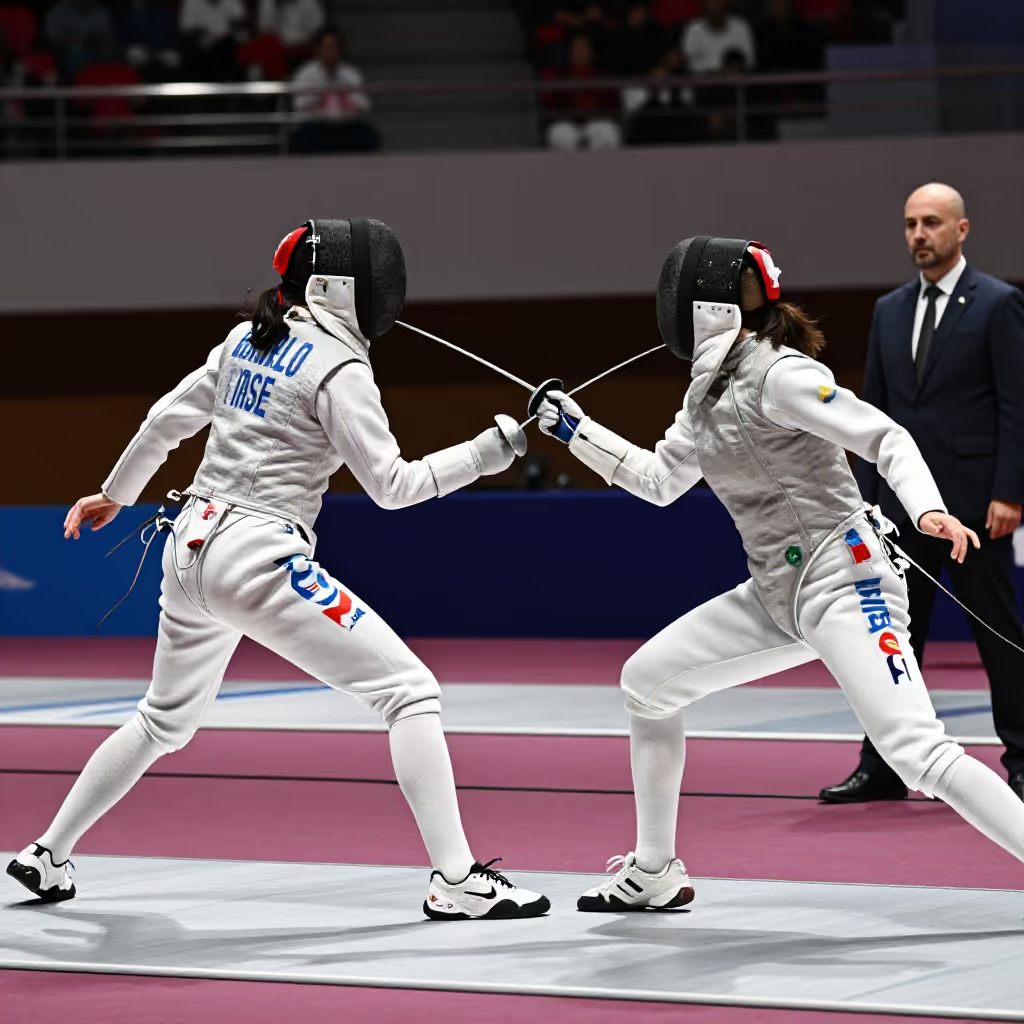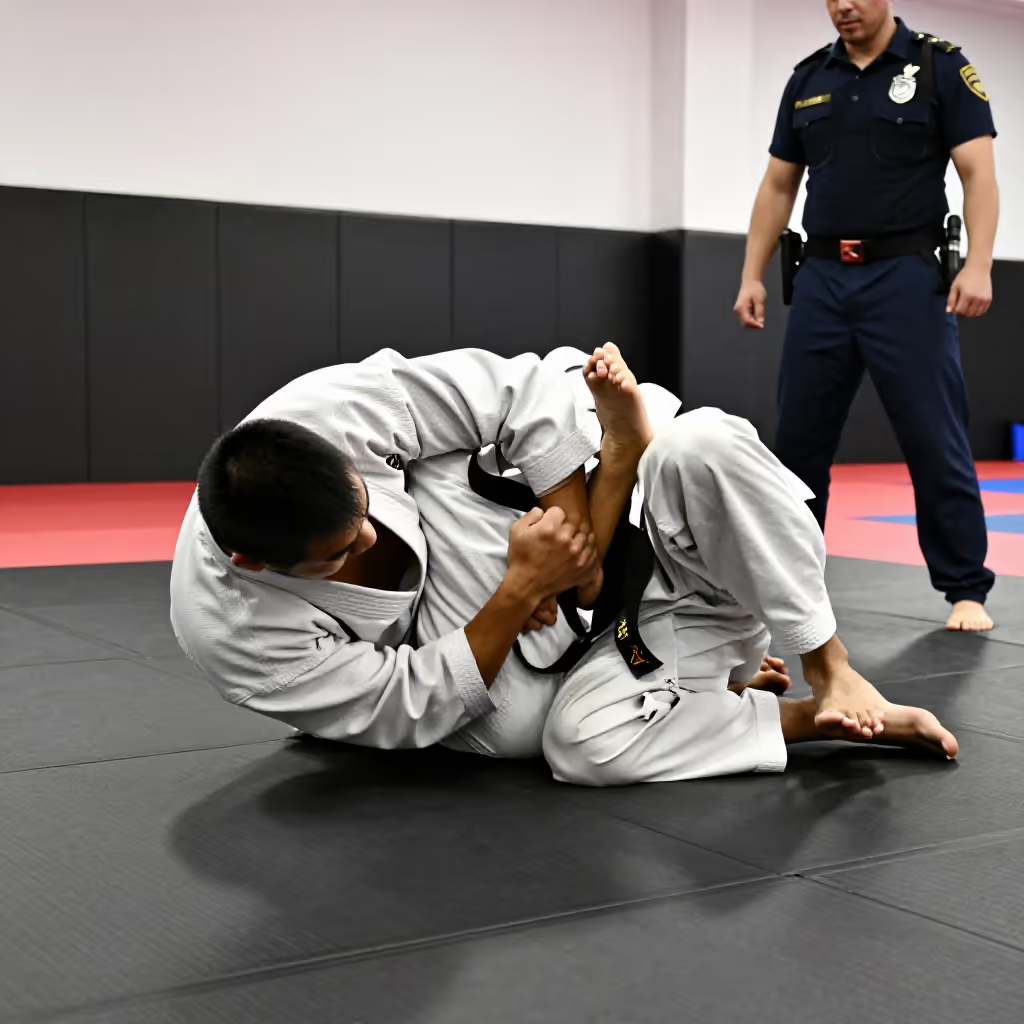
A direct physical confrontation or fight between opponents at very short range, often without the use of firearms.
example
Die Soldaten wurden speziell für den Nahkampf ausgebildet.
The soldiers were specially trained for close combat.

Usage tips
Compound structure
The word is composed of 'nah' (near/close) and 'Kampf' (fight/combat). So it literally describes a fight that takes place at very short, close range.
EXAMPLE
Im Training lernen die Polizisten Techniken für den Nahkampf.
In training, the police officers learn techniques for close combat.
Context clue
You can easily recognize the meaning from the context. If it is about soldiers, police, or martial arts, it refers to physical combat. If it is about politics, debates, or discussions, it refers to the figurative, verbal confrontation.
EXAMPLE
Der Soldat war ein Experte im Nahkampf.
The soldier was an expert in close combat.
Typical collocations
In the literal meaning, 'Nahkampf' (close combat) is often combined with verbs such as 'trainieren' (to train), 'üben' (to practice), or 'ausbilden' (to train/instruct). The context is usually military or relates to self-defense.
EXAMPLE
Sie bietet Kurse an, in denen Frauen den Nahkampf zur Selbstverteidigung üben.
She offers courses in which women practice close combat for self-defense.
Figurative meaning
In the figurative meaning, the phrase 'sich einen Nahkampf liefern' (to engage in a close combat) is often used. Common adjectives here are 'verbal' (verbal) or 'politisch' (political), to specify the type of confrontation.
EXAMPLE
Die beiden Kandidaten lieferten sich einen politischen Nahkampf um die Wählerstimmen.
The two candidates engaged in political close combat over the voters' support.
Compare with
near_synonym · confusable
Nahkampf vs Kampf
fight / struggle
'Kampf' and 'Nahkampf' can both refer to a confrontation between opponents. 'Kampf' is the general word and does not yet say how people are fighting or from what distance. 'Nahkampf' is more specific: the opponents are very close to each other, often body to body or without firearms. In a figurative sense, 'Nahkampf' can also mean a very direct and tough discussion. Learners may confuse the words because every 'Nahkampf' is a 'Kampf', but not every 'Kampf' is a 'Nahkampf'. When the short distance or direct confrontation is important, 'Nahkampf' is more precise.
Nahkampf
Die Soldaten trainierten den Nahkampf ohne Waffen.
The soldiers trained in close combat without weapons.
Kampf
Im Finale war der Kampf um den ersten Platz besonders spannend.
In the final, the contest for first place was especially exciting.