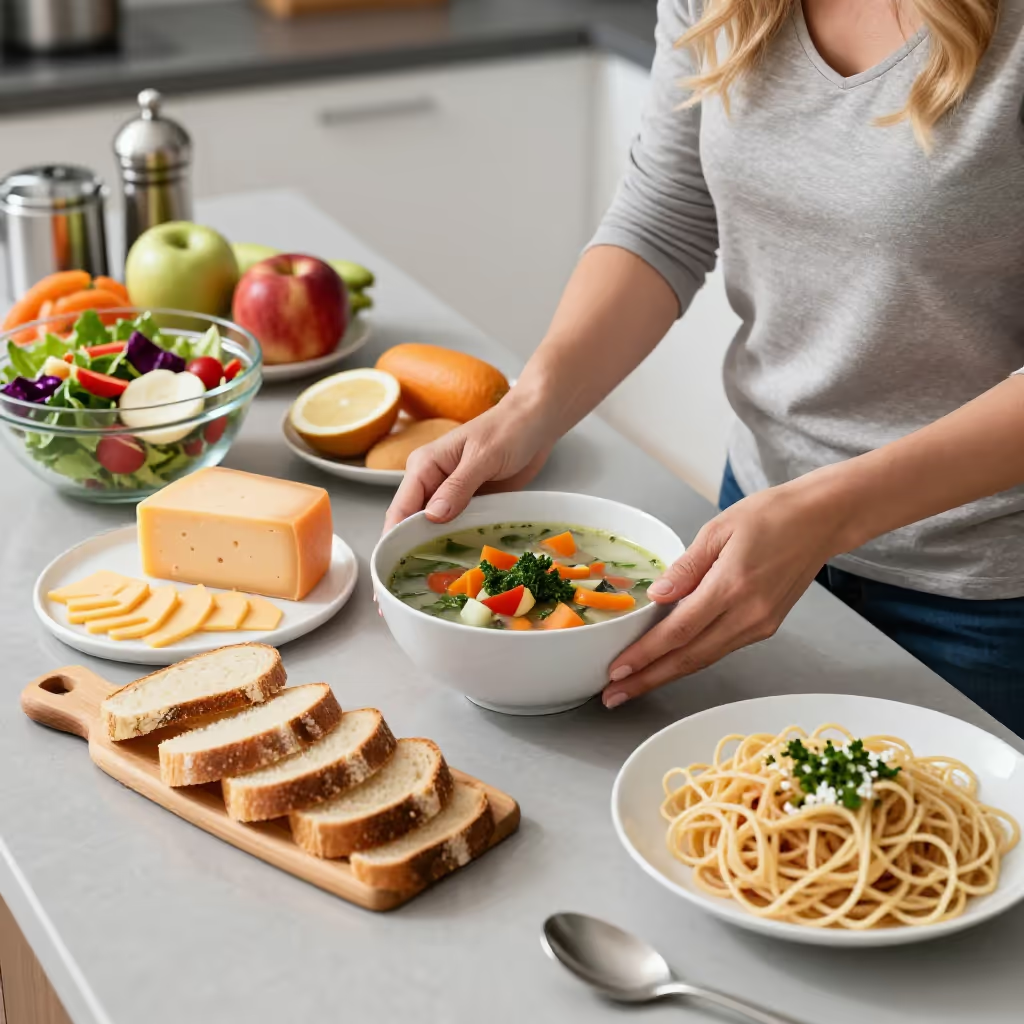
Everything that people, animals, and plants take in in order to live and grow; food.
example
Eine gesunde und ausgewogene Nahrung ist für Kinder besonders wichtig.
Healthy and balanced food is especially important for children.

Usage tips
Word family
The word 'Nahrung' (food/nourishment) belongs to the word family of 'nähren' (to nourish; to feed, provide for) and the adjective 'nahrhaft' (nutritious; containing many nutrients). All these words have to do with nutrition.
EXAMPLE
Diese Suppe ist sehr nahrhaft und gut für den Winter.
This soup is very nutritious and good for winter.
Uncountable noun
In its main meaning, 'Nahrung' (food/nourishment) is almost always used as an uncountable noun in the singular. People say 'viel Nahrung' (a lot of food) or 'genug Nahrung' (enough food), but the plural 'Nahrungen' is very rare.
EXAMPLE
Pflanzen nehmen ihre Nahrung über die Wurzeln auf.
Plants take in their nourishment through their roots.
Factual context
The word 'Nahrung' (food/nourishment) is often used in a factual, biological, or nutritional-science context. It sounds more formal and more general than the everyday word for a meal.
EXAMPLE
Die Umstellung der Nahrung kann bei Tieren zu Problemen führen.
Changing an animal's food can lead to problems.
Recognizing the figurative meaning
You can recognize the figurative meaning by the fact that 'Nahrung' (fuel/nourishment) is combined with abstract nouns such as 'Gerüchte' (rumors), 'Konflikte' (conflicts), or 'Zweifel' (doubts). The structure is often 'etwas gibt [einem Gerücht] neue Nahrung' (something gives [a rumor] new fuel).
EXAMPLE
Sein Schweigen gab den Spekulationen nur noch mehr Nahrung.
His silence only gave the speculation even more fuel.
Compare with
near_synonym · confusable
Nahrung vs Essen
food / meal / eating
'das Essen' and 'die Nahrung' both mean something that one consumes. 'Essen' is the normal everyday word for food and meals for people. 'Nahrung' sounds more general and more factual. It fits especially when talking about nutrition, health, animals, plants, or survival. In conversation, people are more likely to say 'Essen'; in texts about the body, nature, or medicine, 'Nahrung' is more common. The words can be confused because they overlap. But 'Nahrung' often feels less personal and less like a specific meal.
Nahrung
Für kleine Kinder ist gute Nahrung besonders wichtig.
Good nourishment is especially important for young children.
Essen
Vor dem Termin ist das Essen schnell vorbereitet.
Before the appointment, the food is quickly prepared.