

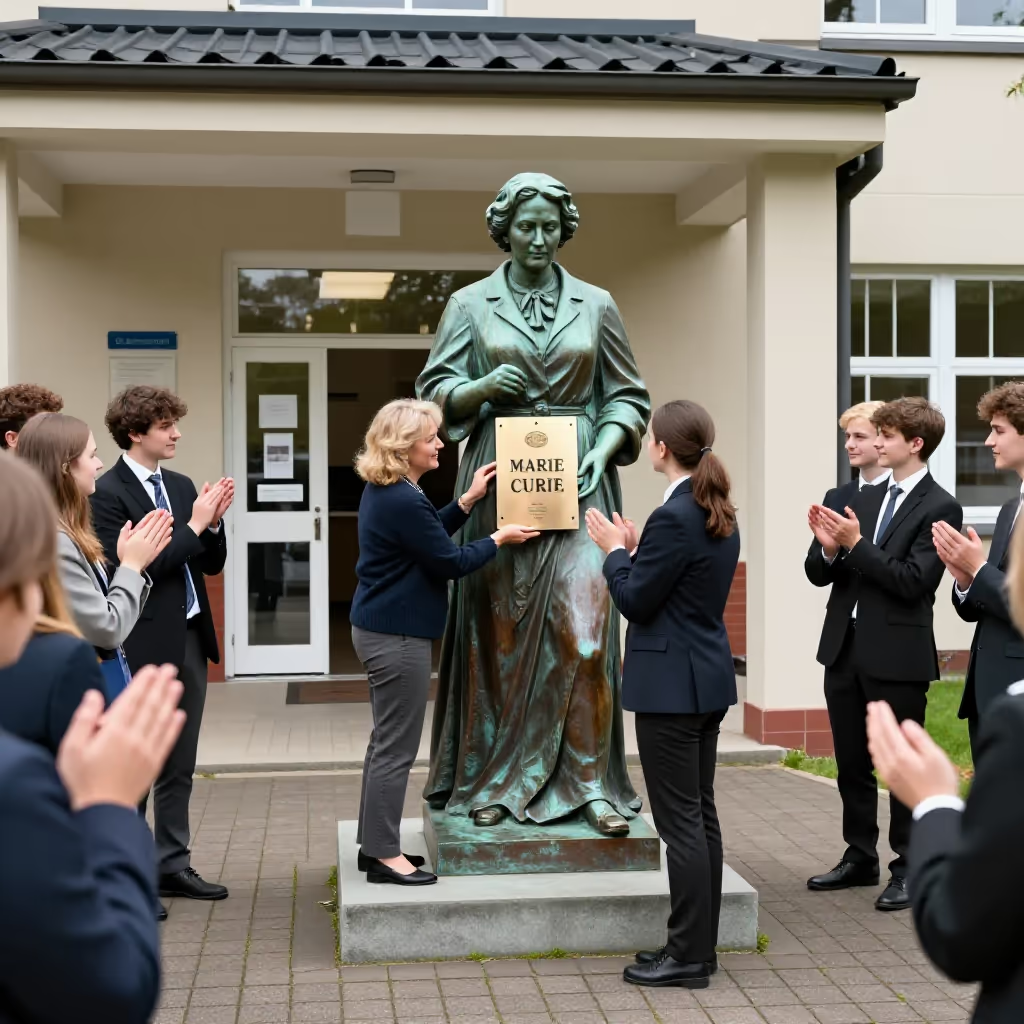
A person, place, or thing after whom or which something else (e.g., a street, an institution, a product) is named.
example
Alexander von Humboldt war der Namensgeber für die berühmte Universität in Berlin.
Alexander von Humboldt was the namesake of the famous university in Berlin.
Usage tips
Compound word
The word is made up of 'der Name' (the name; in the genitive, 'Namens') and 'der Geber' (the giver, from 'geben' (to give)). A 'Namensgeber' (namesake) is therefore literally someone who 'gives' their name to something.
EXAMPLE
Der Dichter Johann Wolfgang von Goethe war der Namensgeber für das Goethe-Institut.
The poet Johann Wolfgang von Goethe was the namesake of the Goethe-Institut.
Sentence structure with 'für'
To express what someone is the namesake for, the preposition 'für' is used with the accusative. The structure is: [person] ist der Namensgeber für [thing].
EXAMPLE
Wer war der Namensgeber für diese Straße?
Who was the namesake of this street?
Typical collocations
A 'Namensgeber' (namesake) is often looked for in connection with places and institutions that have special significance. Typical examples are streets, squares, schools, universities, or awards.
EXAMPLE
Marie Curie ist die Namensgeberin für viele Forschungseinrichtungen.
Marie Curie is the namesake of many research institutions.