

national
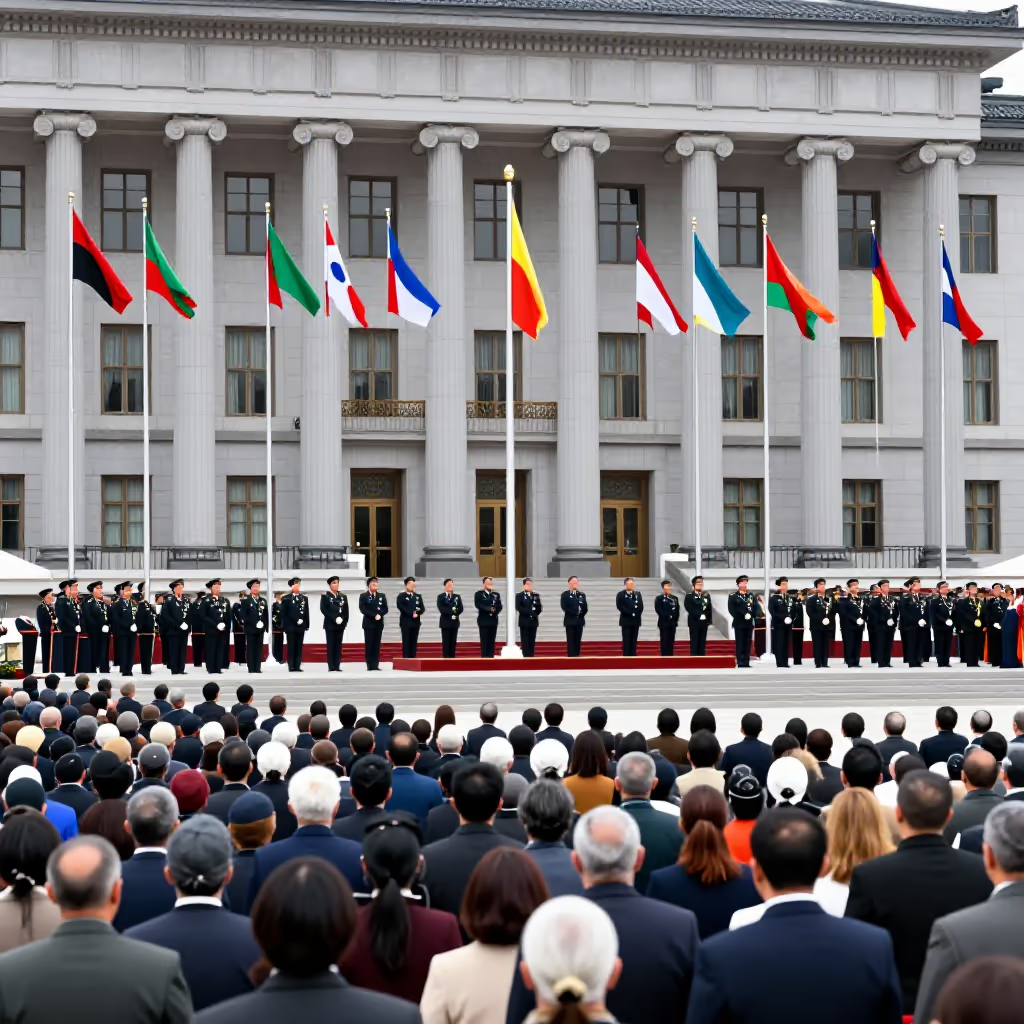
Relating to, belonging to, or characteristic of an entire nation or state.
EXAMPLE
Die Mannschaft spielt in den nationalen Farben ihres Landes.
The team plays in the national colors of its country.
Loading your saved state.
Relating to, belonging to, or characteristic of an entire nation or state.
Die Mannschaft spielt in den nationalen Farben ihres Landes.
The team plays in the national colors of its country.
The adjective 'national' (national) is derived directly from the noun 'die Nation' (the nation). It always means that something has to do with a particular nation or an entire country.
Die Regierung muss die Interessen der gesamten Nation vertreten.
The government must represent the interests of the entire nation.
'National' (national) is often the first part of compound words. Well-known examples are 'die Nationalmannschaft' (the national team), 'der Nationalpark' (the national park), or 'die Nationalhymne' (the national anthem).
Die deutsche Nationalmannschaft hat das Spiel gewonnen.
The German national team won the match.
Common combinations are 'nationale Interessen' (national interests), 'nationale Gesetze' (national laws), 'nationale Ebene' (national level), or 'nationale Feiertage' (national holidays). These terms always refer to the entire state.
Der 3. Oktober ist ein nationaler Feiertag in Deutschland.
October 3 is a national holiday in Germany.
native / at home
Both national and heimisch can express a connection to a country or region. National emphasizes the entire nation or state, while heimisch refers to original belonging to a geographical area, especially for plants and animals. Use national for the state level and heimisch for the origin of a species.

Der nationale Naturschutzplan gilt für alle Regionen des Landes.
The national conservation plan applies to all regions of the country.
Diese seltene Pflanze ist in den Wäldern der Region heimisch.
This rare plant is native to the region’s forests.