

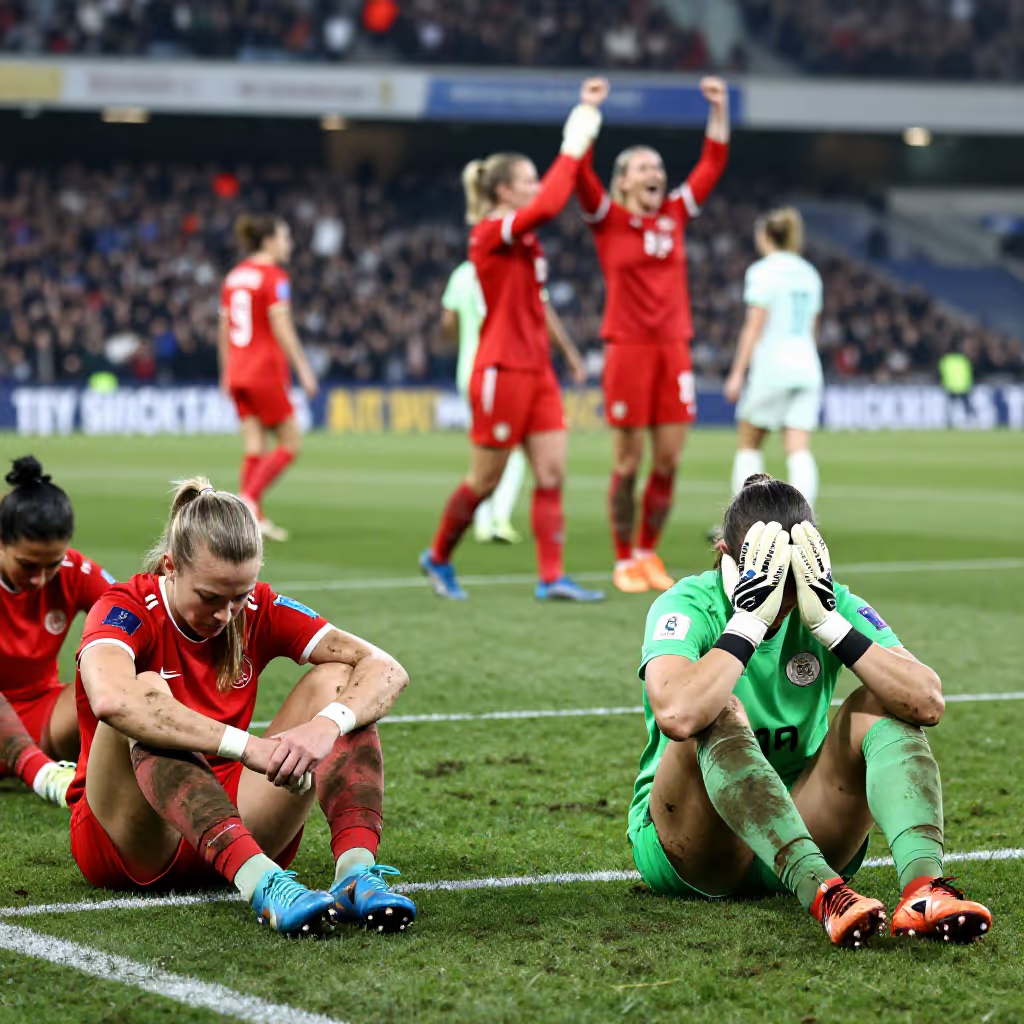
die Niederlage
defeat
Losing a fight, competition, game, or conflict.
EXAMPLE
Nach der unerwarteten Niederlage war die Enttäuschung im Team groß.
After the unexpected defeat, the disappointment in the team was great.
defeat
Loading your saved state.
defeat
Losing a fight, competition, game, or conflict.
Nach der unerwarteten Niederlage war die Enttäuschung im Team groß.
After the unexpected defeat, the disappointment in the team was great.
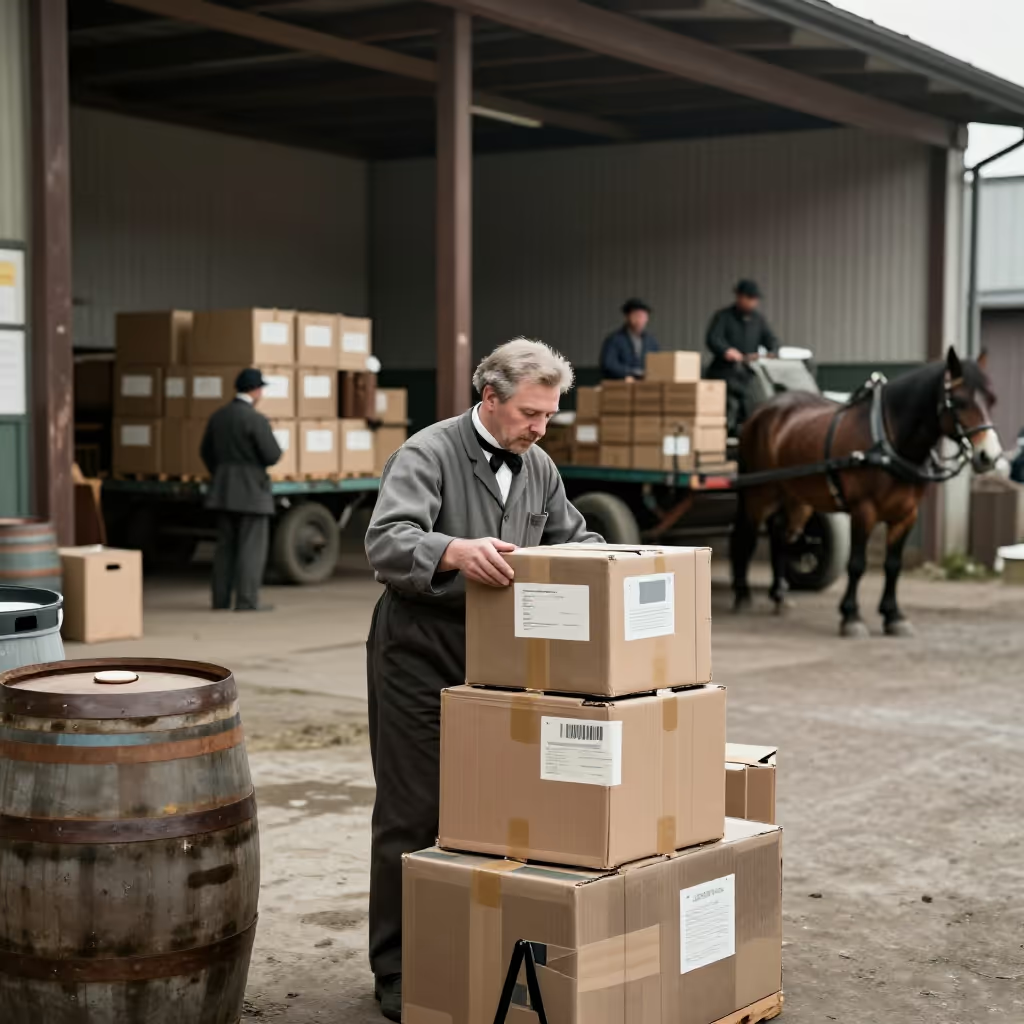
branch / warehouse
A branch office or warehouse of a trading company (obsolete meaning).
Der Kaufmann unterhielt in der Hafenstadt eine Niederlage für importierte Gewürze.
The merchant maintained a warehouse for imported spices in the port city.
'Niederlage' (defeat) comes from the verb 'niederlegen' (to lay down). The basic idea is that in battle, one lays down one's weapons and gives up. The prefix 'nieder-' means 'down'.
Die Soldaten mussten ihre Waffen niederlegen.
The soldiers had to lay down their weapons.
A 'Niederlage' (defeat) is often not actively 'made', but passively experienced. Typical verbs are 'eine Niederlage erleiden' (to suffer a defeat) or 'eine Niederlage einstecken' (to take a defeat). If you defeat someone, you can 'eine Niederlage beibringen' (inflict a defeat on them).
Die Mannschaft musste eine schwere Niederlage einstecken.
The team had to take a heavy defeat.
To describe a 'Niederlage' (defeat) more precisely, certain adjectives are often used. Common examples are 'eine bittere Niederlage' (a bitter defeat), 'eine schwere Niederlage' (a heavy defeat), or 'eine knappe Niederlage' (a narrow defeat).
Es war eine knappe Niederlage mit nur einem Punkt Unterschied.
It was a narrow defeat by just one point.
The meaning 'Zweigstelle' (branch office) or 'Warenlager' (warehouse) is obsolete. You will find it almost only in historical texts about trade and the economy from earlier centuries.
Im 18. Jahrhundert gründete die Handelsfirma eine Niederlage in Übersee.
In the 18th century, the trading company established a branch overseas.
loss
Both words can refer to a painful outcome. „Die Niederlage“ refers to losing a game or competition, while „der Verlust“ emphasizes that you no longer have something, such as a trophy. Use „Niederlage“ for the lost contest and „Verlust“ for the possession that is no longer there.

Nach dem verlorenen Finale sprach der Trainer von einer bitteren Niederlage.
After losing the final, the coach spoke of a bitter defeat.
Nach dem verlorenen Finale schmerzte der Verlust des Pokals besonders.
After losing the final, the loss of the trophy was especially painful.