

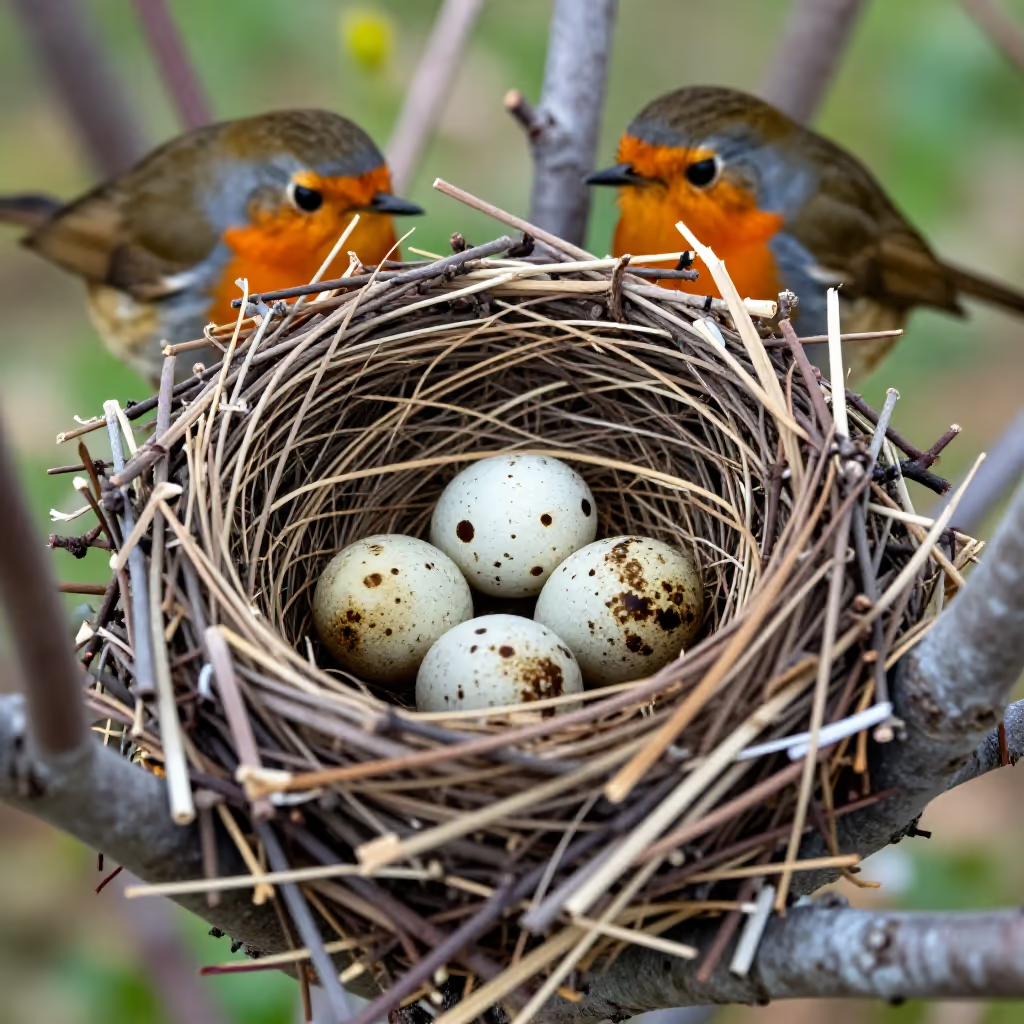
das Nest
nest
A structure built by birds in order to lay eggs and raise their young.
EXAMPLE
Im Frühling bauen die Amseln ihr Nest in unserer Hecke.
In spring, the blackbirds build their nest in our hedge.
nest
Loading your saved state.
nest
A structure built by birds in order to lay eggs and raise their young.
Im Frühling bauen die Amseln ihr Nest in unserer Hecke.
In spring, the blackbirds build their nest in our hedge.

nest
A cozy, protected place or a home that one sets up for oneself.
Nach der Renovierung haben sie sich ein richtiges Nest gebaut.
After the renovation, they built themselves a real nest.
backwater
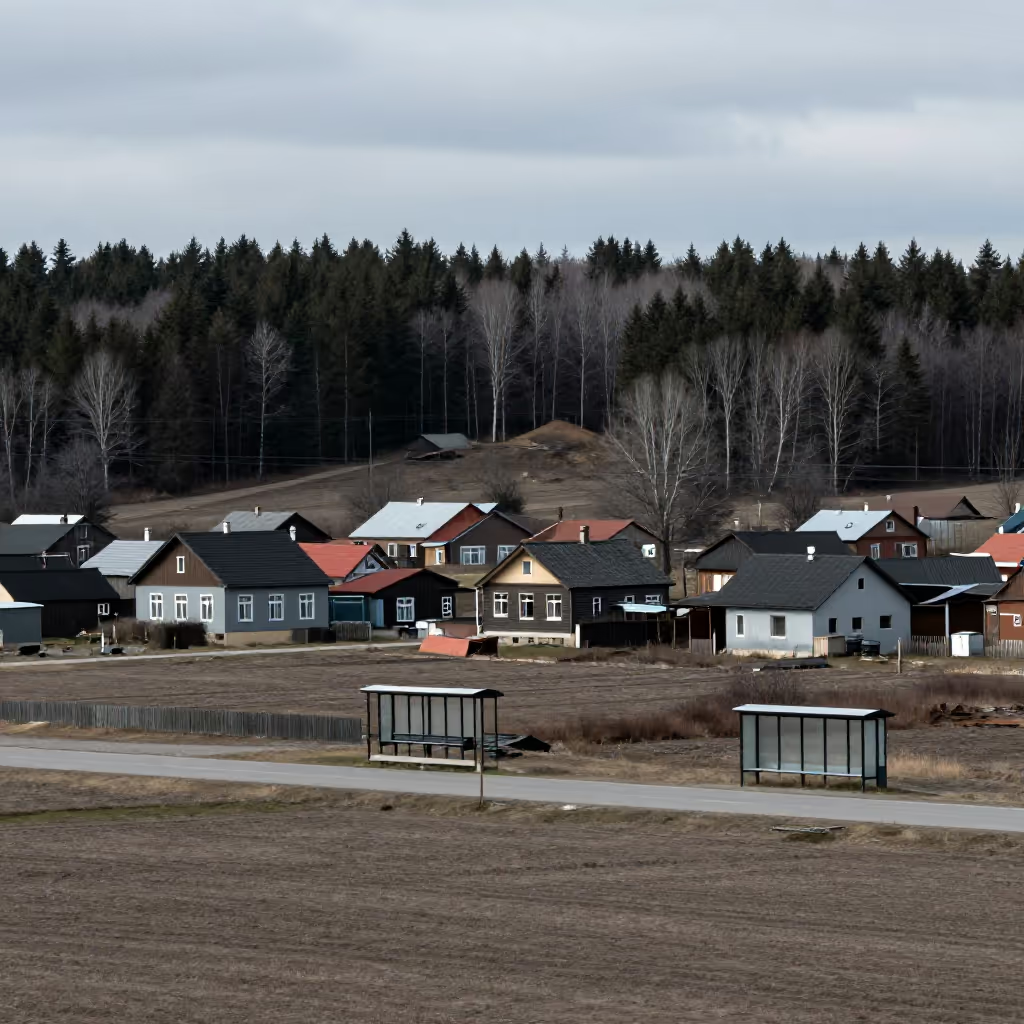
Colloquial and often derogatory for a very small, remote, and uninteresting place.
Er ist froh, endlich aus diesem Nest herausgekommen zu sein und in der Stadt zu leben.
He is glad to have finally gotten out of that backwater and to be living in the city.
nest
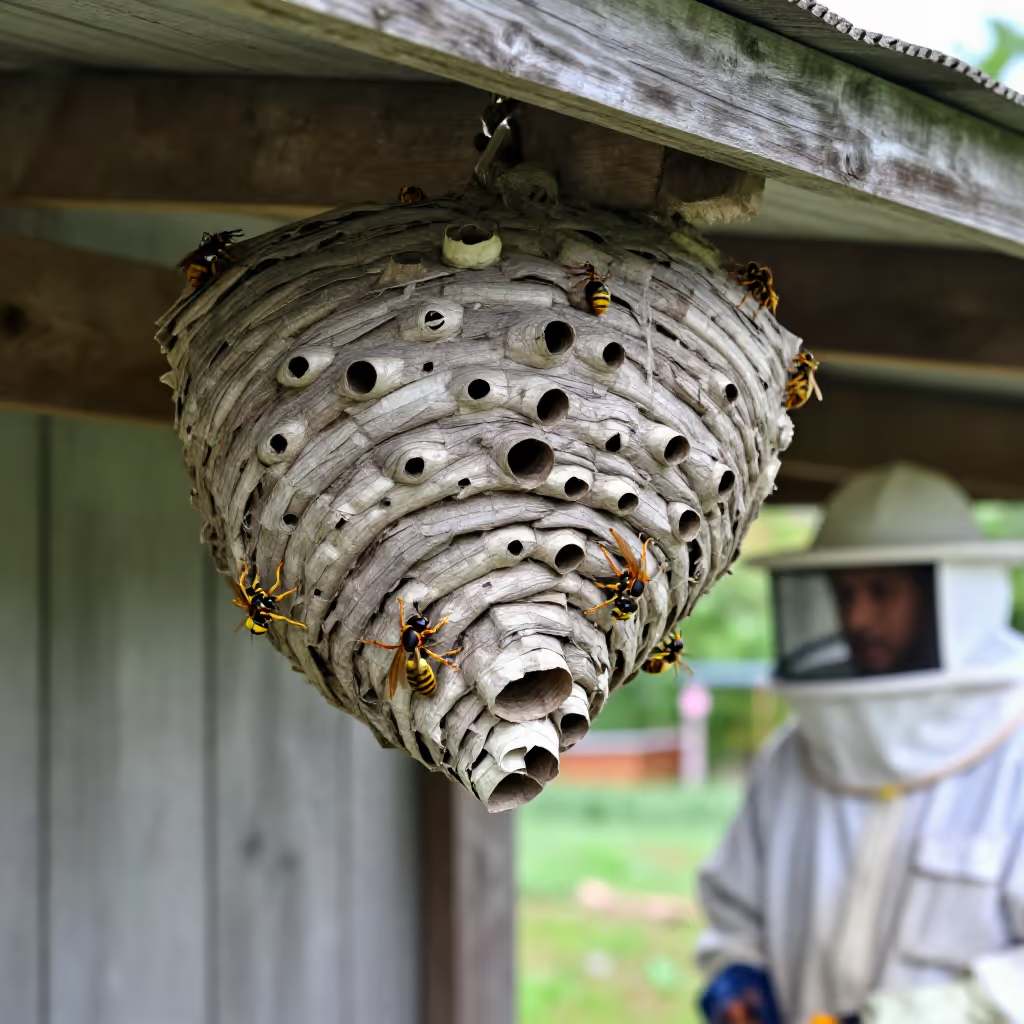
The structure or shelter of certain insects, reptiles, or small mammals.
Vorsicht, im alten Schuppen ist ein Wespennest!
Careful, there is a wasp nest in the old shed!
In connection with birds, 'Nest' (nest) is often used with the verbs 'bauen' (to build), 'verlassen' (to leave), or 'brüten' (to brood/incubate). Birds lay their eggs 'ins Nest' (into the nest), and the young grow up 'im Nest' (in the nest).
Im Kirschbaum hat ein Vogelpaar ein Nest gebaut.
A pair of birds built a nest in the cherry tree.
In a figurative sense, 'Nest' (nest) is used positively for a cozy and safe home. The fixed phrase for this is 'sich ein Nest bauen' (to build oneself a nest), and it means to create a homey place to live.
Mit der neuen Wohnung wollen sie sich endlich ein gemütliches Nest bauen.
With the new apartment, they finally want to build themselves a cozy nest.
When 'Nest' (nest/backwater) describes a place, it is colloquial and almost always derogatory. It refers to a small, boring, and remote village or small town.
Ich bin froh, dass ich zum Studieren aus diesem Nest wegziehen konnte.
I'm glad I was able to move away from that backwater to study.
In connection with insects or reptiles, 'Nest' (nest) refers to their structure or shelter. It often has a warning or negative connotation, as in 'Wespennest' (wasp nest), 'Hornissennest' (hornet nest), or 'Schlangennest' (snake nest).
Sei vorsichtig, unter dem Dach ist ein großes Wespennest.
Be careful, there is a large wasp nest under the roof.
construction / building
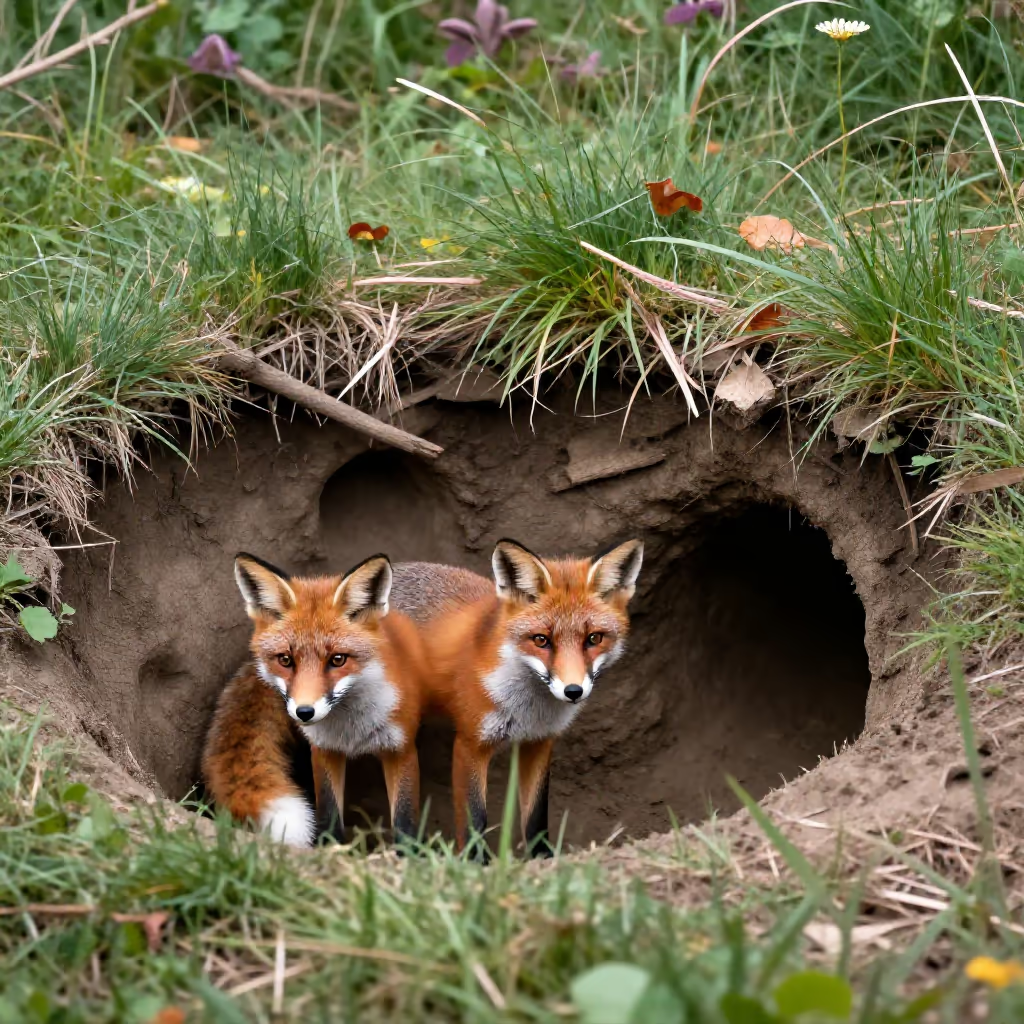
Bau and Nest can both refer to an animal’s protected dwelling. Bau is especially used for the underground or sheltered refuge of certain animals, whereas Nest mainly refers to the structure built by birds. For birds, use Nest; for foxes, Bau is the typical word.
Der Vogel füttert seine Jungen im Nest.
The bird feeds its young in the nest.
Der Fuchs versteckt sich bei Gefahr in seinem Bau.
The fox hides in its den when it is in danger.