


neutral
Impartial; not taking any side in a dispute, conflict, or discussion.
EXAMPLE
Die Schweiz ist bekannt dafür, in internationalen Konflikten neutral zu bleiben.
Switzerland is known for remaining neutral in international conflicts.
Loading your saved state.
Impartial; not taking any side in a dispute, conflict, or discussion.
Die Schweiz ist bekannt dafür, in internationalen Konflikten neutral zu bleiben.
Switzerland is known for remaining neutral in international conflicts.

With regard to colors, smells, or tastes: unobtrusive, not pronounced or intense.
Für die Wände haben wir eine neutrale Farbe wie Grau oder Beige gewählt.
For the walls, we chose a neutral color like gray or beige.
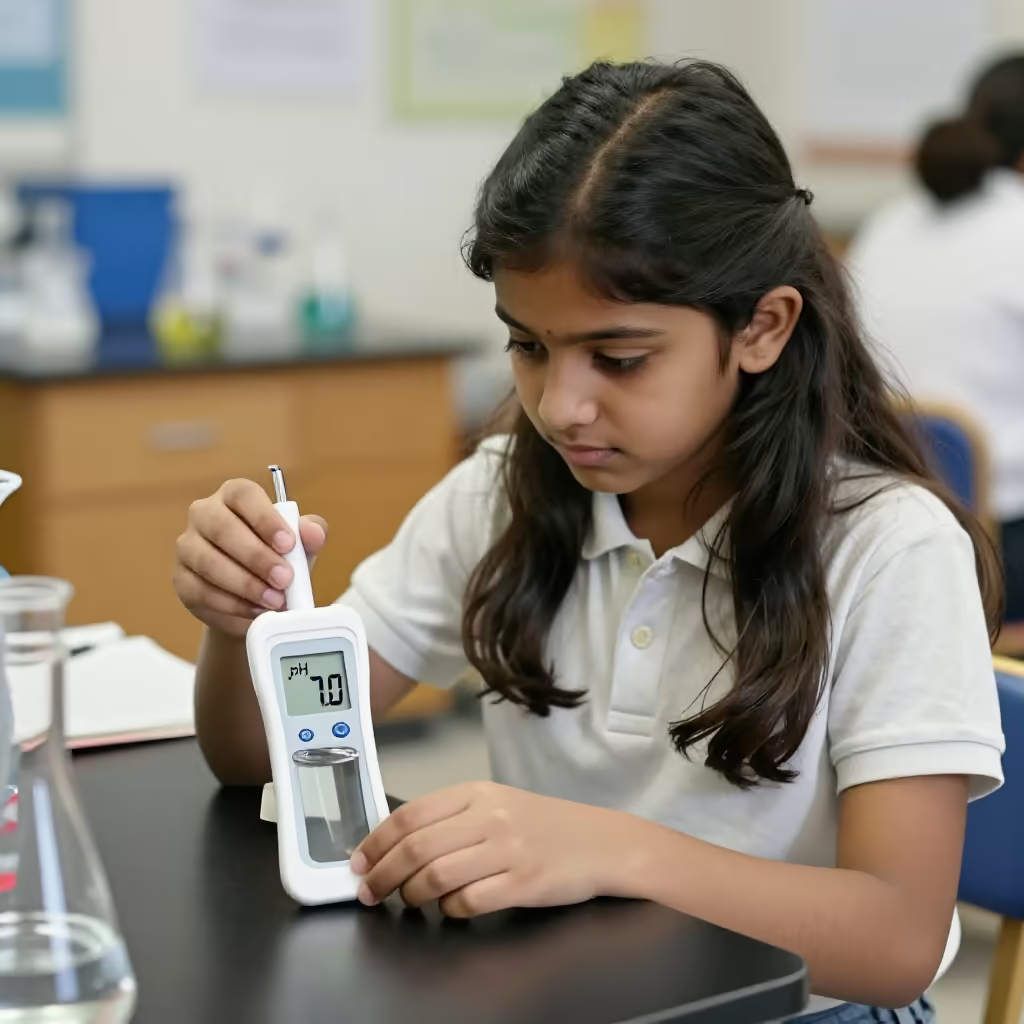
In chemistry, describing a substance that is neither acidic nor basic and has a pH value of 7.
Reines Wasser ist chemisch neutral.
Pure water is chemically neutral.

In physics, describing a state in which there is no net electric charge because positive and negative charges balance each other out.
Ein Atom ist im Normalzustand elektrisch neutral.
An atom is electrically neutral in its normal state.
neuter
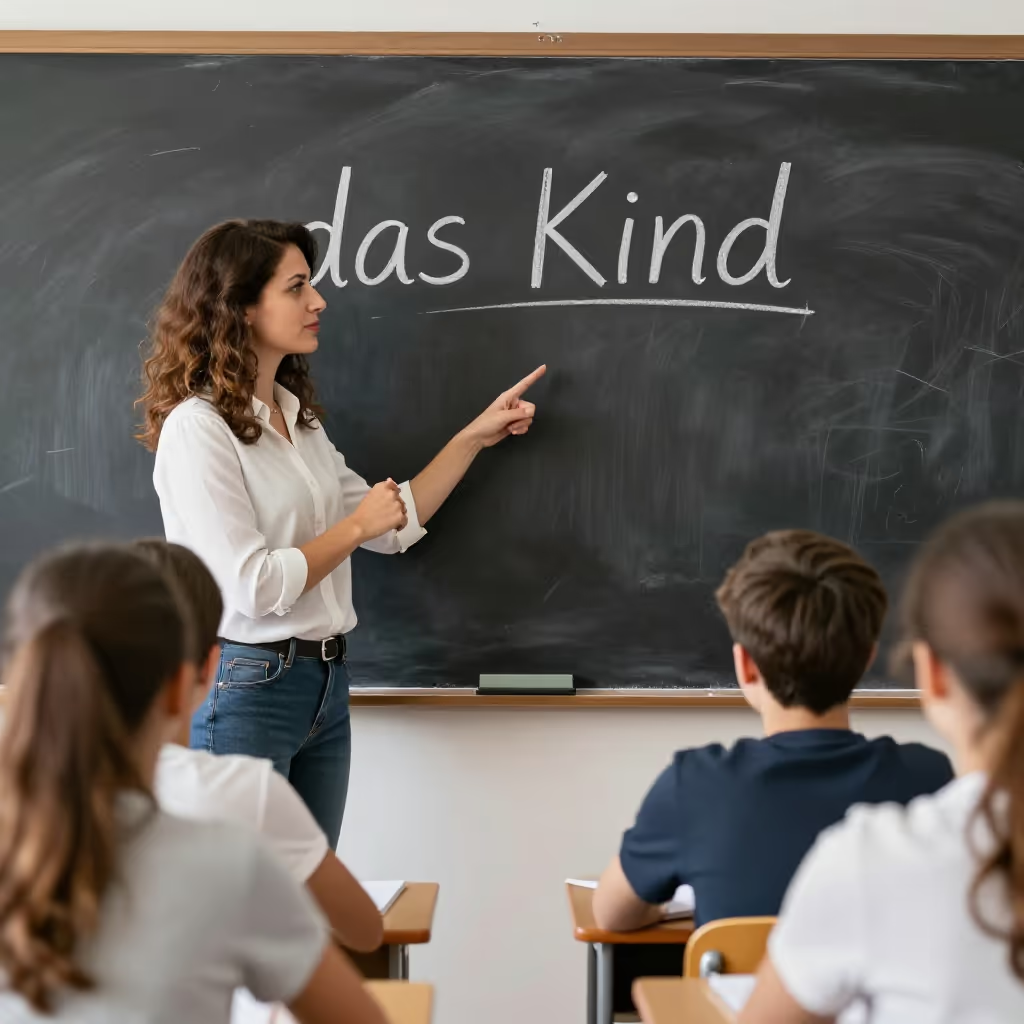
In grammar, referring to the neuter gender.
Das Pronomen 'es' ist neutral.
The pronoun 'es' is neuter.
The word family of 'neutral' includes the noun 'die Neutralität' (neutrality, the state of being neutral) and the verb 'neutralisieren' (to neutralize, to make something neutral or cancel out an effect).
Die Regierung betonte die politische Neutralität des Landes.
The government emphasized the country's political neutrality.
The exact meaning of 'neutral' always becomes clear from the context. Pay attention to keywords: 'Konflikt' (conflict, impartial), 'Farbe' (color, unobtrusive), 'pH-Wert' (pH value, chemical), or 'Genus' (gender, grammatical).
Als Journalist muss man versuchen, neutral über Ereignisse zu berichten.
As a journalist, you have to try to report on events neutrally.
When it comes to impartiality, 'neutral' is often combined with the verbs 'bleiben' (to remain), 'sein' (to be), or the reflexive expression 'sich verhalten' (to behave).
In diesem Familienstreit versuche ich, neutral zu bleiben.
In this family dispute, I am trying to remain neutral.
In the meaning 'unauffällig' (unobtrusive), 'neutral' usually describes sensory perceptions. Typical combinations are 'neutrale Farben' (neutral colors), 'ein neutraler Geschmack' (a neutral taste), or 'ein neutraler Geruch' (a neutral smell).
Dieses Waschmittel hat einen sehr neutralen Geruch.
This laundry detergent has a very neutral smell.
In a chemical context, 'neutral' has an exact scientific meaning. It describes a liquid with a pH value of exactly 7.
Destilliertes Wasser sollte chemisch neutral sein.
Distilled water should be chemically neutral.
independent
For an assessment, both unabhängig and neutral can be appropriate. Unabhängig emphasizes that no outside interests or influences determine the assessment; neutral emphasizes that no side is favored. Use unabhängig for the way the assessment is carried out and neutral for a stance in a dispute or conflict.

Die Kommission bleibt im Streit zwischen den Unternehmen neutral.
The commission remains neutral in the dispute between the companies.
Die Kommission beurteilt den Fall unabhängig von den beteiligten Unternehmen.
The commission assesses the case independently of the companies involved.