


dezent
subtle
Unobtrusive, restrained, and not intrusive in color, form, volume, or behavior.
EXAMPLE
Sie trug ein elegantes Kleid in einem dezenten Grauton.
She wore an elegant dress in a subtle shade of gray.
subtle / discreet
Loading your saved state.
subtle
Unobtrusive, restrained, and not intrusive in color, form, volume, or behavior.
Sie trug ein elegantes Kleid in einem dezenten Grauton.
She wore an elegant dress in a subtle shade of gray.

discreet
Tactful and considerate; in a way that does not embarrass anyone.
Er machte sie mit einem dezenten Hinweis auf den Fehler in ihrer Präsentation aufmerksam.
He drew her attention to the mistake in her presentation with a discreet hint.
'Dezent' (subtle/discreet) means 'unauffällig' (unobtrusive) or 'zurückhaltend' (restrained). It is a false friend of the English word 'decent', which means 'anständig' (proper) or 'akzeptabel' (acceptable).
Für das Vorstellungsgespräch wählte er ein dezentes Hemd.
For the job interview, he chose a subtle shirt.
'Dezent' (subtly/discreetly) is very often used as an adverb to describe how an action is carried out: in an unobtrusive or tactful way.
Sie hat ihn dezent darauf hingewiesen, dass sein Reißverschluss offen war.
She discreetly pointed out to him that his fly was open.
In the meaning 'unauffällig' (unobtrusive), 'dezent' (subtle) often describes visual or acoustic impressions. Typical combinations are 'dezente Farben' (subtle colors), 'ein dezentes Muster' (a subtle pattern), 'dezenter Schmuck' (subtle jewelry), or 'dezente Musik' (subtle music).
Die Wände sind in einem dezenten Beige gestrichen.
The walls are painted in a subtle beige.
When it is about tact, 'dezent' (discreet) is often connected with words of communication. Common examples are 'ein dezenter Hinweis' (a discreet hint), 'eine dezente Frage' (a discreet question), or 'dezente Kritik' (discreet criticism).
Mit einer dezenten Geste bat der Kellner die lauten Gäste um Ruhe.
With a discreet gesture, the waiter asked the loud guests to be quiet.
neutral
With colors or scents, „neutral“ and „dezent“ can both seem unobtrusive. „Neutral“ means that no distinct character stands out; „dezent“ describes a restrained, low intensity, even if a particular note remains recognizable. If there is no recognizable characteristic, „neutral“ fits; for a subtle characteristic, „dezent“ fits.
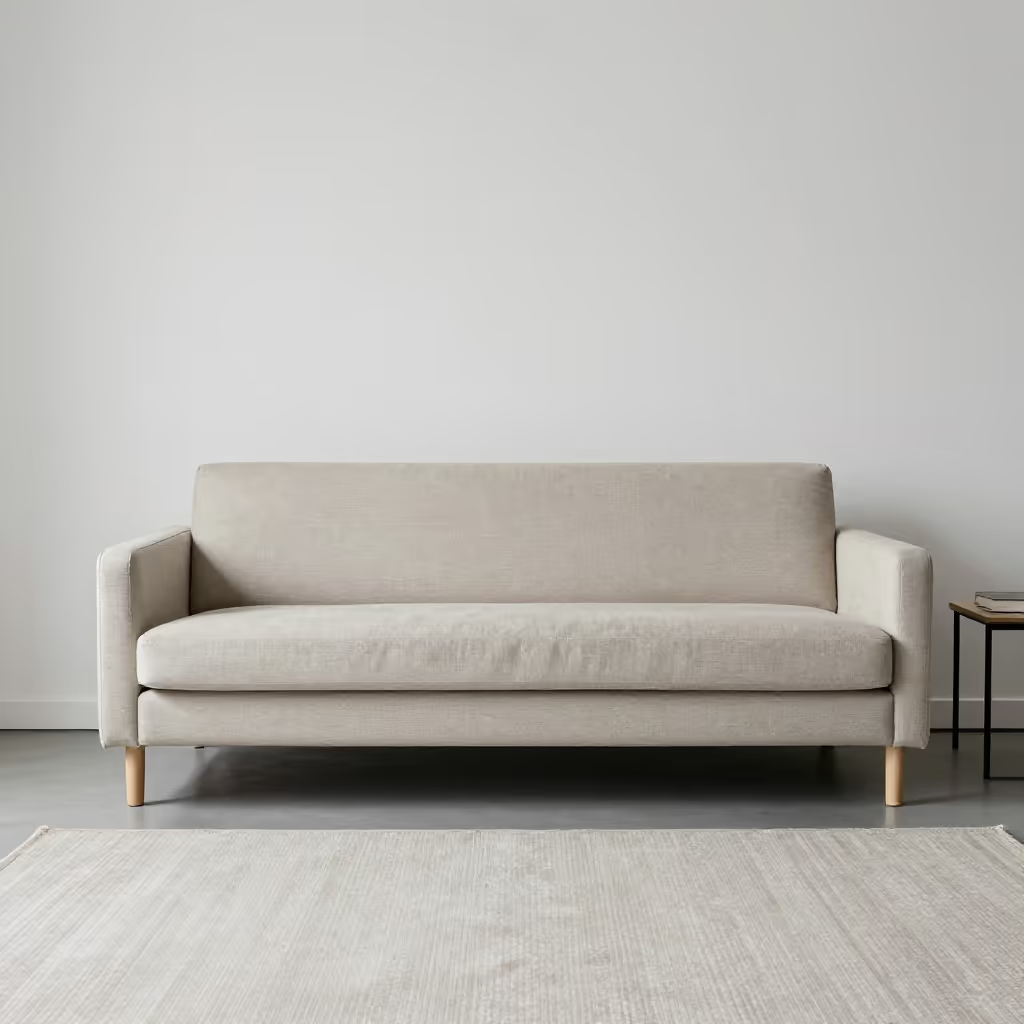
Die Seife duftet dezent nach Zitrone, sodass die Note erkennbar, aber nicht aufdringlich ist.
The soap has a subtle lemon scent, so the note is recognizable but not overpowering.
Die Seife duftet neutral, weil keine bestimmte Note hervortritt.
The soap has a neutral scent because no particular note stands out.