

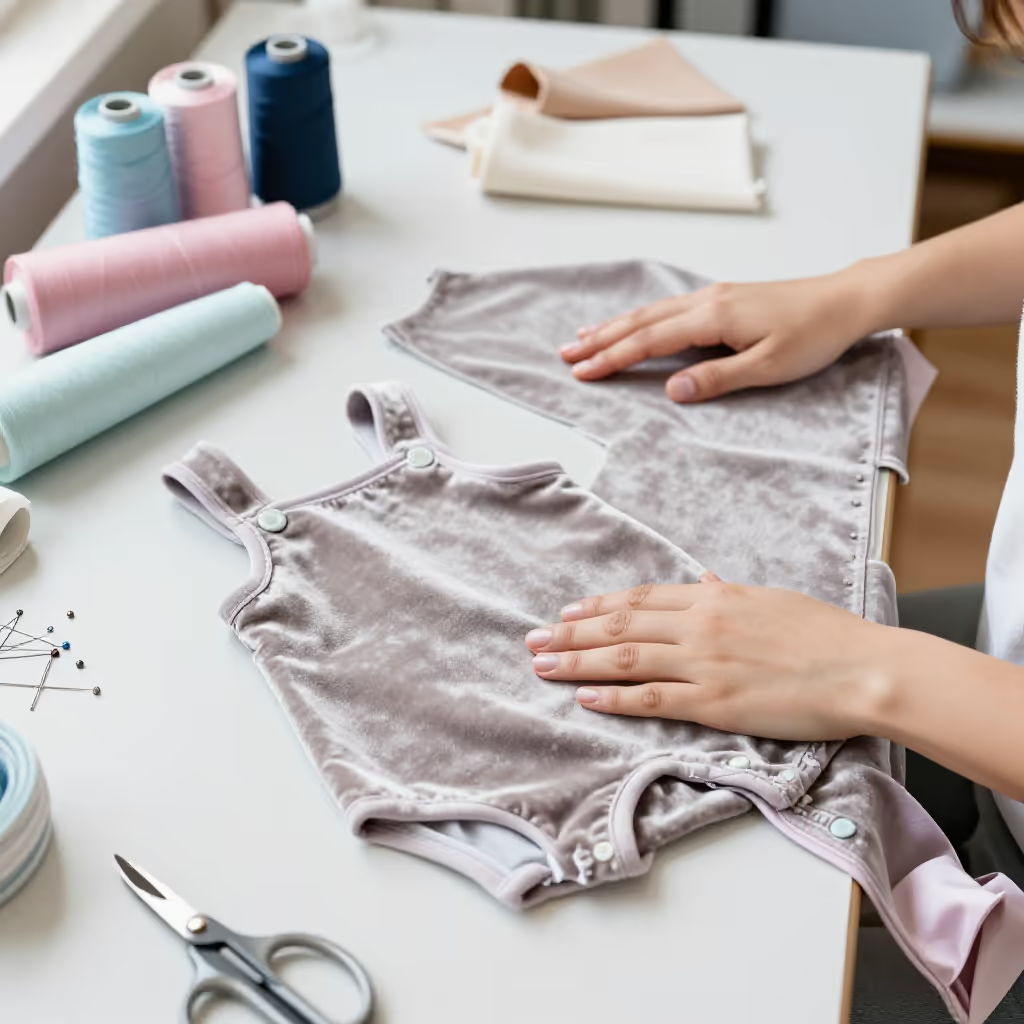
A soft, velvet-like fabric (Nickistoff) that is often used for comfortable clothing such as sweaters, loungewear, or baby clothes.
example
Der Strampler aus Nicki ist besonders kuschelig und warm.
The romper made of velour is especially cozy and warm.

Usage tips
Use as a material
The word 'Nicki' (velour) is often used as the first part of compound words to describe the material of a garment. It then functions like an adjective.
EXAMPLE
Für den Winter kaufe ich meinem Sohn einen warmen Nicki-Pullover.
For winter, I’m buying my son a warm velour sweater.
Context clue
You can tell from context whether the fabric or the garment is meant. The phrase 'aus Nicki' (made of velour) always refers to the fabric, while 'ein Nicki' usually means the finished garment.
EXAMPLE
Ihre Jogginghose ist aus weichem Nicki.
Her sweatpants are made of soft velour.
Typical collocations
When 'Nicki' (velour) refers to the fabric, it is often combined with adjectives like 'weich' (soft), 'kuschelig' (cozy), or 'warm' (warm). It is a typical material for baby clothes, loungewear, or pajamas.
EXAMPLE
Der Bademantel aus kuscheligem Nicki ist perfekt für kalte Abende.
The bathrobe made of cozy velour is perfect for cold evenings.
Compare with
near_synonym · confusable
Nicki vs Pullover
sweater
'Pullover' and 'Nicki' can both mean an item of clothing for the upper body. 'Pullover' is the general term for a long-sleeved top that you pull on. The material can vary. 'Nicki' is more specific: it can mean the soft, velvet-like fabric or a garment made from this fabric. So a 'Nicki' can be a sweater, but not every sweater is a 'Nicki'. If the shape of the garment is important, people usually say 'Pullover'. If the soft material is important, 'Nicki' fits.
Nicki
Nach dem Waschen fühlt sich das Nicki wieder weich und angenehm an.
After washing, the velour top feels soft and comfortable again.
Pullover
Für den Spaziergang zieht Lisa einen warmen Pullover an.