

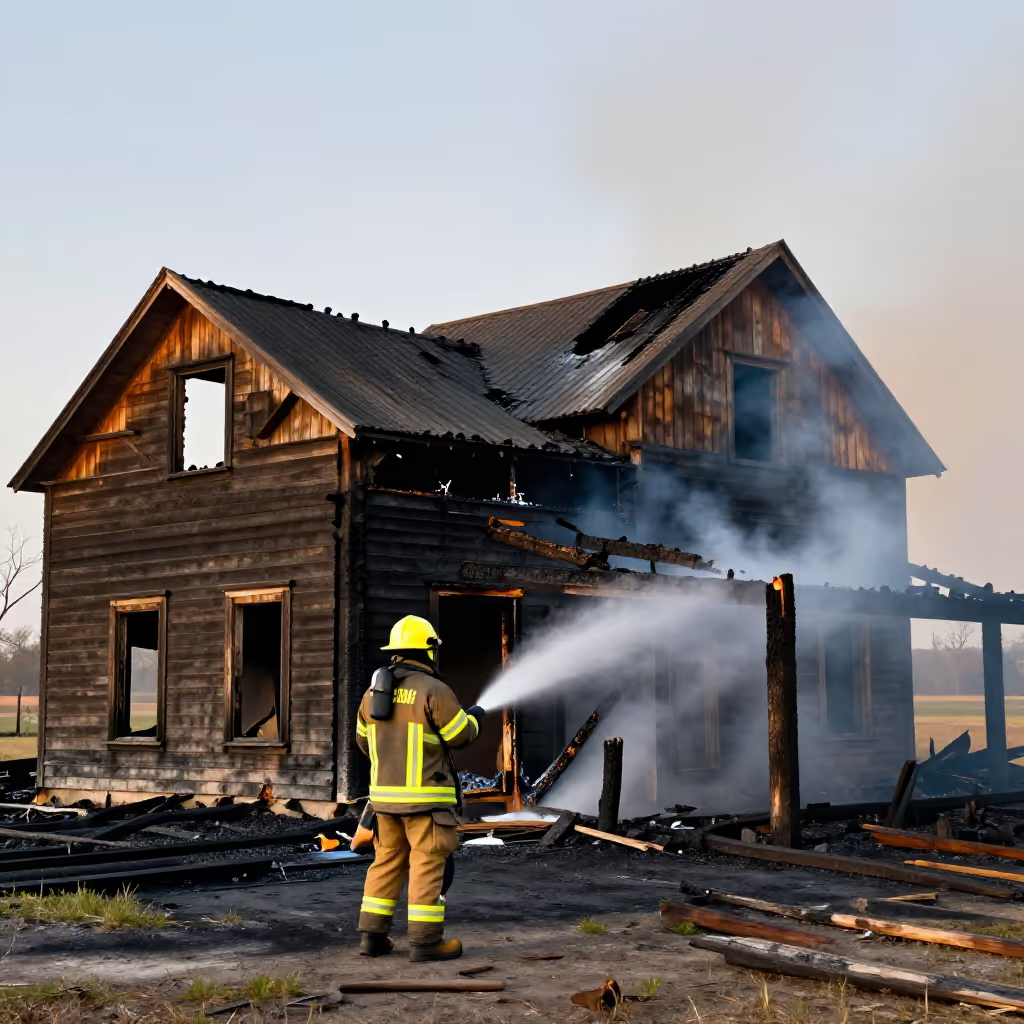
niederbrennen
to burn down
To be completely destroyed by fire; to burn down to the foundations.
EXAMPLE
Die alte Scheune ist nach einem Blitzeinschlag komplett niedergebrannt.
The old barn burned down completely after being struck by lightning.
to burn down
Loading your saved state.
to burn down
To be completely destroyed by fire; to burn down to the foundations.
Die alte Scheune ist nach einem Blitzeinschlag komplett niedergebrannt.
The old barn burned down completely after being struck by lightning.
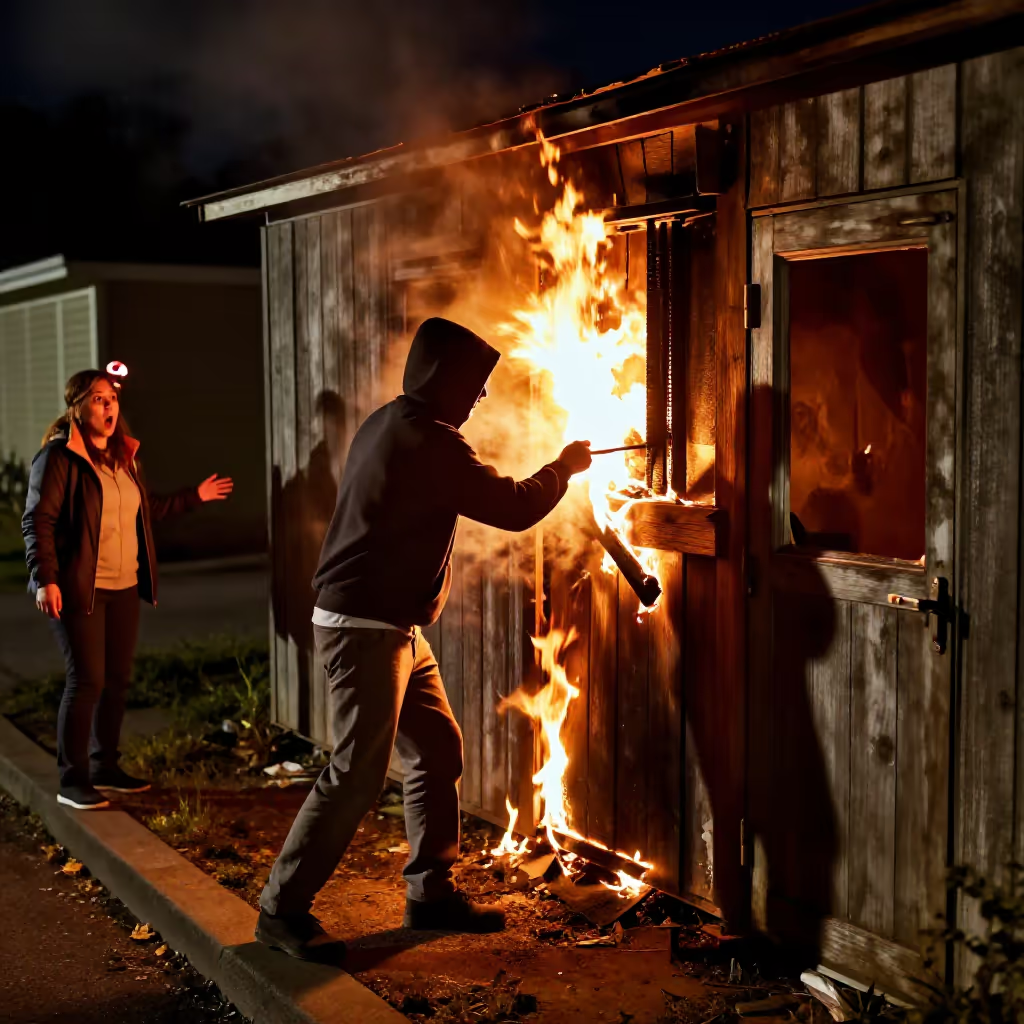
to burn something down
To deliberately set something on fire with the aim of destroying it completely.
Die feindlichen Truppen brannten bei ihrem Rückzug das ganze Dorf nieder.
As they retreated, the enemy troops burned the whole village down.
'Niederbrennen' (to burn down) is a separable verb. The prefix 'nieder-' comes at the end in a main clause. In subordinate clauses and in the infinitive with 'zu', the verb stays together.
Das alte Lagerhaus brannte vollständig nieder.
The old warehouse burned down completely.
The verb is made up of the prefix 'nieder-' (which means 'downward') and 'brennen' (to burn). The meaning 'to burn down to the ground' is therefore quite literal.
Innerhalb einer Stunde brannte die Holzhütte nieder.
Within an hour, the wooden hut burned down.
The correct auxiliary verb depends on the meaning. When something burns down by itself (a change of state), you use 'sein'. When someone deliberately sets something on fire (an action), you use 'haben'.
Das unbewohnte Haus ist letzte Nacht niedergebrannt.
The unoccupied house burned down last night.
The verb is often used with adverbs like 'vollständig' (completely), 'komplett' (completely), or the phrase 'bis auf die Grundmauern' (down to the foundations) to emphasize total destruction.
Das Museum brannte bei dem Feuer bis auf die Grundmauern nieder.
The museum burned down to its foundations in the fire.
to burn down / set off
Abbrennen and niederbrennen can both refer to the complete destruction of a building by fire. Abbrennen often describes the result neutrally, while niederbrennen places greater emphasis on complete and often deliberate destruction. Therefore, abbrennen is suitable for a neutral report, while niederbrennen is more appropriate when the destructive action is emphasized.
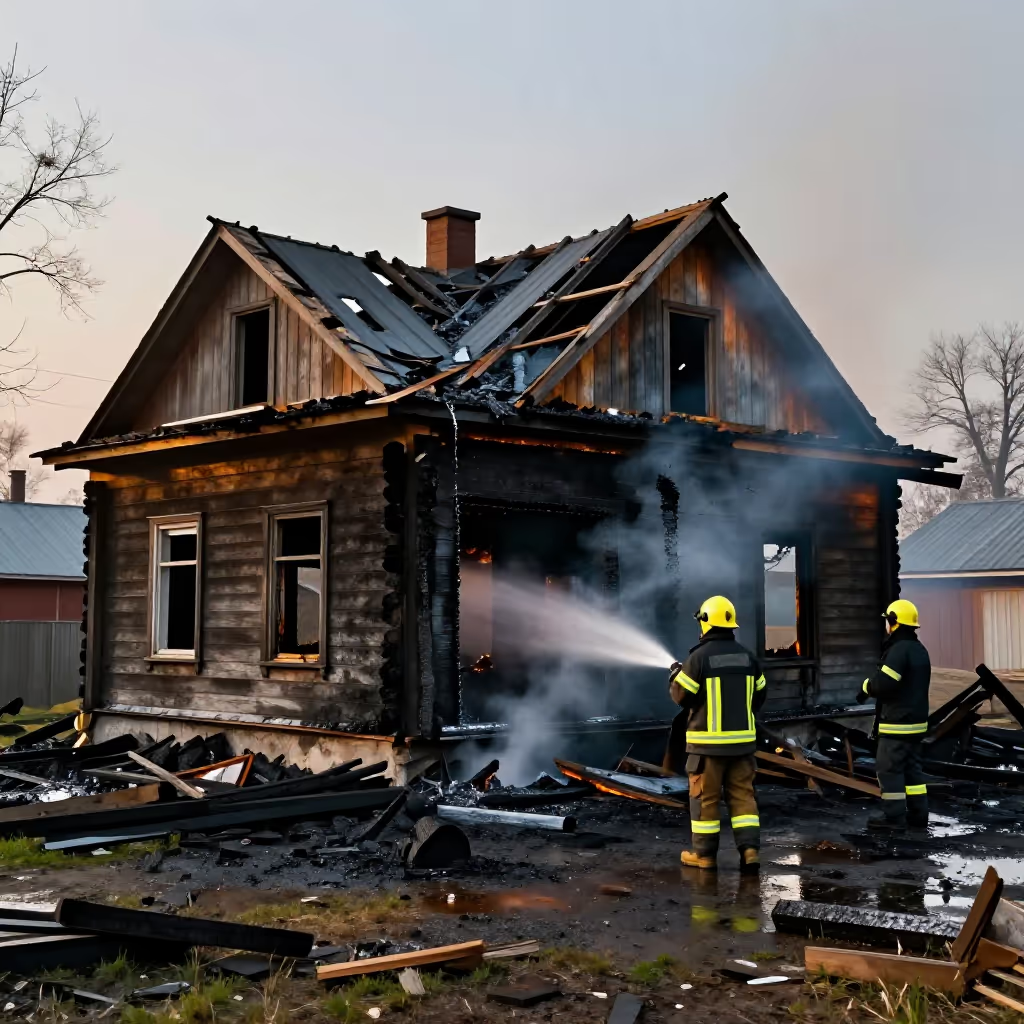
Die Angreifer brannten das alte Lagerhaus in der Nacht vollständig nieder.
The attackers burned the old warehouse to the ground during the night.
Das alte Lagerhaus brannte in der Nacht vollständig ab.
The old warehouse burned down completely during the night.