

niedersächsisch
Lower Saxon
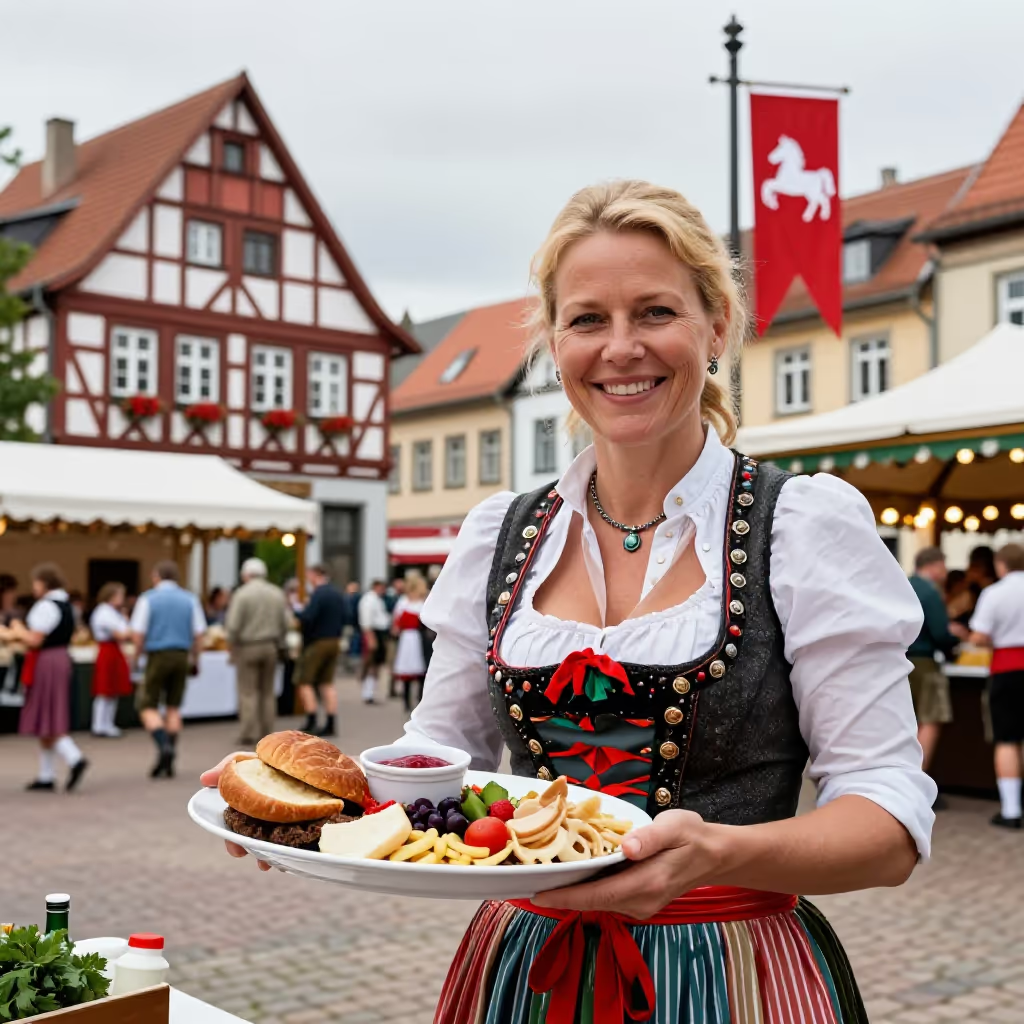
Relating to the German federal state of Lower Saxony, its culture, or its inhabitants.
Die Meyer-Werft ist ein bekanntes niedersächsisches Unternehmen.
The Meyer Werft shipyard is a well-known Lower Saxon company.
Lower Saxon
Loading your saved state.
Lower Saxon
Relating to the German federal state of Lower Saxony, its culture, or its inhabitants.
Die Meyer-Werft ist ein bekanntes niedersächsisches Unternehmen.
The Meyer Werft shipyard is a well-known Lower Saxon company.

The adjective is derived from the name of the federal state 'Niedersachsen' (Lower Saxony) with the ending '-isch'. This ending is often used to form adjectives from geographical names.
Er interessiert sich für die niedersächsische Geschichte.
He is interested in Lower Saxon history.
Adjectives derived from geographical names and ending in '-isch' are written in lowercase in German. So it is 'der niedersächsische Ministerpräsident' (the Lower Saxon minister-president).
Wir haben eine niedersächsische Spezialität probiert.
We tried a Lower Saxon specialty.
Like most adjectives, 'niedersächsisch' (Lower Saxon) can stand before a noun (attributive) or be used with verbs like 'sein' (to be) (predicative). If it stands before a noun, it must be declined.
Dieses Rezept ist typisch niedersächsisch.
This recipe is typically Lower Saxon.
When 'niedersächsisch' (Lower Saxon) is used together with words like 'Dialekt' (dialect), 'Akzent' (accent), or 'Aussprache' (pronunciation), it refers to the language and not to the federal state in general.
Man erkennt an seinem leichten Akzent die niedersächsische Herkunft.
You can recognize his Lower Saxon origins from his slight accent.
Saxon
'sächsisch' and 'niedersächsisch' sound similar, but they usually refer to different regions. Today, 'sächsisch' mainly means the federal state of Saxony, its people, culture, or dialect. It can also refer historically to the old Saxons. 'Niedersächsisch' refers to Lower Saxony or to the dialect or accent there. The risk of confusion comes from the fact that both words contain 'sächsisch'. In everyday language, the important point is: Saxony and Lower Saxony are two different federal states. For Dresden or Leipzig, you say 'sächsisch'; for Hanover or Lower Saxony, you say 'niedersächsisch'.

In Hannover hört man manchmal einen niedersächsischen Akzent.
In Hanover, you sometimes hear a Lower Saxon accent.
Beim Einkaufen hat er sofort den sächsischen Dialekt der Verkäuferin erkannt.
While shopping, he immediately recognized the saleswoman's Saxon dialect.