


der Norden
north
One of the four main compass directions, opposite south. On a map, north is usually at the top.
EXAMPLE
Der Wind kommt heute aus Norden.
The wind is coming from the north today.
north
Loading your saved state.
north
One of the four main compass directions, opposite south. On a map, north is usually at the top.
Der Wind kommt heute aus Norden.
The wind is coming from the north today.
north
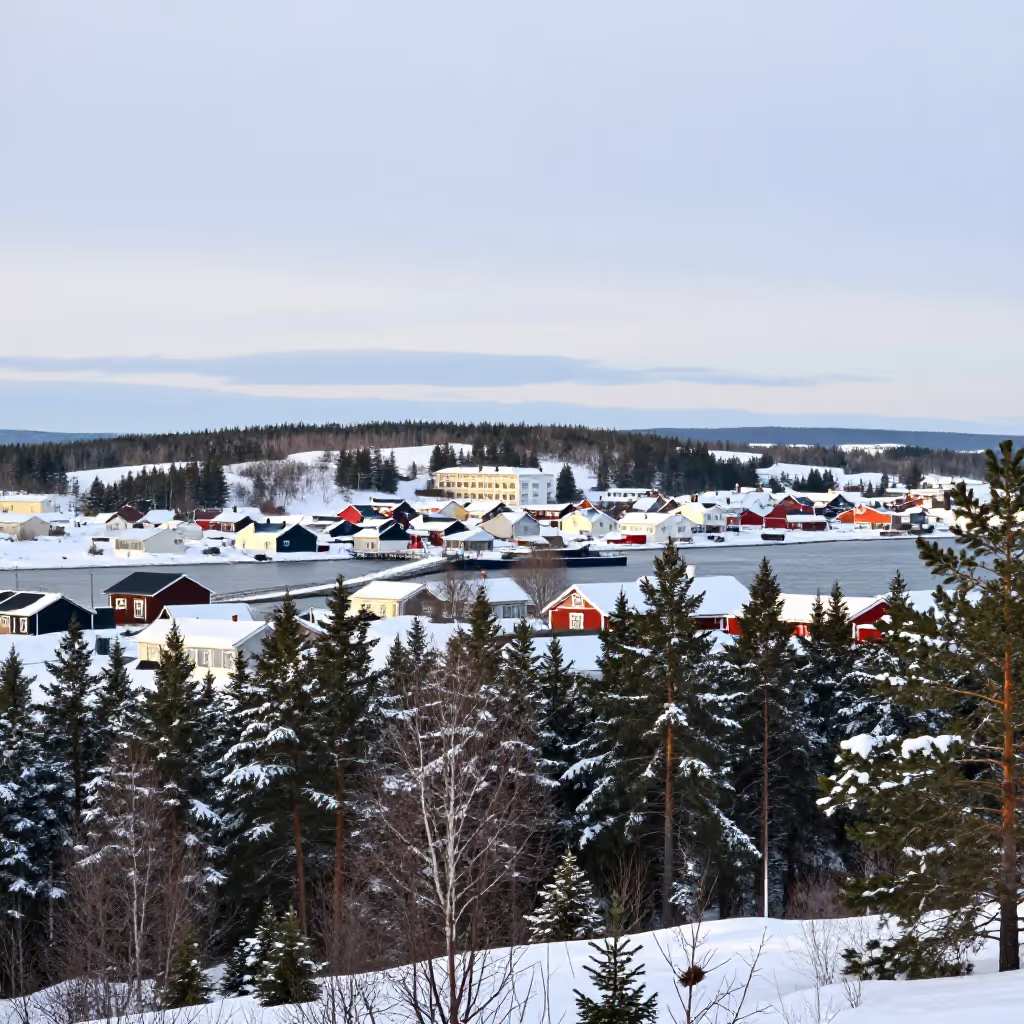
The northern part of a geographical area, such as a country, region, or the world.
Wir verbringen unseren Urlaub im Norden von Italien.
We are spending our vacation in the north of Italy.
The prepositions change depending on usage: 'im Norden' (in the north; position), 'nach Norden' (northward/to the north; direction), 'in den Norden' (to the north; travel to the region), and 'aus dem Norden' (from the north; origin).
Hamburg liegt im Norden von Deutschland.
Hamburg is located in the north of Germany.
'Norden' is the basis for the adjective 'nördlich' (northern) and the adverbial phrase 'nördlich von' (north of). These words help describe a position more precisely.
Die nördlichste Stadt Deutschlands ist Flensburg.
The northernmost city in Germany is Flensburg.
In combination with the prepositions 'nach' (to; direction) and 'aus' (from; origin), 'Norden' is often used without an article when referring to the compass direction.
Die Vögel fliegen im Frühling wieder nach Norden.
The birds fly north again in spring.
north
Both words can refer to the northern direction or a northern part. In present-day standard German, Norden is usually the usual standalone noun for this. Nord occurs only in certain technical or regional uses and sounds marked in those contexts.
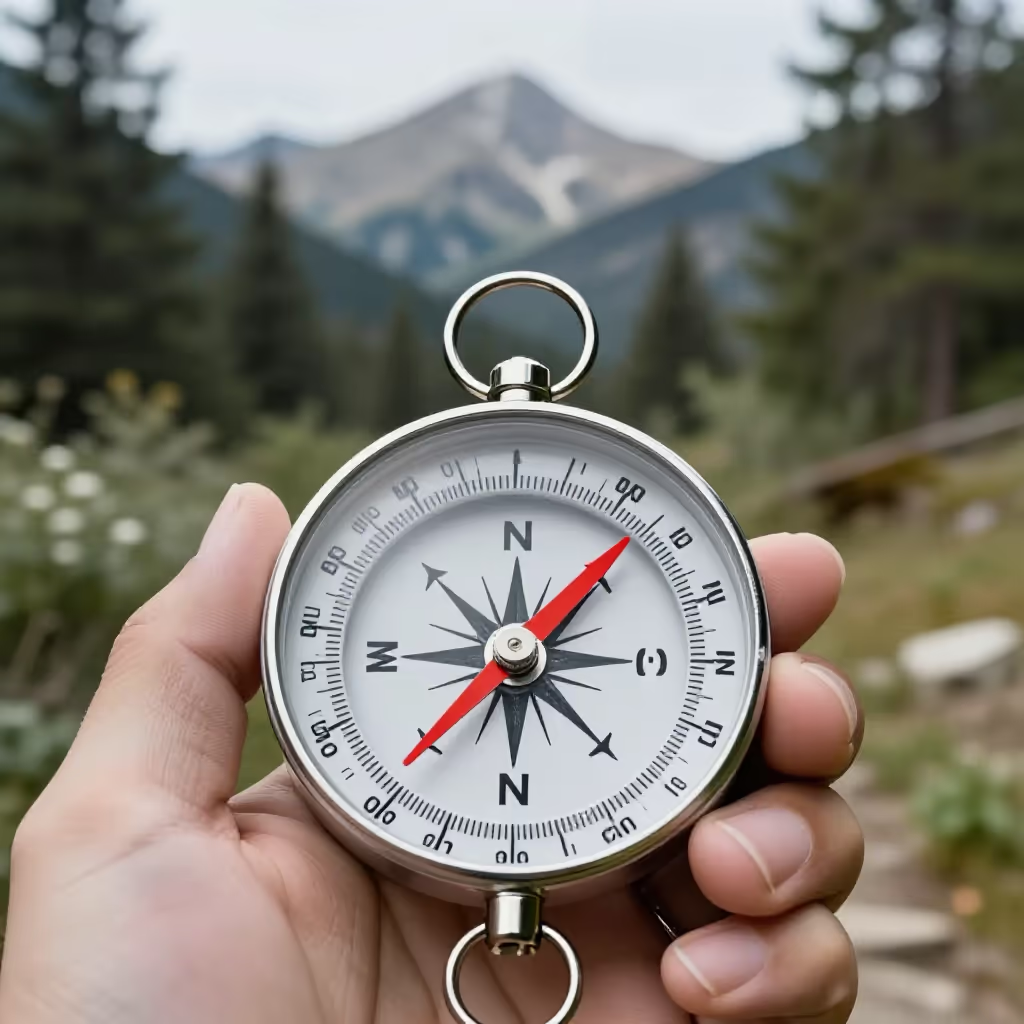
Auf der Karte liegt der Norden oben.
North is at the top of the map.
Im regionalen Wetterbericht wird der Nord als Bezeichnung für den nördlichen Stadtteil verwendet.
In the regional weather report, “Nord” is used to refer to the northern district.