

nordwärts
northward
Describes movement or direction toward the north.
EXAMPLE
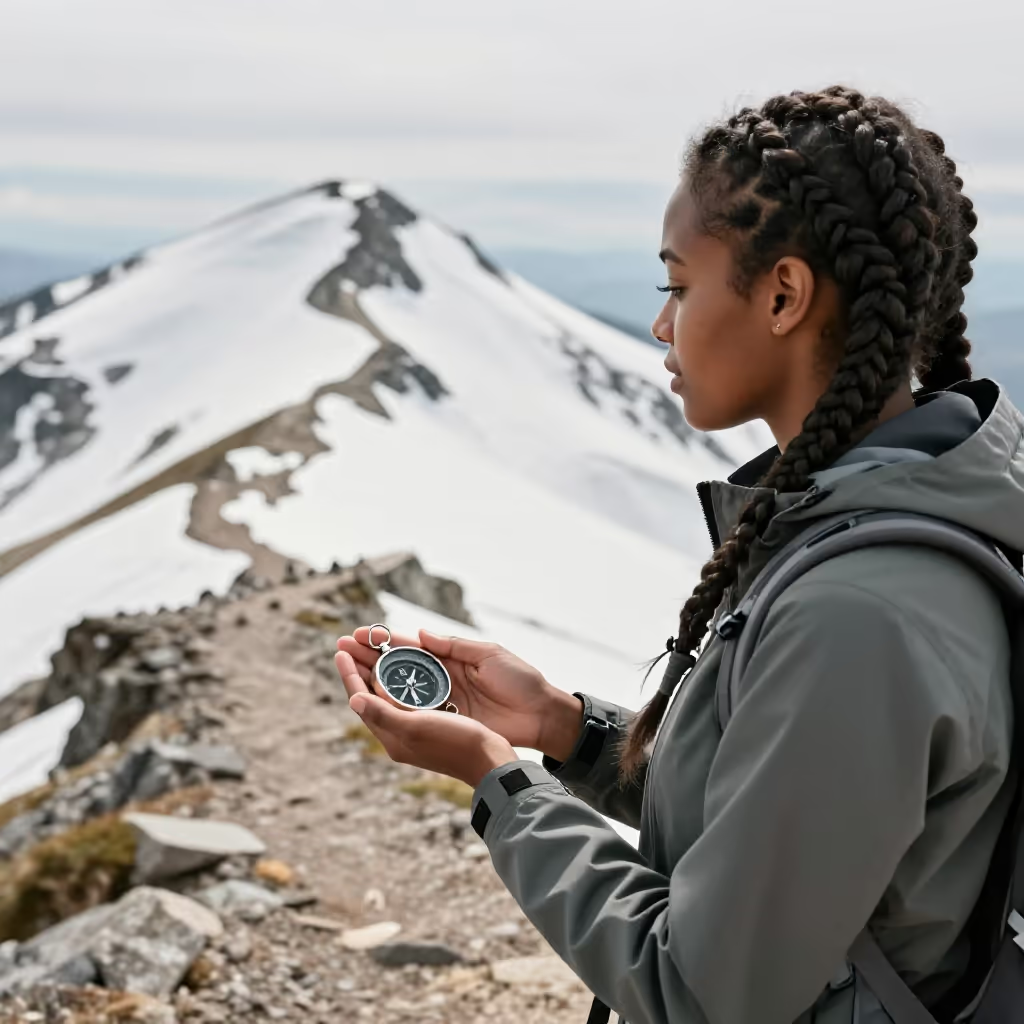
Die Wandergruppe zog von der Hütte aus weiter nordwärts.
The hiking group moved on northward from the hut.
northward
Loading your saved state.
northward
Describes movement or direction toward the north.
Die Wandergruppe zog von der Hütte aus weiter nordwärts.
The hiking group moved on northward from the hut.
The ending '-wärts' is very useful and always means 'in the direction of'. You can combine it with all compass directions: nordwärts (northward), südwärts (southward), ostwärts (eastward), and westwärts (westward).
Die Vögel fliegen im Herbst südwärts in wärmere Gebiete.
In autumn, the birds fly southward to warmer regions.
As an adverb of direction, 'nordwärts' (northward) answers the question 'Wohin?' (Where to?). It typically comes after the conjugated verb and describes the direction of a movement.
Nach der Pause fuhren wir mit dem Auto weiter nordwärts.
After the break, we continued driving northward by car.
'Nordwärts' (northward) is almost always used with verbs of movement. Typical verbs are 'gehen' (to go), 'fahren' (to drive/travel), 'ziehen' (to move on), 'blicken' (to look), or 'reisen' (to travel).
Vom Berggipfel blickten wir nordwärts über das weite Tal.
From the mountain peak, we looked northward over the wide valley.
northern
Both words can express a connection to the north. Nördlich mainly describes a location or, more generally, a northern direction, while nordwärts explicitly refers to movement toward the north. For a location, use nördlich; for movement in that direction, nordwärts is usually the better choice.
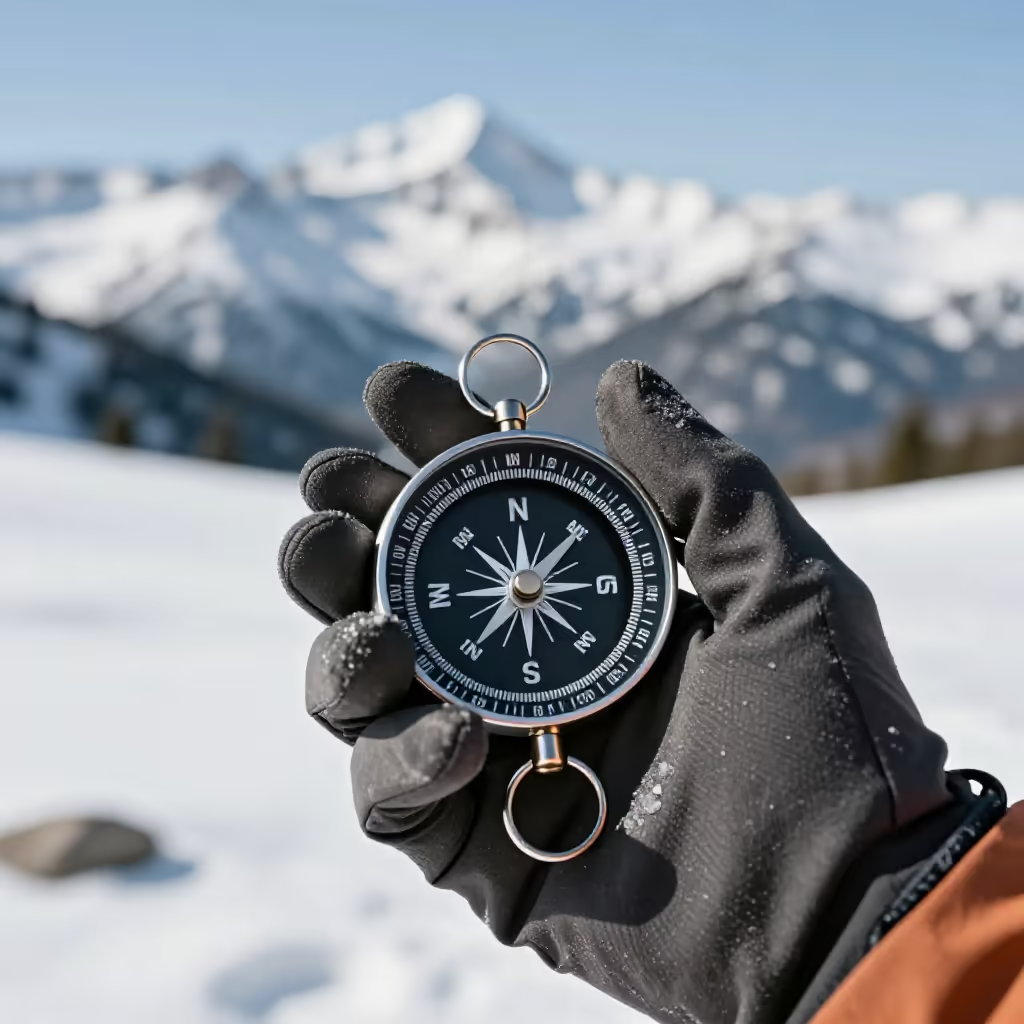
Die Wandergruppe ging am Morgen nordwärts weiter.
The hiking group continued northward in the morning.
Das Dorf liegt nördlich von der Stadt.
The village lies north of the city.