

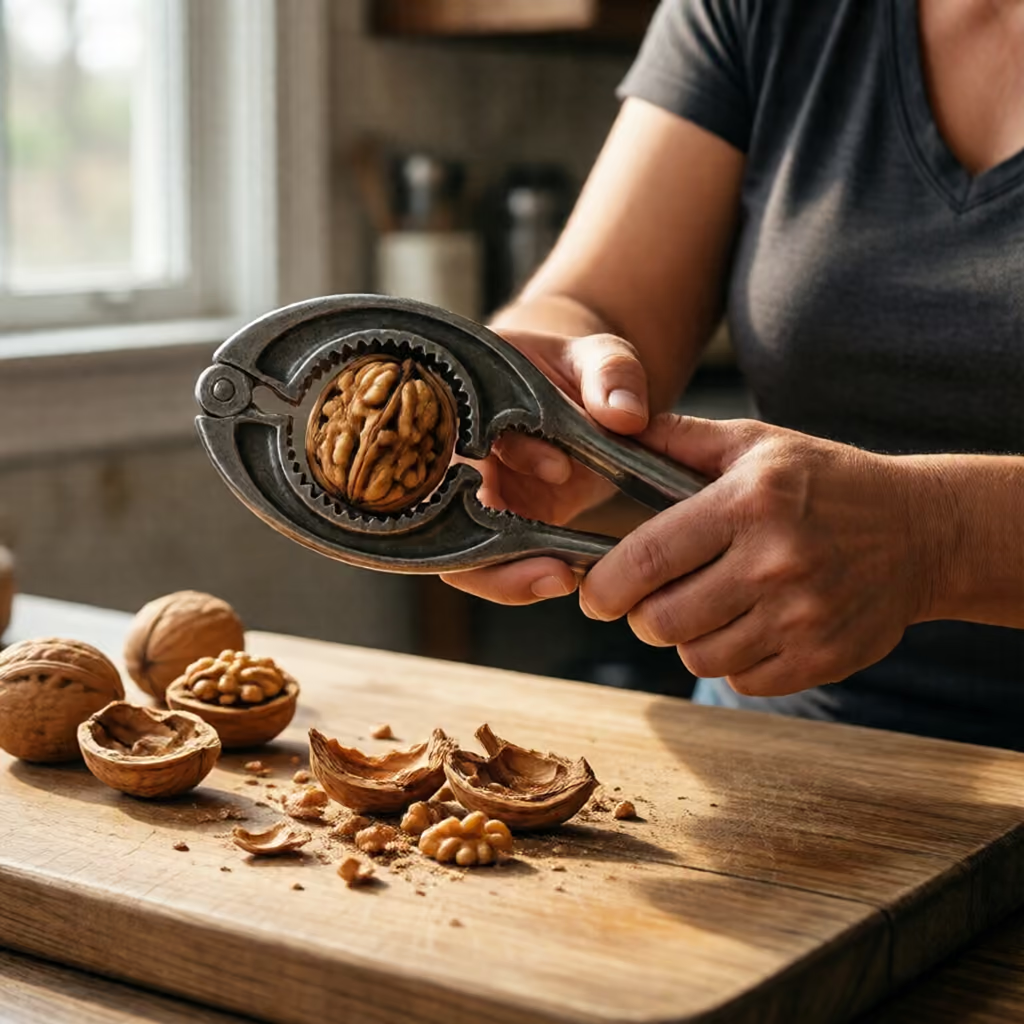
der Nussknacker
nutcracker
A tool used to crack the hard shells of nuts.
EXAMPLE
Mit dem Nussknacker bekam sie die Walnuss leicht auf.
She easily cracked the walnut with a nutcracker.
nutcracker
der Nussknacker, die Nussknacker
Loading your saved state.
nutcracker
A tool used to crack the hard shells of nuts.
Mit dem Nussknacker bekam sie die Walnuss leicht auf.
She easily cracked the walnut with a nutcracker.
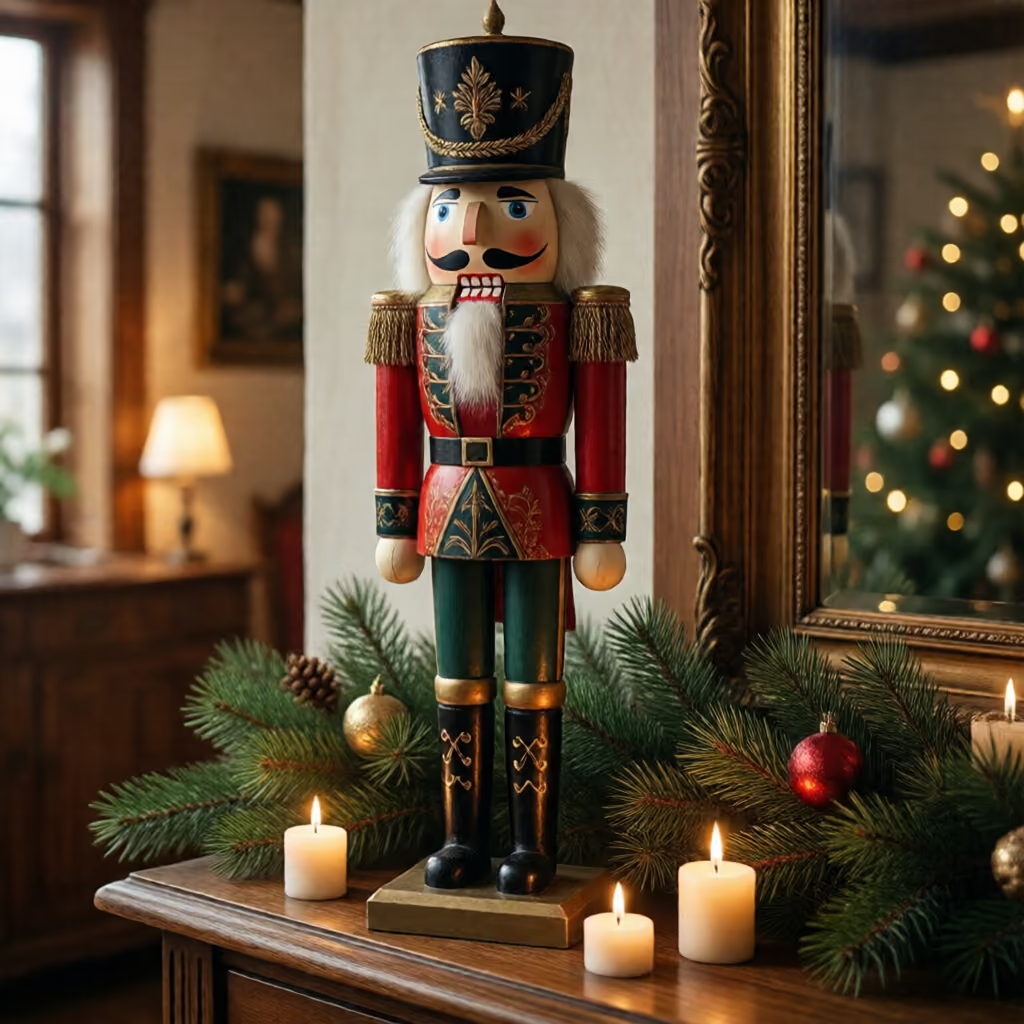
nutcracker
A decorative wooden figure in the shape of a soldier or another person, typically displayed during the Christmas season.
Auf dem Kaminsims stand ein großer Nussknacker aus Holz.
A large wooden nutcracker stood on the mantelpiece.
| gender | masculine der |
|---|---|
| plural | die Nussknacker |
| genitive | des Nussknackers |
| singular | plural | |
|---|---|---|
| nominative | der Nussknacker | die Nussknacker |
| accusative | den Nussknacker | die Nussknacker |
| dative | dem Nussknacker | den Nussknackern |
| genitive | des Nussknackers | der Nussknacker |
The article changes with the case; it is shown in colour.
'Nussknacker' is made up of 'Nuss' (nut) and 'Knacker' (cracker). The element 'Knacker' belongs to the word family of 'knacken' (to crack), which makes it easy to remember the object's original function.
Mit diesem Nussknacker lassen sich auch sehr harte Nüsse knacken.
This nutcracker can crack even very hard nuts.
When you mention the tool used to open a nut, the pattern 'mit einem Nussknacker' (with a nutcracker) is typical. 'Mit' is followed by the dative.
Er öffnete die Walnüsse mit einem Nussknacker.
He opened the walnuts with a nutcracker.
For decorative figures, the phrases 'einen Nussknacker aufstellen' (to put up a nutcracker) and 'Nussknacker sammeln' (to collect nutcrackers) are common. With 'aufstellen' (to put up), you can also indicate where the figure is placed as a decoration.
Anfang Dezember stellen wir unseren Nussknacker neben dem Weihnachtsbaum auf.
At the beginning of December, we put up our nutcracker next to the Christmas tree.