

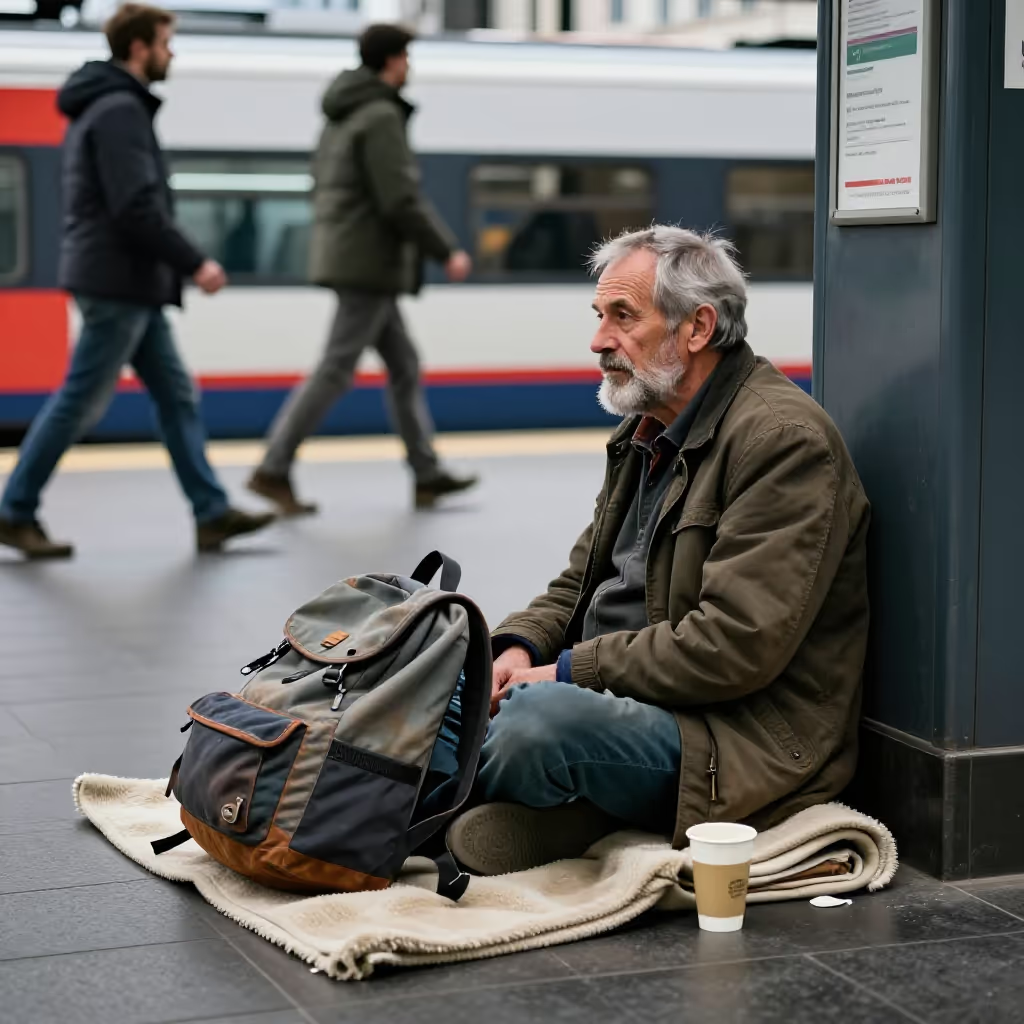
Describing the state of not having a permanent home or shelter and living on the street or in emergency accommodation.
example
Nachdem er seinen Job und seine Wohnung verloren hatte, wurde er obdachlos.
After he lost his job and his apartment, he became homeless.
Usage tips
Word structure
The word is made up of 'Obdach' (shelter) and the suffix '-los' (-less). 'Das Obdach' is another word for shelter or 'a roof over one's head.' The suffix '-los' means 'without.' So 'obdachlos' literally means 'without shelter.'
EXAMPLE
Viele Organisationen helfen Menschen, die ohne Obdach sind.
Many organizations help people who are without shelter.
Using it as a noun
The adjective 'obdachlos' is very often used as a noun to refer to a person. You then say 'der Obdachlose' (male homeless person) or 'die Obdachlose' (female homeless person).
EXAMPLE
Ein Obdachloser hat mir den Weg zum Bahnhof gezeigt.
A homeless man showed me the way to the train station.
Typical combination
A very common combination is 'obdachlos werden' (to become homeless). This describes the process in which a person loses their home and cannot find new accommodation.
EXAMPLE
Durch die hohe Miete sind viele Menschen in Gefahr, obdachlos zu werden.
Because of the high rent, many people are at risk of becoming homeless.
Compare with
confusable
obdachlos vs fahrend
moving / traveling
'fahrend' and 'obdachlos' can both seem connected to people without a normal fixed place to live. But they do not mean the same thing. 'fahrend' describes a way of life in which people or groups move from place to place, often because of work or tradition. 'Obdachlos' describes a situation of hardship: a person has no permanent home or shelter and lives, for example, on the street or in emergency accommodation. The words can be confused because neither simply means 'living at a fixed address'. The important point is: 'fahrend' says something about movement and way of life, while 'obdachlos' says something about lacking shelter and being in social hardship.
obdachlos
Nach dem Brand war die Familie vorübergehend obdachlos und kam bei Freunden unter.
After the fire, the family was temporarily homeless and stayed with friends.
fahrend
Früher zogen fahrende Händler von Dorf zu Dorf und verkauften ihre Waren.
In the past, traveling merchants went from village to village selling their goods.