

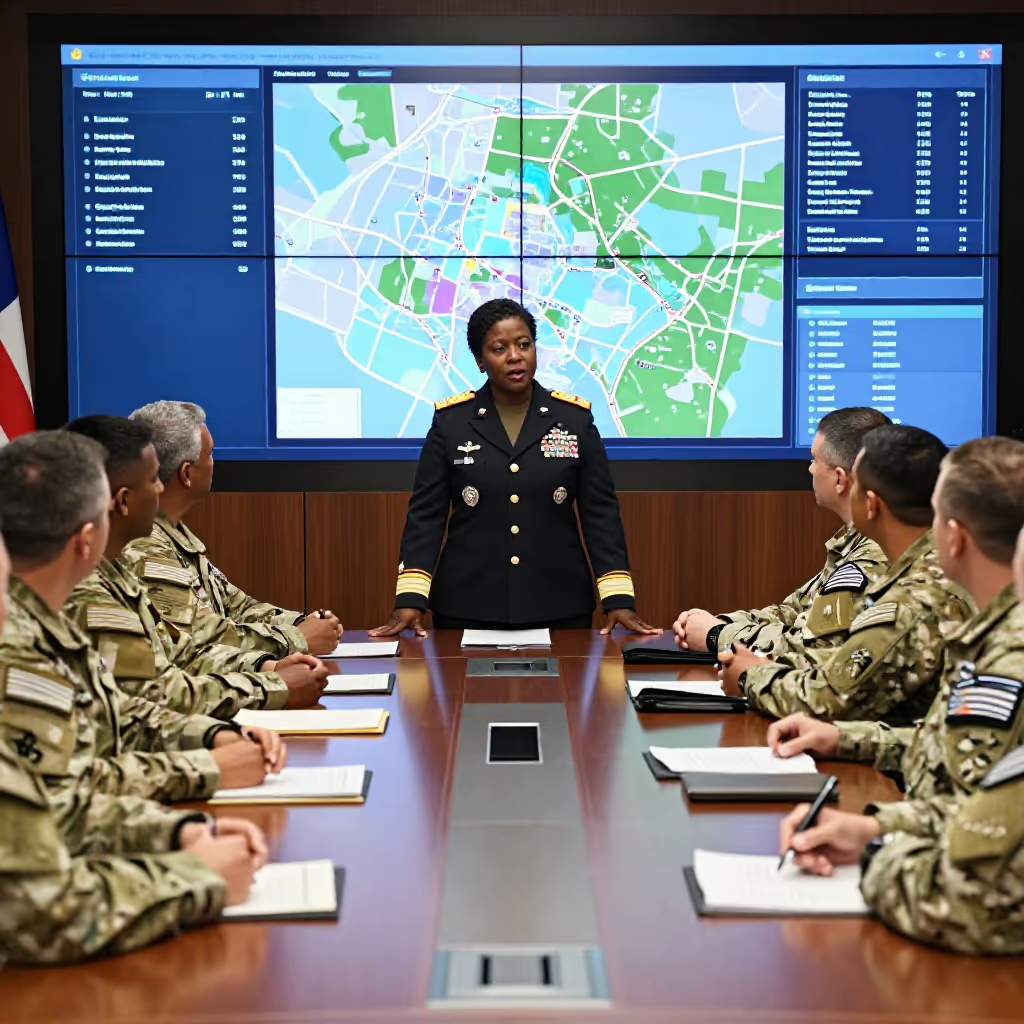
The person who holds the highest military rank and commands a country's entire armed forces. This person has ultimate authority over all branches of the armed forces.
example
Der Präsident ist in vielen Ländern zugleich der Oberbefehlshaber der Armee.
In many countries, the president is also the commander-in-chief of the army.
Usage tips
Word composition
The word is composed of four parts: 'Ober-' (highest), 'Befehl' (command), the linking -s, and 'Haber' (someone who has something). An 'Oberbefehlshaber' (commander-in-chief) is therefore literally someone who has the highest command.
EXAMPLE
Nur der Oberbefehlshaber kann einen solchen Einsatz anordnen.
Only the commander-in-chief can order such a deployment.
Sentence structure with genitive
The title 'Oberbefehlshaber' (commander-in-chief) is usually used with a genitive to specify what the person has command over. This structure is very typical in official contexts.
EXAMPLE
Er wurde zum Oberbefehlshaber der alliierten Streitkräfte ernannt.
He was appointed commander-in-chief of the Allied forces.
Register and context
This word belongs to formal language and is used almost exclusively in a military or political context. It is not used in everyday conversation.
EXAMPLE
Die Verfassung regelt, wer der Oberbefehlshaber des Militärs ist.
The constitution regulates who is the commander-in-chief of the military.
Compare with
confusable
Oberbefehlshaber vs General
general
'der General' and 'der Oberbefehlshaber' both belong to the military field and can refer to very high-ranking people in an army. The important difference is: a general has a high military rank. A commander-in-chief has supreme command authority over an entire armed force or a large part of it. A general can be the commander-in-chief, but not every general is automatically the commander-in-chief. The words can be confused because both sound like the highest military power. If it is about rank, 'General' fits better; if it is about final decision-making and command over all troops, 'Oberbefehlshaber' is more precise.
Oberbefehlshaber
Der Oberbefehlshaber gab den Befehl, alle Truppen zurückzuziehen.
The commander-in-chief gave the order to withdraw all troops.
General
Der General sprach mit den Offizieren über den neuen Einsatzplan.
The general spoke with the officers about the new deployment plan.