


der Oberschenkel
thigh
The part of a human or animal leg located between the knee and the hip.
EXAMPLE
Nach dem Fußballtraining hatte er einen Krampf im Oberschenkel.
After soccer practice, he had a cramp in his thigh.
thigh
Loading your saved state.
thigh
The part of a human or animal leg located between the knee and the hip.
Nach dem Fußballtraining hatte er einen Krampf im Oberschenkel.
After soccer practice, he had a cramp in his thigh.
The word is made up of 'Ober-' and 'Schenkel' (thigh). The prefix 'Ober-' means 'upper part' and makes clear that it refers to the upper section of the leg.
Der Oberschenkel hat die stärksten Muskeln im menschlichen Körper.
The thigh has the strongest muscles in the human body.
The prefix 'Ober-' is often used to name the upper part of body parts. You can also find this pattern in other words, such as 'Oberarm' (upper arm).
Beim Sport hat er sich den Oberschenkel und den Oberarm gezerrt.
While doing sports, he strained his thigh and his upper arm.
Pay attention to the preposition: you say 'im Oberschenkel' (in the thigh) for pain or muscles inside, e.g. sore muscles. You say 'am Oberschenkel' (on the thigh) for something on the surface, e.g. a bruise.
Ich habe einen starken Schmerz im Oberschenkel.
I have a strong pain in my thigh.
thigh / leg / side
Oberschenkel and Schenkel can both refer to the area between the hip and the knee. Oberschenkel clearly identifies this part of the body and is the usual precise term, while Schenkel can also refer to other parts or have other meanings depending on the context. In a clear description of the human body, Oberschenkel is therefore usually more suitable.
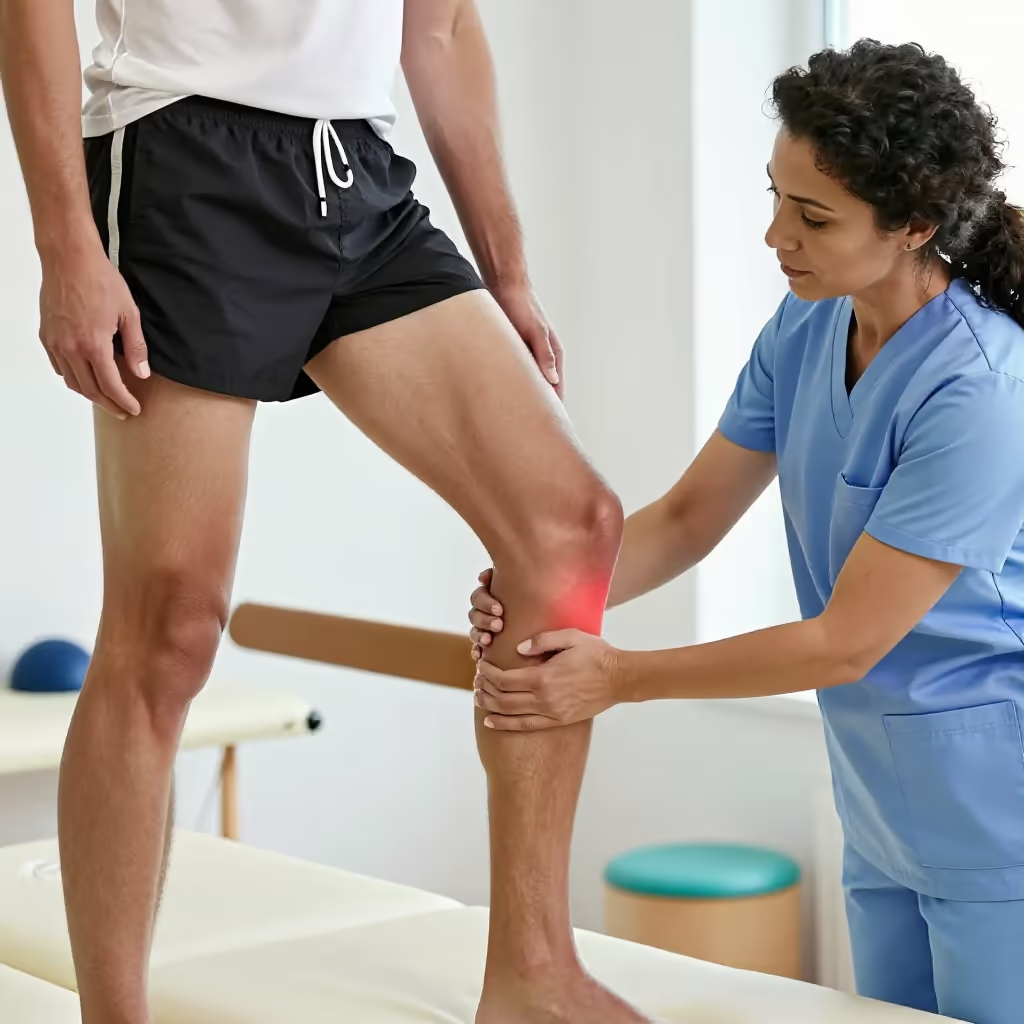
Nach dem Sturz tat ihr der linke Oberschenkel weh.
Her left thigh hurt after the fall.
Nach dem Sturz tat ihr der linke Schenkel weh.
Her left thigh hurt after the fall.