

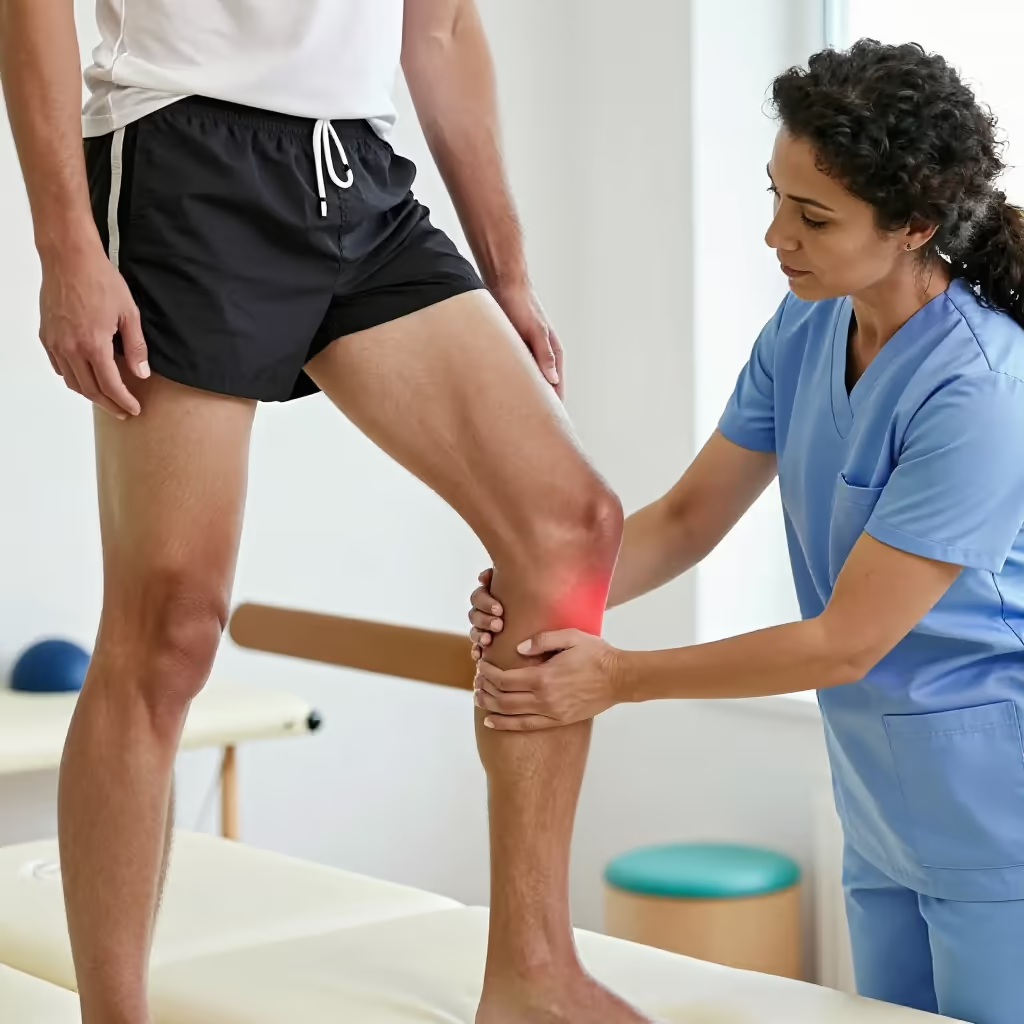
der Schenkel
thigh
The upper part of a human or animal leg, located between the hip and the knee.
EXAMPLE
Nach der langen Wanderung schmerzten ihm die Schenkel.
After the long hike, his thighs hurt.
thigh / leg / side
Loading your saved state.
thigh
The upper part of a human or animal leg, located between the hip and the knee.
Nach der langen Wanderung schmerzten ihm die Schenkel.
After the long hike, his thighs hurt.
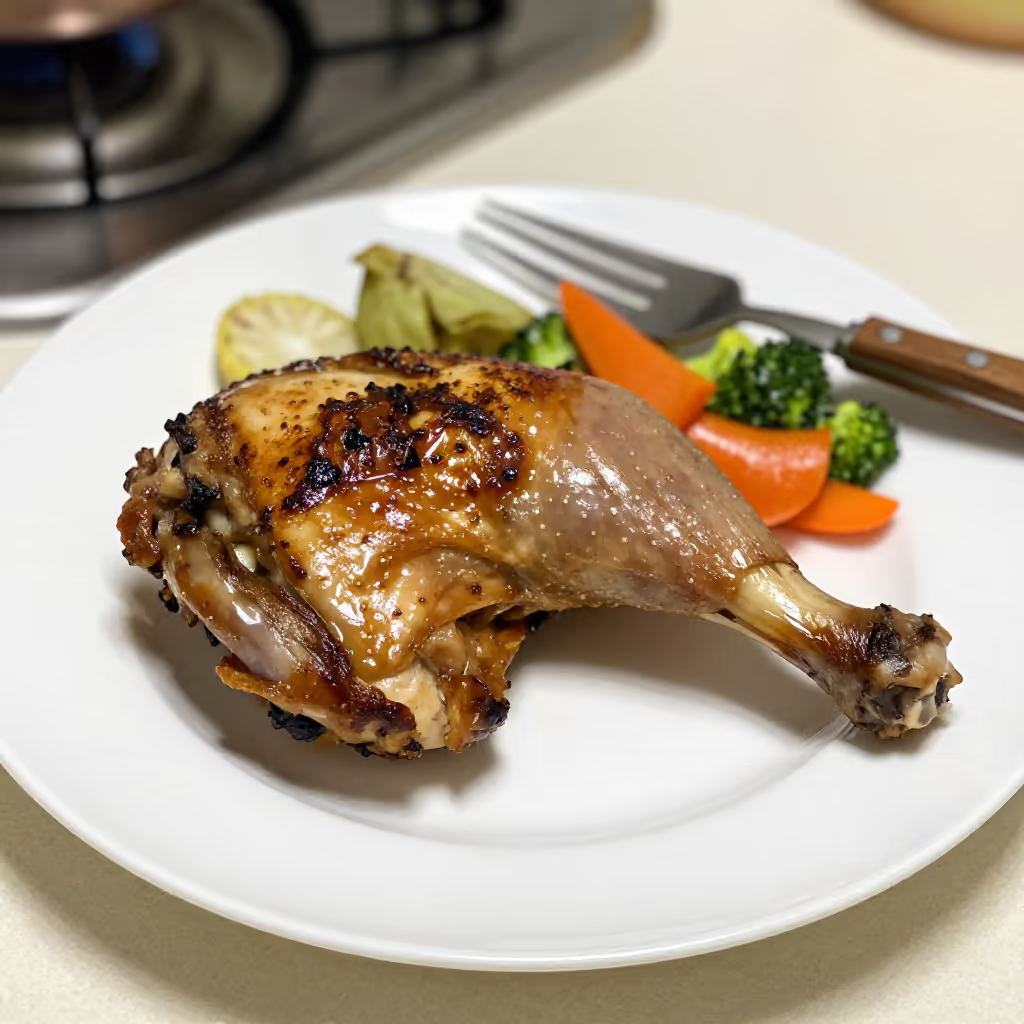
leg
A piece from the leg of a slaughtered animal, especially poultry, served as food.
Zum Mittagessen gab es gebratene Hähnchenschenkel mit Kartoffelsalat.
For lunch there were roasted chicken legs with potato salad.

side
In geometry, one of the two lines that form an angle.
Bei einem gleichschenkligen Dreieck sind zwei Schenkel gleich lang.
In an isosceles triangle, two sides are the same length.
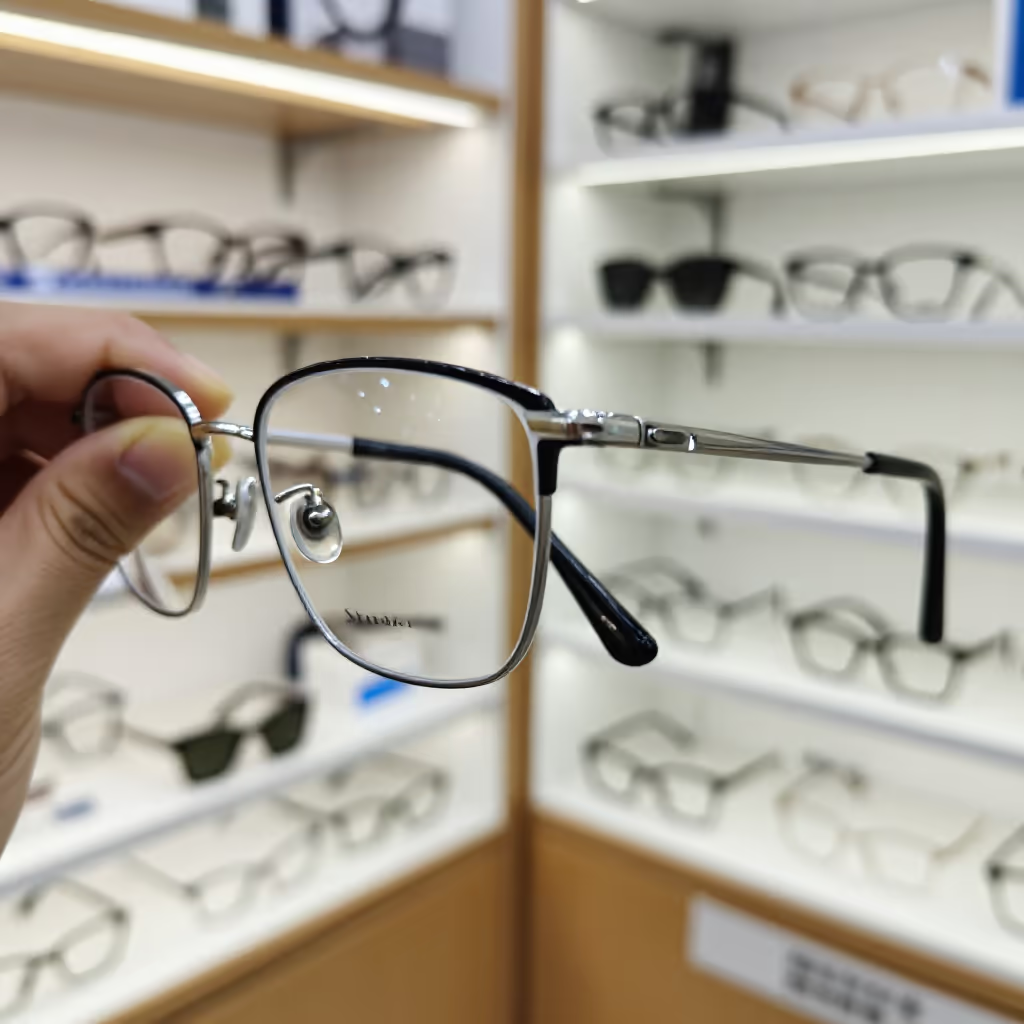
arm / side piece
A lateral, arm-like part of an object, for example on a pair of glasses or a compass.
Ein Schenkel seiner Lesebrille ist abgebrochen.
One arm of his reading glasses has broken off.
In German, a distinction is often made between 'Oberschenkel' (thigh, the part between hip and knee) and 'Unterschenkel' (lower leg, the part between knee and foot). When people just say 'Schenkel' (thigh/leg), they usually mean the thigh.
Er hat sich beim Fußball den Oberschenkel gezerrt.
He pulled his thigh muscle while playing soccer.
You can easily recognize the meaning of 'Schenkel' from the context. In connection with the body, sports, or pain, it refers to the leg. With food, it refers to meat; in mathematics, to geometry; and with objects, to their side parts.
Die beiden Schenkel des Winkels sind 5 cm lang.
The two sides of the angle are 5 cm long.
The idiom 'sich auf die Schenkel klopfen' means that someone laughs very loudly and heartily. It is a figurative expression for great amusement.
Der Witz war so gut, dass sich alle auf die Schenkel klopften.
The joke was so good that everyone slapped their thighs laughing.
In a culinary context, 'Schenkel' (leg) is almost always combined with the type of animal. Typical dishes are 'Hähnchenschenkel' (chicken leg), 'Putenschenkel' (turkey leg), or 'Lammschenkel' (leg of lamb).
Im Ofen braten schon die Putenschenkel für das Abendessen.
The turkey legs for dinner are already roasting in the oven.
thigh
Oberschenkel and Schenkel can both refer to the area between the hip and the knee. Oberschenkel clearly identifies this part of the body and is the usual precise term, while Schenkel can also refer to other parts or have other meanings depending on the context. In a clear description of the human body, Oberschenkel is therefore usually more suitable.

Nach dem Sturz tat ihr der linke Schenkel weh.
Her left thigh hurt after the fall.
Nach dem Sturz tat ihr der linke Oberschenkel weh.
Her left thigh hurt after the fall.