


oberst
topmost
The superlative of 'ober'; refers to the highest position in a ranking, hierarchy, or spatial arrangement.
EXAMPLE
Das Buch liegt auf dem obersten Regalbrett.
The book is on the topmost shelf.
topmost
Loading your saved state.
topmost
The superlative of 'ober'; refers to the highest position in a ranking, hierarchy, or spatial arrangement.
Das Buch liegt auf dem obersten Regalbrett.
The book is on the topmost shelf.
'Oberst' (topmost) is the superlative form of the adjective 'ober' (upper, which is itself already a kind of comparative) and means 'highest'. It is used to refer to the top of a spatial or hierarchical order.
Der Präsident ist der oberste Befehlshaber der Armee.
The president is the supreme commander of the army.
'Oberst' (topmost) is almost always used directly before a noun and with a definite article, because it refers to a unique, highest position. Predicative use (e.g., 'Das Brett ist oberst') is very unusual.
Die Akten findest du im obersten Fach des Schranks.
You’ll find the files in the top compartment of the cabinet.
The word is used both for spatial height and for rankings. Typical collocations are 'das oberste Stockwerk' (the top floor) in a spatial sense, as well as 'die oberste Priorität' (top priority) or 'das oberste Gebot' (the highest commandment) in a hierarchical sense.
Sicherheit hat für uns oberste Priorität.
Safety is our top priority.
lieutenant colonel
Both words can refer to a high position in a military hierarchy. However, „der Oberstleutnant“ is a specific rank below colonel, while „oberst“ as an adjective refers to the highest position. Use „Oberstleutnant“ for the specific person or rank, and „oberst“ for the rank level.
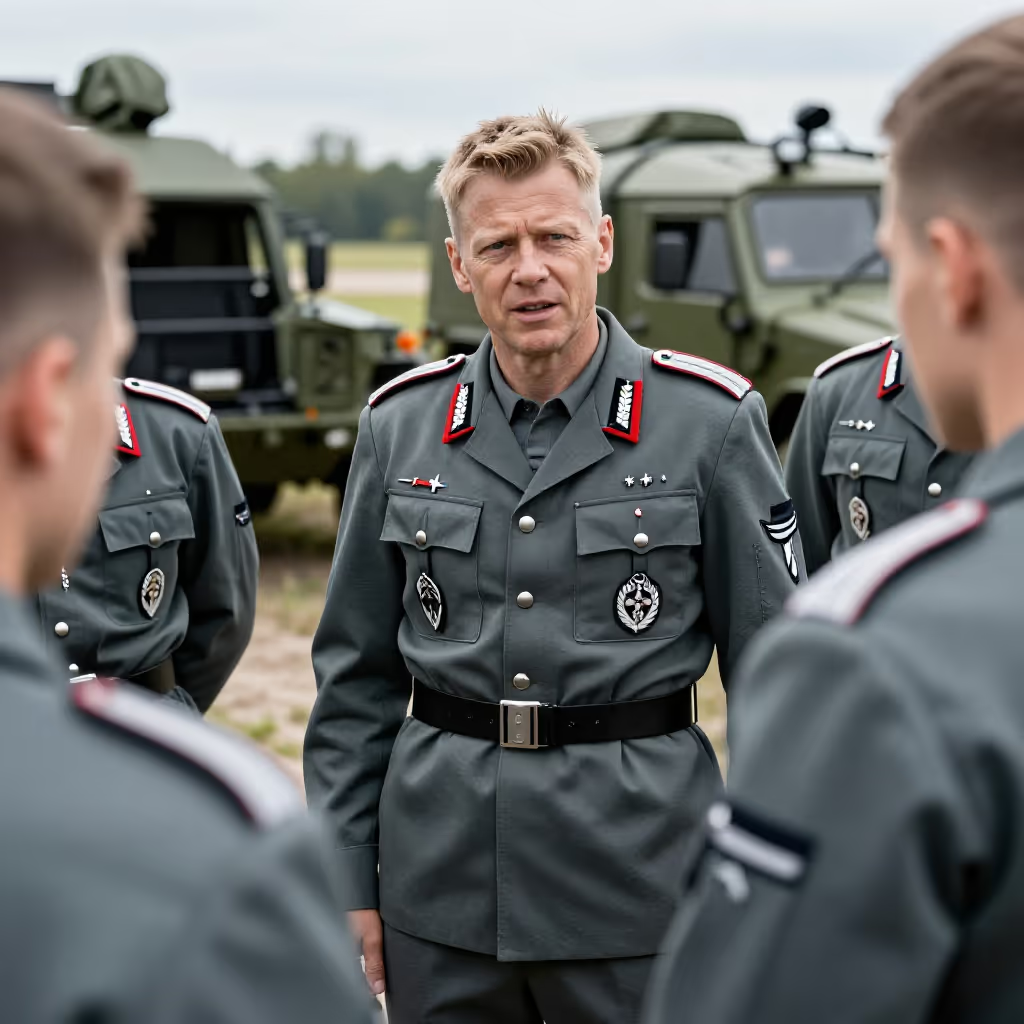
Der oberste Offizier begrüßte die neuen Soldaten.
The top-ranking officer welcomed the new soldiers.
Der Oberstleutnant begrüßte die neuen Soldaten.
The lieutenant colonel welcomed the new soldiers.