


öde
boring
Describes something as dull, boring, and monotonous.
EXAMPLE
Die Party war total öde, deshalb bin ich früh gegangen.
The party was totally boring, so I left early.
boring / desolate
Loading your saved state.
boring
Describes something as dull, boring, and monotonous.
Die Party war total öde, deshalb bin ich früh gegangen.
The party was totally boring, so I left early.
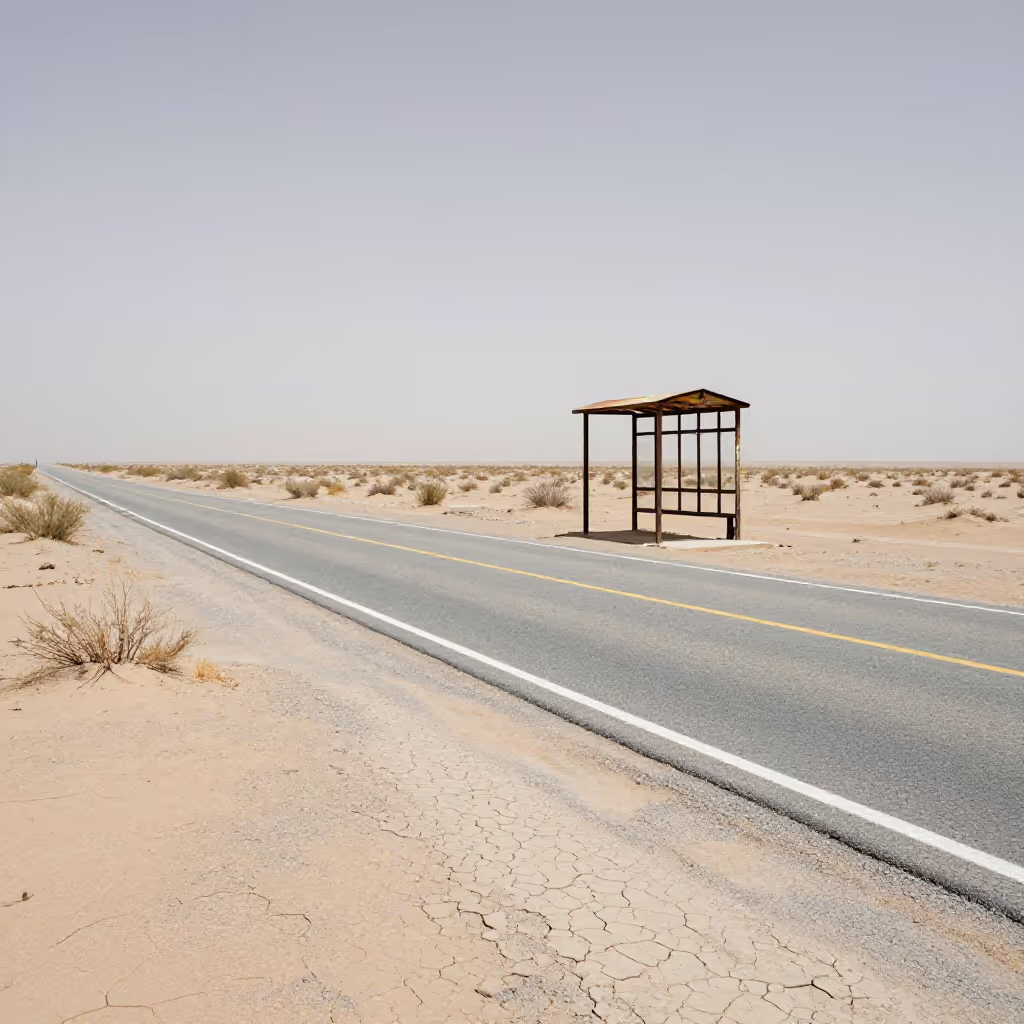
desolate
Describes a landscape or place as empty, abandoned, barren, and uninhabited.
Hinter den Bergen erstreckte sich eine öde Felslandschaft.
Behind the mountains stretched a desolate rocky landscape.
The noun reveals the meaning: if 'öde' refers to an activity, a film, or an event, it means 'boring'. If it refers to a place such as a landscape, it means 'empty and abandoned'.
Ich fand den Vortrag ziemlich öde.
I found the lecture pretty boring.
In the meaning 'boring', 'öde' belongs to colloquial language. It is an expressive word that you often hear in conversations with friends.
Der Sonntagnachmittag war total öde, weil das Wetter so schlecht war.
Sunday afternoon was totally boring because the weather was so bad.
This meaning is often used to describe landscapes. Typical combinations are 'eine öde Gegend' (a desolate area), 'eine öde Wüste' (a desolate desert), or 'eine öde Felslandschaft' (a desolate rocky landscape).
Im Winter wirkt die ganze Gegend grau und öde.
In winter, the whole area looks gray and desolate.
to leave / rely
Both words can occur in the same situation when a place is left without people. „Verlassen“ refers to the action of the people going away, while „öde“ describes the empty, barren, and lifeless impression the place makes afterward.

Nach dem Ende des Festes wirkte das Dorf leer und öde.
After the festival ended, the village seemed empty and desolate.
Nach dem Ende des Festes verließen die Bewohner das Dorf.
After the festival ended, the residents left the village.