

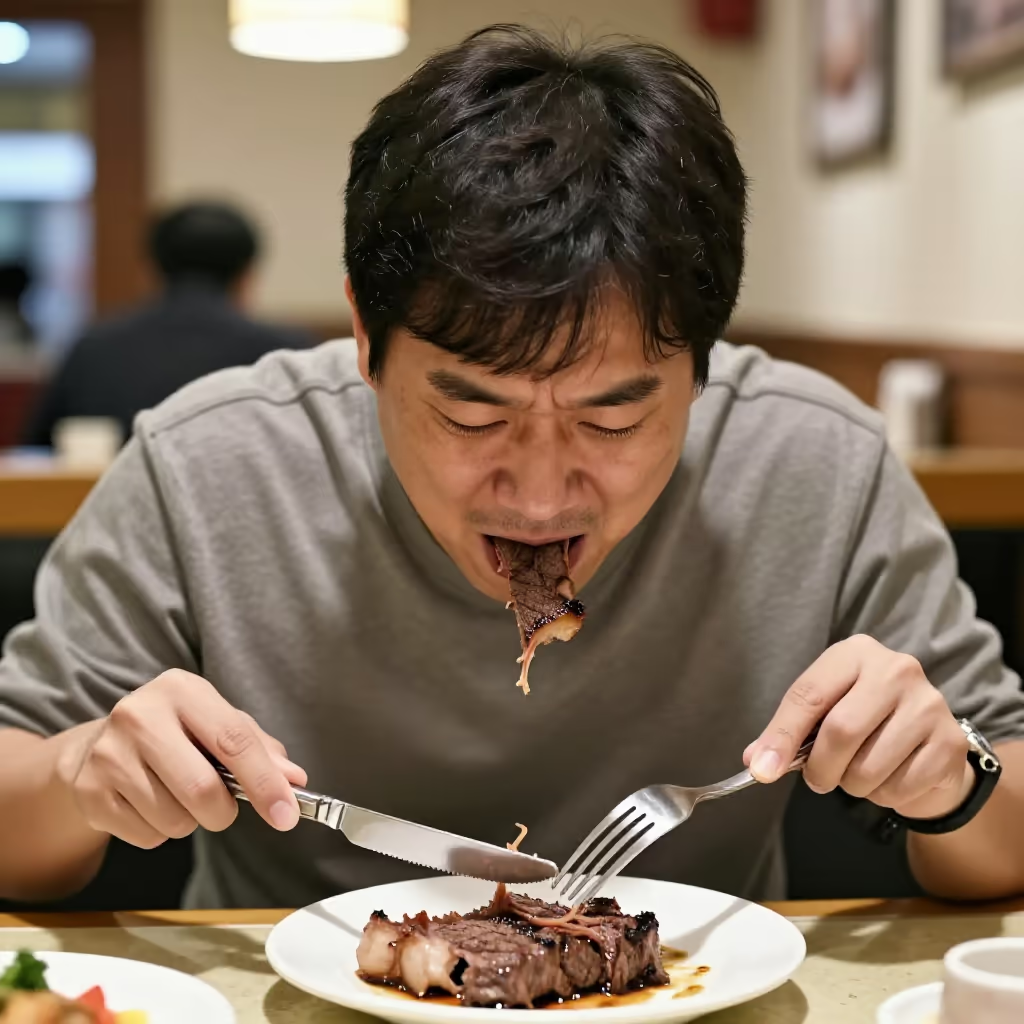
zäh
tough
Describes the texture of foods, especially meat, that are firm and hard to chew.
EXAMPLE
Das Schnitzel war leider so zäh, dass man es kaum schneiden konnte.
Unfortunately, the schnitzel was so tough that you could hardly cut it.
tough / viscous
Loading your saved state.
tough
Describes the texture of foods, especially meat, that are firm and hard to chew.
Das Schnitzel war leider so zäh, dass man es kaum schneiden konnte.
Unfortunately, the schnitzel was so tough that you could hardly cut it.

tough
Describes a process or negotiation that proceeds very slowly, laboriously, and at great length.
Nach zähen Verhandlungen einigten sich die Parteien auf einen Kompromiss.
After tough negotiations, the parties agreed on a compromise.
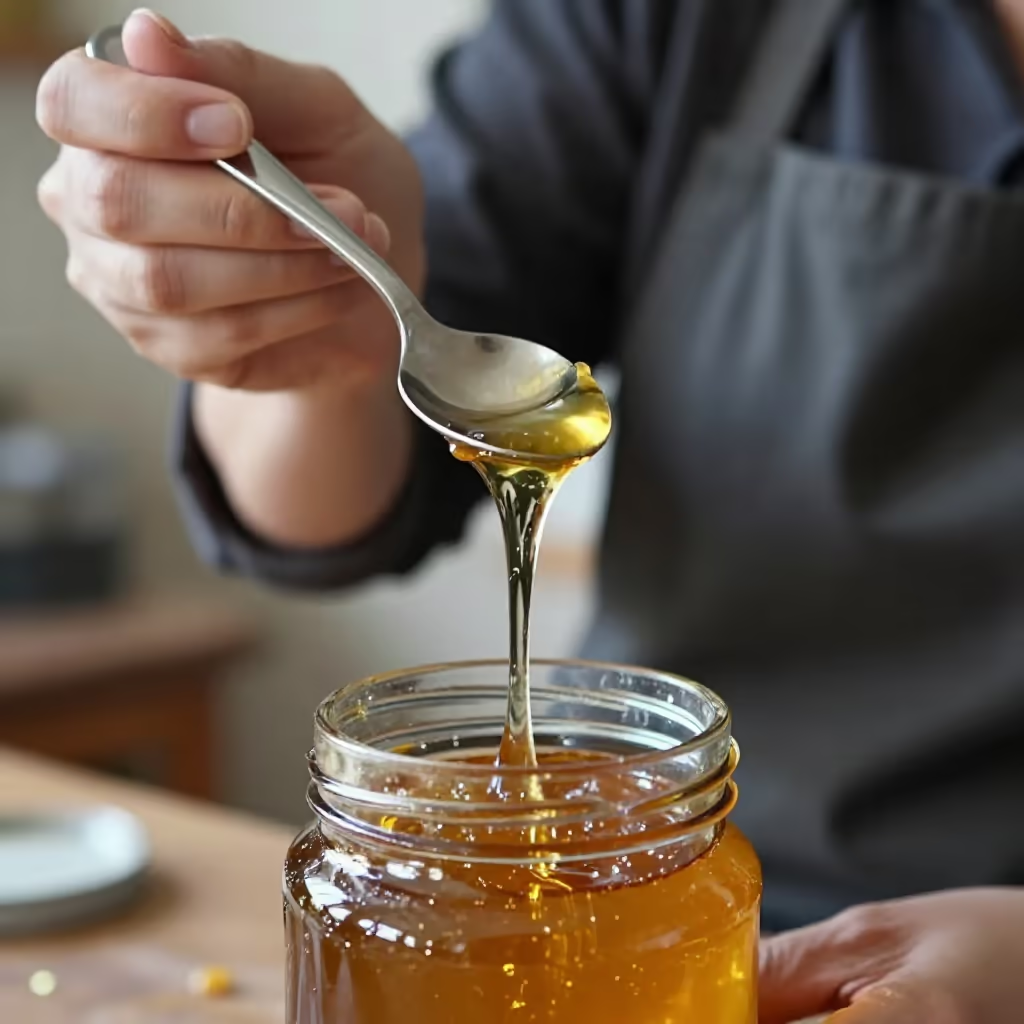
viscous
Describes a substance that is thick, sticky, and does not flow easily.
Der kalte Honig floss nur zäh aus dem Glas.
The cold honey flowed only sluggishly from the jar.

tough
Describes a person who is persevering, resilient, and persistent, and who does not give up easily.
Obwohl sie schon über achtzig ist, ist meine Großmutter noch eine richtig zähe Person.
Although she is already over eighty, my grandmother is still a really tough person.
You can recognize the meaning of 'zäh' (tough/viscous) from the noun it describes. 'Zähes Fleisch' (tough meat) is hard to chew, 'zähe Verhandlungen' (tough negotiations) are lengthy, 'zäher Honig' (viscous honey) is thick, and a 'zähe Person' (tough person) is persevering.
Nach einem zähen Kampf konnte die Mannschaft das Spiel gewinnen.
After a tough fight, the team was able to win the game.
In a culinary context, 'zäh' (tough) is almost always used negatively for meat or baked goods that are firm and hard to bite or cut.
Das Fleisch war leider trocken und zäh.
Unfortunately, the meat was dry and tough.
This figurative meaning describes processes that move forward slowly and laboriously. Typical collocations are 'zähe Verhandlungen' (tough negotiations), 'ein zäher Prozess' (a tough process), or 'ein zähes Ringen' (a tough struggle).
Die Suche nach einer Lösung war ein zäher Prozess.
The search for a solution was a tough process.
This meaning describes the physical property of thick, sticky substances. It can often be combined with the verb 'fließen' (to flow): 'etwas fließt zäh' (something flows sluggishly).
Der Teig ist sehr zäh und lässt sich nur schwer rühren.
The dough is very viscous and is hard to stir.
When 'zäh' (tough) describes a person, it is usually meant positively. It means that the person is resilient, persevering, and strong-willed.
Sie ist eine zähe Athletin und gibt niemals auf.
She is a tough athlete and never gives up.
hard
When talking about meat, both hart and zäh can describe an unpleasant texture. Hart emphasizes that it is firm and not soft; zäh highlights that the meat offers strong resistance when chewed and is difficult to chew.
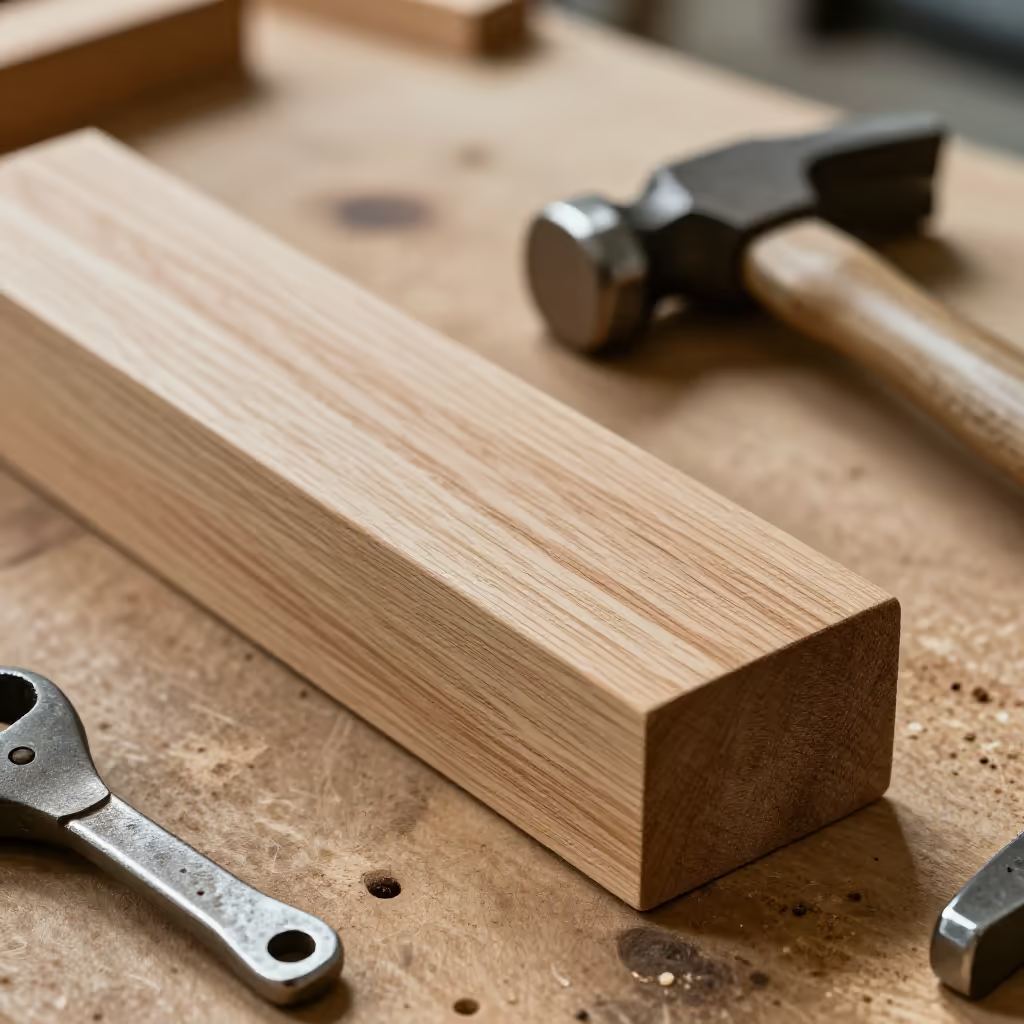
Das zu lange gebratene Steak ist zäh und lässt sich nur schwer kauen.
The steak, which was cooked for too long, is tough and difficult to chew.
Das zu lange gebratene Steak ist hart und fühlt sich sehr fest an.
The steak, which was cooked for too long, is hard and feels very firm.