

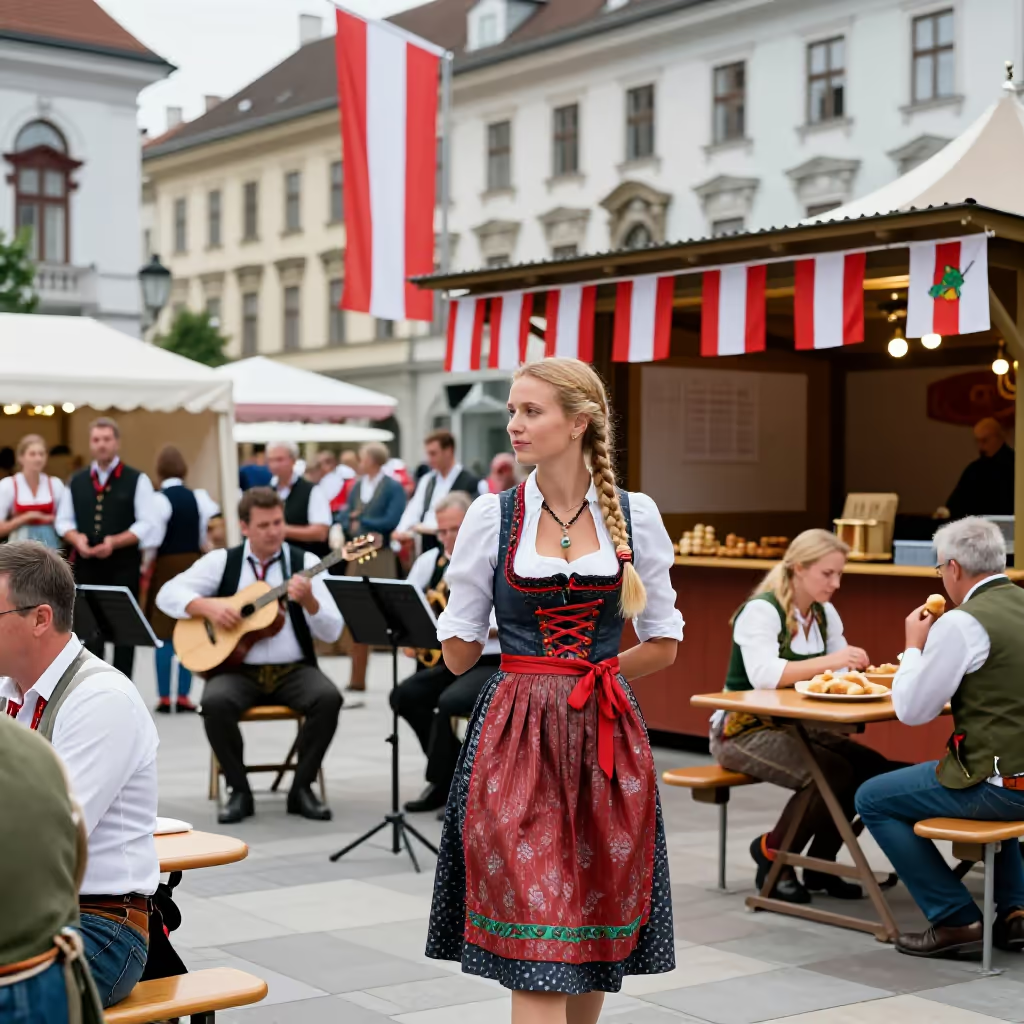
Refers to Austria, its inhabitants, its culture, or its language. Describes origin from or affiliation with Austria.
example
Die österreichische Küche ist für ihre Mehlspeisen wie Kaiserschmarrn und Apfelstrudel bekannt.
Austrian cuisine is known for its pastries and desserts, such as Kaiserschmarrn and apple strudel.
Usage tips
Word formation
The adjective is formed from the country name 'Österreich' (Austria) with the typical ending '-isch' (-ian/-ish). This ending is used very often to form adjectives from country names or regions.
EXAMPLE
Die österreichische Flagge ist rot-weiß-rot.
The Austrian flag is red-white-red.
Typical collocations
The adjective is often used in fixed combinations to describe origin or affiliation. Common examples are 'die österreichischen Alpen' (the Austrian Alps), 'die österreichische Regierung' (the Austrian government), or 'die österreichische Staatsbürgerschaft' (Austrian citizenship).
EXAMPLE
Viele Touristen fahren zum Skifahren in die österreichischen Alpen.
Many tourists go to the Austrian Alps to ski.
Use for language
When referring to the Austrian dialect or language variety, the adjective is often used as a noun: 'auf Österreichisch' (in Austrian German). It is then written with a capital letter.
EXAMPLE
Das Wort „Marille“ ist typisch für das österreichische Deutsch.
The word 'Marille' (apricot) is typical of Austrian German.
Compare with
near_synonym · confusable
österreichisch vs deutsch
German
'deutsch' and 'österreichisch' both describe origin, culture, or language in the German-speaking world. 'deutsch' refers to Germany or to the German language in general. 'österreichisch' refers to Austria, its people, culture, or certain linguistic features there. Learners may confuse the words because German is also spoken in Austria. Still, 'österreichisch' is not simply the same as 'deutsch': it names affiliation with Austria. When talking about Germany, you say 'deutsch'; when talking about Austria, you say 'österreichisch'.
österreichisch
Im Urlaub erklärt der Fahrer, dass dieses Wort österreichisch ist.
On vacation, the driver explains that this word is Austrian.
deutsch
Ihre deutsche Kollegin hilft ihr morgen beim Termin.
Her German colleague will help her with the appointment tomorrow.