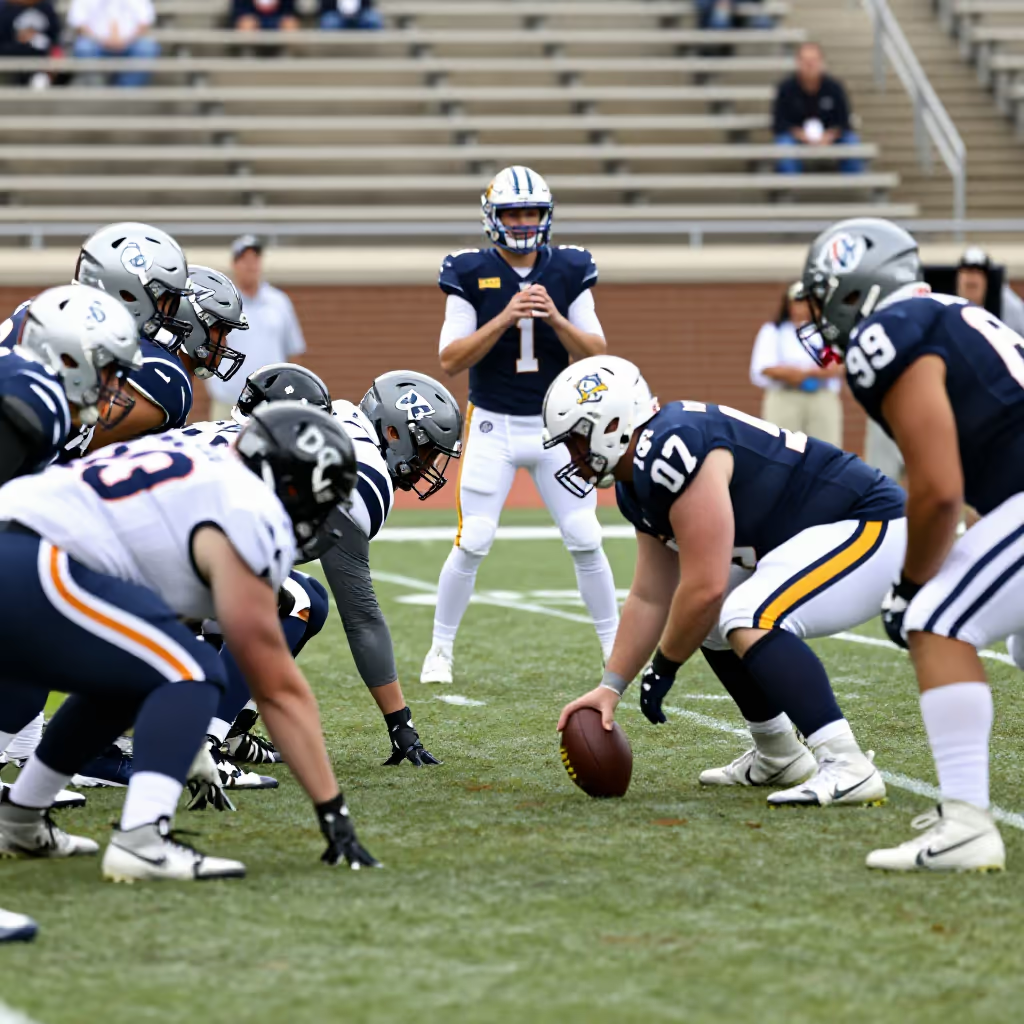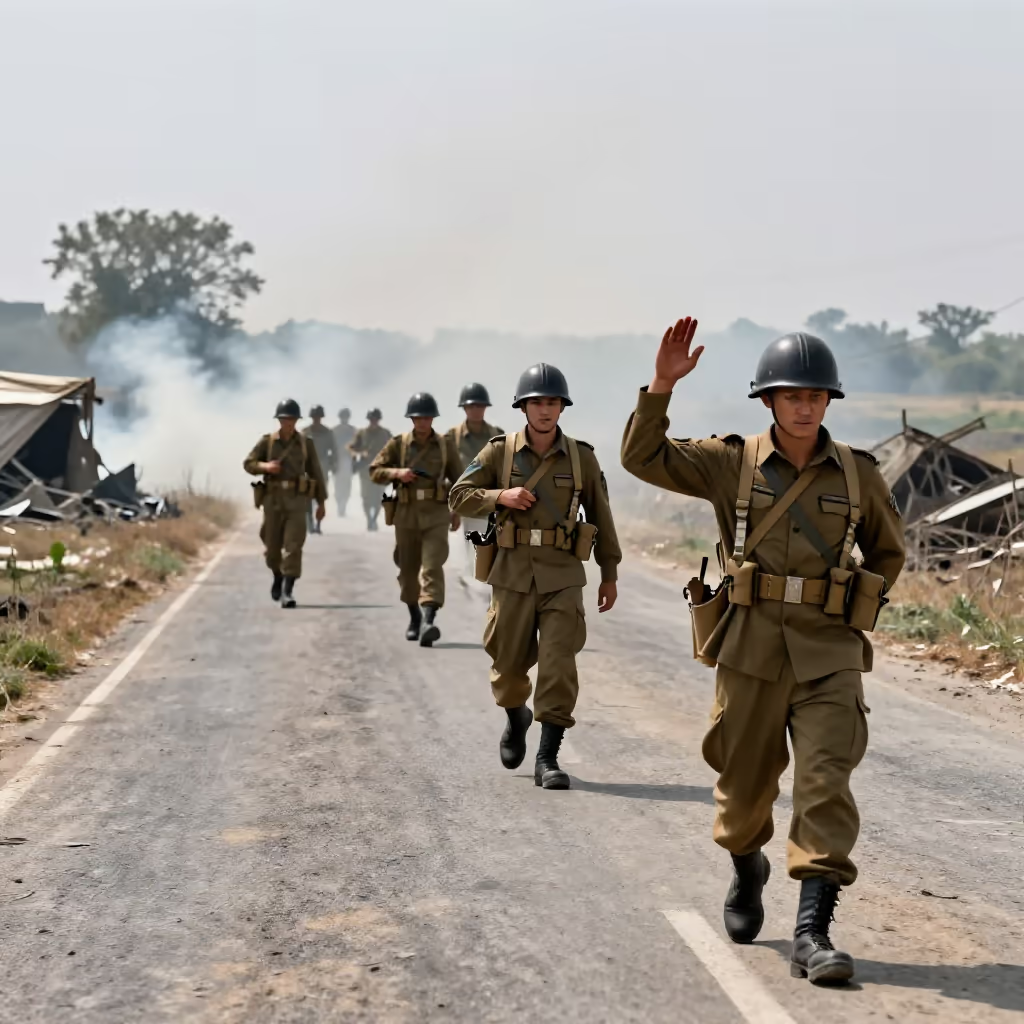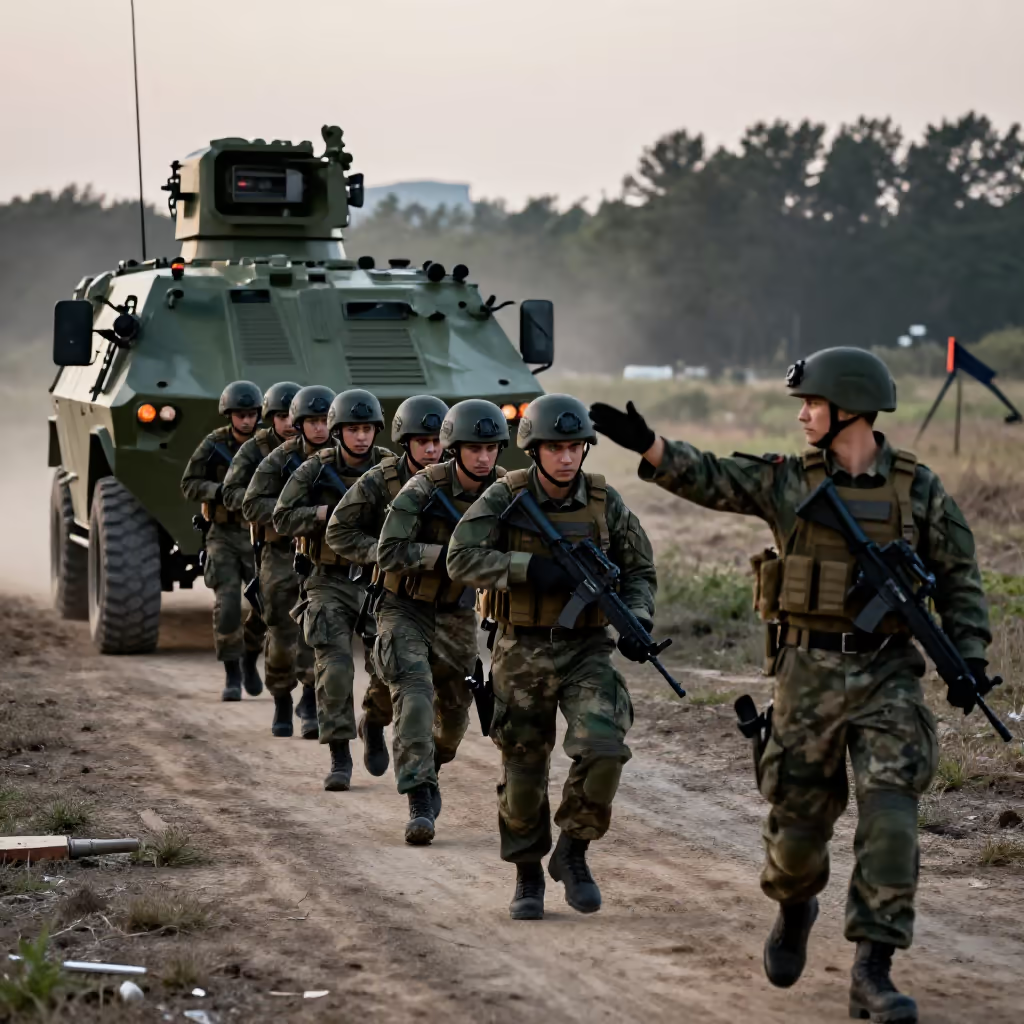
A planned attack, especially in a military context or in sports, to seize the initiative and put the opponent under pressure.
example
Die Mannschaft startete in der zweiten Halbzeit eine starke Offensive.
The team launched a strong offensive in the second half.

Usage tips
Word family
'Die Offensive' (the offensive) is the noun related to the adjective 'offensiv' (offensive). Both words describe an active, attacking, or proactive stance, whether in sports, the military, or in a figurative sense.
EXAMPLE
Die Mannschaft ist für ihren offensiven Spielstil bekannt.
The team is known for its offensive style of play.
Typical expressions
Common fixed expressions are 'in die Offensive gehen' (to go on the offensive) or 'zur Offensive übergehen' (to switch to the offensive), which means that someone begins to attack or act actively.
EXAMPLE
Nach dem Gegentor ging die Heimmannschaft sofort in die Offensive.
After conceding the goal, the home team immediately went on the offensive.
Productive word formation
In marketing or politics, 'Offensive' (offensive/campaign) is often used as the second part of a compound noun to describe a targeted campaign. Typical examples are 'Charme-Offensive' (charm offensive), 'Werbe-Offensive' (advertising campaign), or 'Preis-Offensive' (price offensive).
EXAMPLE
Der neue Politiker startete eine Medien-Offensive, um bekannter zu werden.
The new politician launched a media offensive to become better known.
Context clue
The meaning can be recognized from the context: In sports or the military (meaning 1), the 'Offensive' (offensive) is an action. When it refers to part of a team (meaning 3), it means the attacking players.
EXAMPLE
Die Offensive der Gastmannschaft war heute sehr schwach und harmlos.
The visiting team's offense was very weak and harmless today.
Compare with
near_synonym · confusable
Offensive vs Angriff
attack
'der Angriff' and 'die Offensive' can both mean actively moving against an opponent. 'Angriff' refers more to a single action or a concrete push forward. 'Offensive' usually sounds larger and more planned: it is about a whole phase, strategy, or group that is attacking. In sports, 'die Offensive' can also mean the attacking players. Learners can confuse the words because both have to do with moving forward and applying pressure. For a single action, 'Angriff' often fits; for a planned series of actions, 'Offensive' is more appropriate.
Offensive
Nach der Pause begann die Mannschaft eine starke Offensive.
After the break, the team began a strong offensive.
Angriff
Der Angriff über die rechte Seite brachte fast ein Tor.
The attack down the right side almost led to a goal.