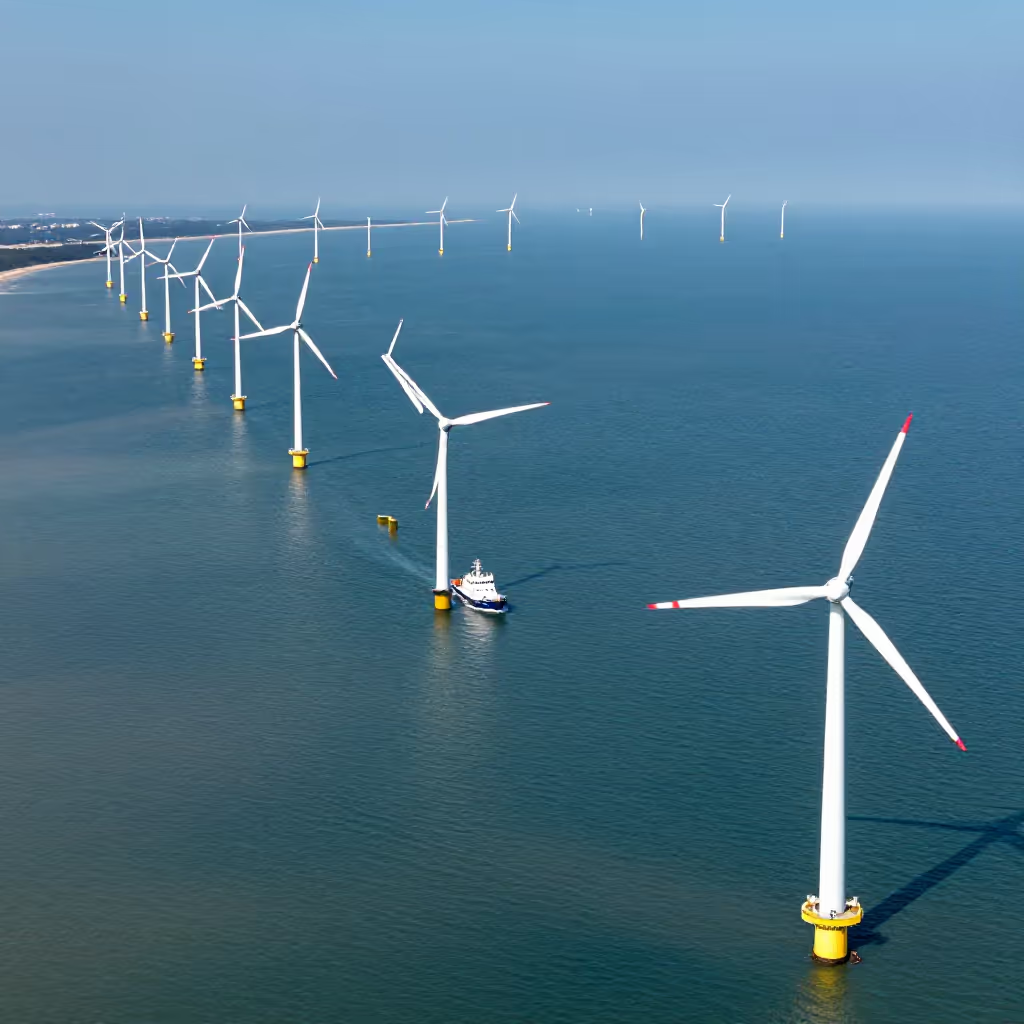
Refers to facilities or activities that are located at sea off the coast. The term is often used in connection with wind farms or oil platforms.
example
Der neue Offshore-Windpark soll nächstes Jahr genug Strom für eine halbe Million Haushalte liefern.
The new offshore wind farm is expected to supply enough electricity for half a million households next year.

Usage tips
English origin
'Offshore' is a word from English, made up of 'off' (away from) and 'shore' (coast). So it literally means 'away from the coast' or 'off the coast'.
EXAMPLE
Die Firma ist auf Offshore-Projekte spezialisiert.
The company specializes in offshore projects.
Sentence structure and usage
This adjective is almost never declined before a noun. Instead, it forms compound nouns (e.g., 'der Offshore-Windpark' — the offshore wind farm) or is used adverbially (e.g., 'Die Plattform liegt offshore' — the platform is located offshore).
EXAMPLE
Viele Unternehmen investieren in Offshore-Windparks.
Many companies are investing in offshore wind farms.
Typical collocations
In the meaning 'at sea', 'offshore' often forms fixed terms with technical installations. Typical examples are 'Offshore-Windpark' (offshore wind farm), 'Offshore-Plattform' (offshore platform), or 'Offshore-Anlage' (offshore facility).
EXAMPLE
Der Bau der Offshore-Plattform war sehr teuer.
The construction of the offshore platform was very expensive.
Context clue
You can recognize the financial meaning from words like 'Konto' (account), 'Firma' (company), 'Bank' (bank), or 'Steuern' (taxes). In this context, 'offshore' always means 'abroad', usually for tax reasons.
EXAMPLE
Ermittler entdeckten mehrere Offshore-Konten des Managers.
Investigators discovered several offshore accounts belonging to the manager.
Compare with
near_synonym · confusable
offshore vs ausländisch
foreign
'ausländisch' and 'offshore' can both refer to something in another country, but they are not generally interchangeable. 'ausländisch' is the normal word for people, goods, companies, or things from another country. 'offshore' is much more specific and is used mainly in business and finance when activities are moved to another country, often because of taxes or regulations. They can be confused because both have to do with foreign countries. In everyday language, you almost always say 'ausländisch'; 'offshore' only fits in certain specialist contexts.
offshore
Beim Termin erklärt der Berater die Risiken von Offshore-Geschäften.
At the appointment, the consultant explains the risks of offshore transactions.
ausländisch
Im Sommer hat die Familie viele ausländische Gäste im Restaurant getroffen.
In the summer, the family met many foreign guests at the restaurant.