

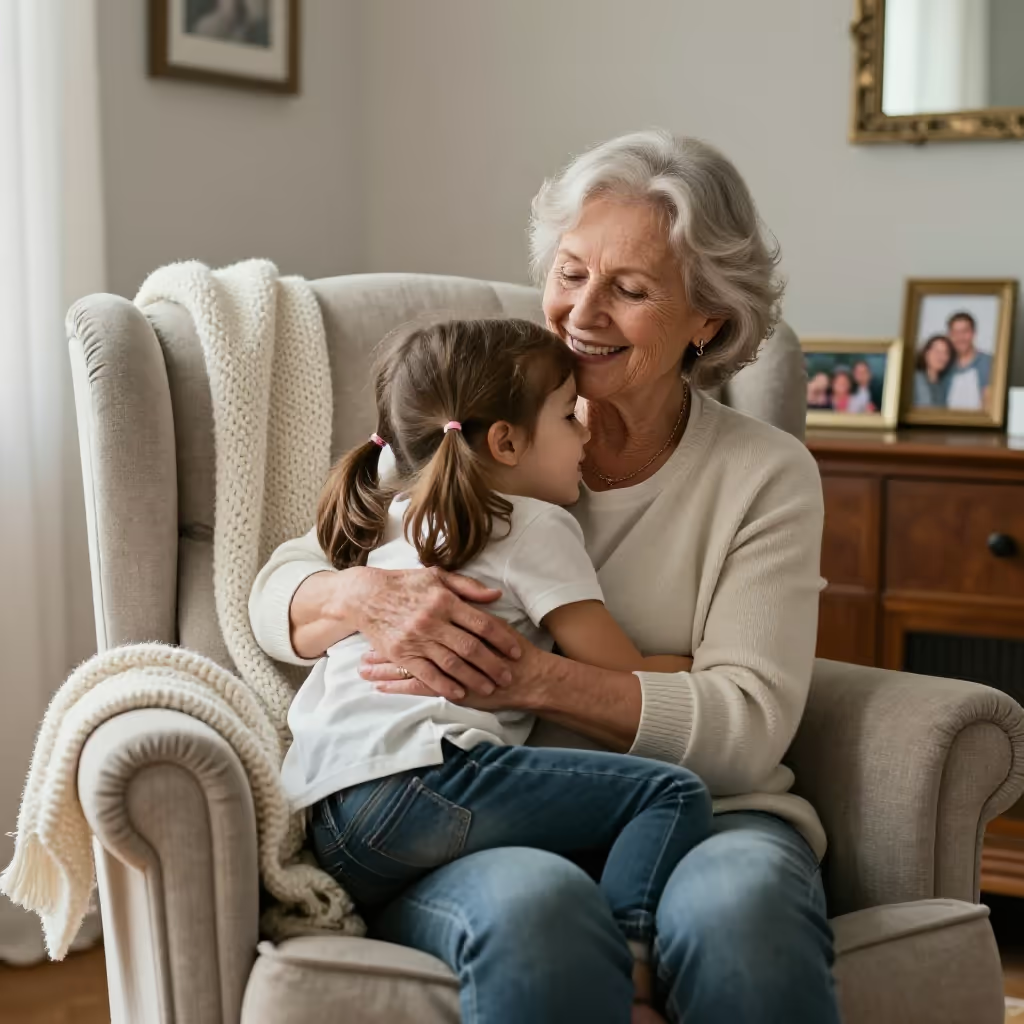
A colloquial and affectionate term for one's own grandmother. It is a pet form of 'Oma' (grandma).
example
Jeden Sonntag fahren wir zu Omi, die dann ihren berühmten Apfelkuchen backt.
Every Sunday we drive to Granny's, and she bakes her famous apple cake.
Usage tips
Register and style
'Omi' (granny) is a pet form and is used almost only in family, informal contexts, often by children. It expresses a close and loving relationship with one's grandmother.
EXAMPLE
Als Kind habe ich die Ferien immer bei Omi auf dem Land verbracht.
As a child, I always spent the holidays with Granny in the countryside.
Use without an article
When talking about your own grandmother, 'Omi' (granny) is used like a name, without an article. When talking about another person's grandmother, the article or a possessive pronoun is used.
EXAMPLE
Ich rufe später Omi an.
I'll call Granny later.
Word family
'Omi' (granny) is a diminutive form of 'Oma' (grandma), which in turn is a short form of 'Großmutter' (grandmother). This kind of affectionate form formation is common in German for family members.
EXAMPLE
Meine Omi ist die beste Köchin der Welt.
My granny is the best cook in the world.
Compare with
near_synonym · confusable
Omi vs Oma
grandma
'Oma' and 'Omi' often mean the same person: your own grandmother. 'Oma' is the normal, very common colloquial form. 'Omi' is even more affectionate and sounds like a pet name. It fits especially within the family or when speaking very familiarly. Learners may confuse the words because both are informal. If you want to speak neutrally and naturally about your grandmother, 'Oma' is usually safer. 'Omi' feels warmer, but also a bit more personal or childlike.
Omi
Meine Omi freut sich, wenn ich sie am Wochenende besuche.
My granny is happy when I visit her on the weekend.