

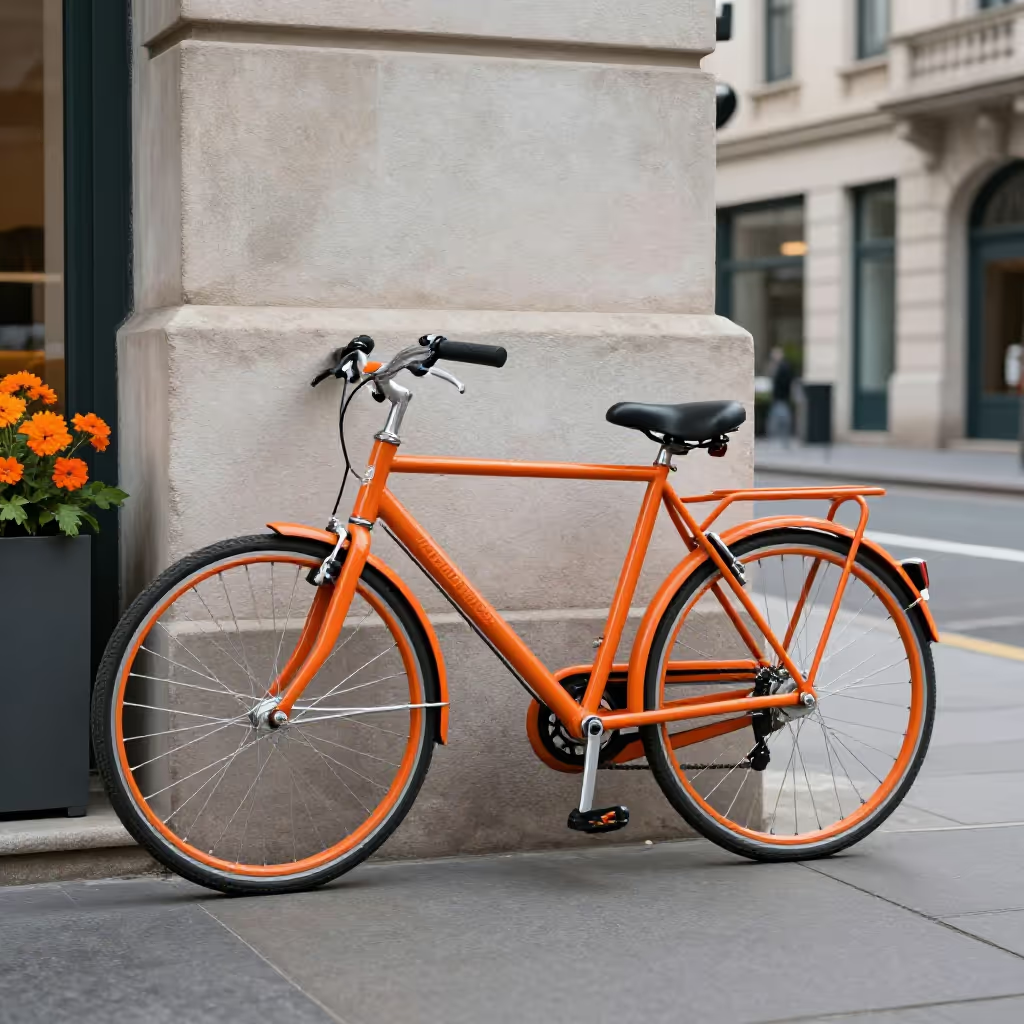
orange
Referring to the color that lies between red and yellow, like that of a ripe orange. The adjective 'orange' is not declined in German.
EXAMPLE
Sie hat sich ein leuchtend orange T-Shirt gekauft.
She bought herself a bright orange T-shirt.
Loading your saved state.
Referring to the color that lies between red and yellow, like that of a ripe orange. The adjective 'orange' is not declined in German.
Sie hat sich ein leuchtend orange T-Shirt gekauft.
She bought herself a bright orange T-shirt.
A special feature of 'orange' is that, as an adjective before a noun, it is usually not declined. It keeps its base form, no matter what gender or case the noun has.
Er trägt einen orange Pullover.
He is wearing an orange sweater.
As in many other languages, the color 'orange' is named after the fruit of the same name, 'die Orange' (the orange). The noun for the fruit is feminine: 'die Orange'.
Die Wände sind in einem warmen Orange gestrichen.
The walls are painted in a warm orange.
The color itself can be used as a noun. In this case, it is neuter and capitalized: 'das Orange' (the orange). It then describes the shade of color itself.
Das kräftige Orange des Sonnenuntergangs war beeindruckend.
The strong orange of the sunset was impressive.