

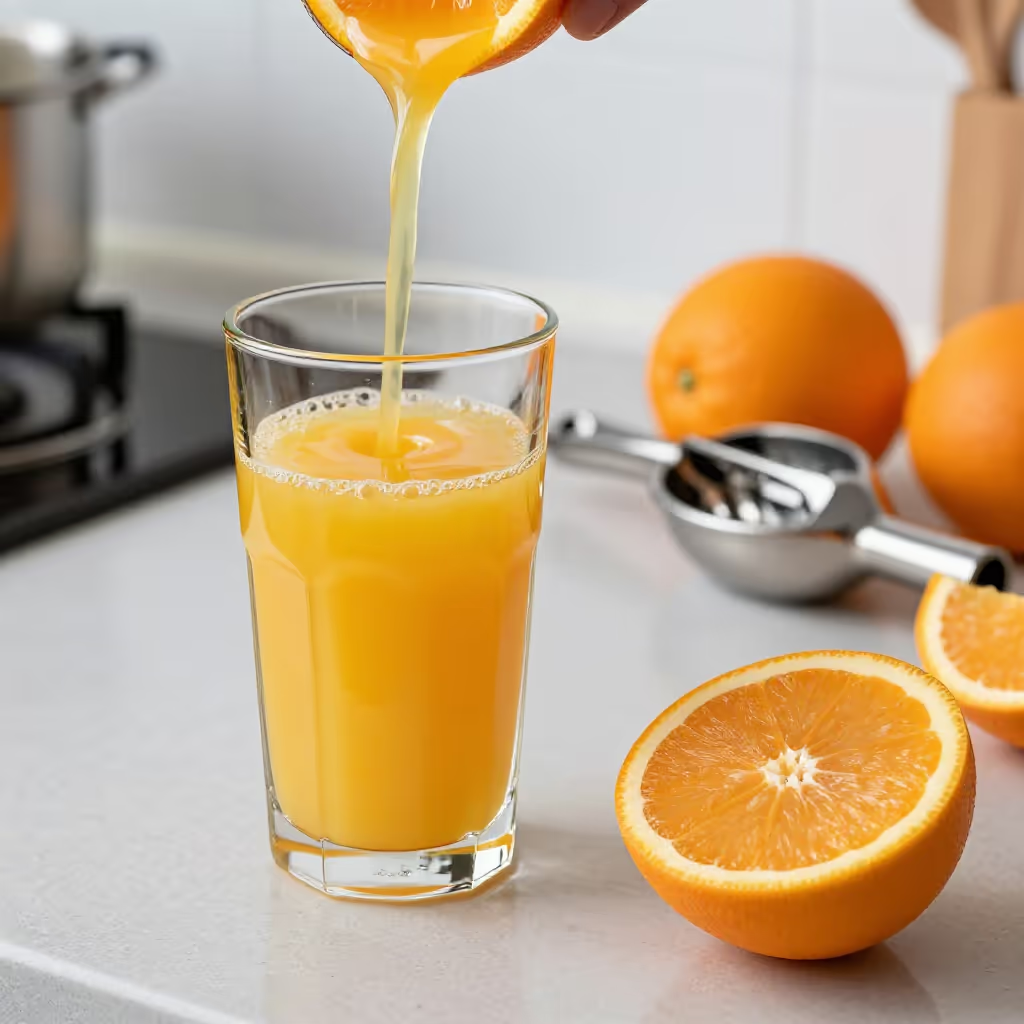
der Orangensaft
orange juice
A fruit juice obtained by squeezing oranges.
EXAMPLE
Zum Frühstück trinke ich am liebsten ein Glas frisch gepressten Orangensaft.
For breakfast, I most like to drink a glass of freshly squeezed orange juice.
orange juice
Loading your saved state.
orange juice
A fruit juice obtained by squeezing oranges.
Zum Frühstück trinke ich am liebsten ein Glas frisch gepressten Orangensaft.
For breakfast, I most like to drink a glass of freshly squeezed orange juice.
The word is made up of 'die Orange' (the orange) and 'der Saft' (the juice). The '-n-' in the middle is a linking element that often comes from the plural of the first word ('die Orangen' — the oranges). So it is literally 'juice from oranges'.
Dieser Orangensaft schmeckt, als wären die Orangen frisch vom Baum.
This orange juice tastes as if the oranges were fresh from the tree.
The base word '-saft' (-juice) is very productive. If you know the name of a fruit, you can often form the name of the juice, e.g. 'Apfelsaft' (apple juice), 'Kirschsaft' (cherry juice), or 'Traubensaft' (grape juice).
Im Supermarkt gibt es eine große Auswahl an Säften, von Ananassaft bis Mangosaft.
At the supermarket there is a large selection of juices, from pineapple juice to mango juice.
Common combinations are 'ein Glas Orangensaft' (a glass of orange juice) or 'eine Flasche Orangensaft' (a bottle of orange juice). A typical adjective often used together with the word is 'frisch gepresst' (freshly squeezed).
Ein Glas frisch gepresster Orangensaft am Morgen ist für viele ein Genuss.
A glass of freshly squeezed orange juice in the morning is a treat for many people.