

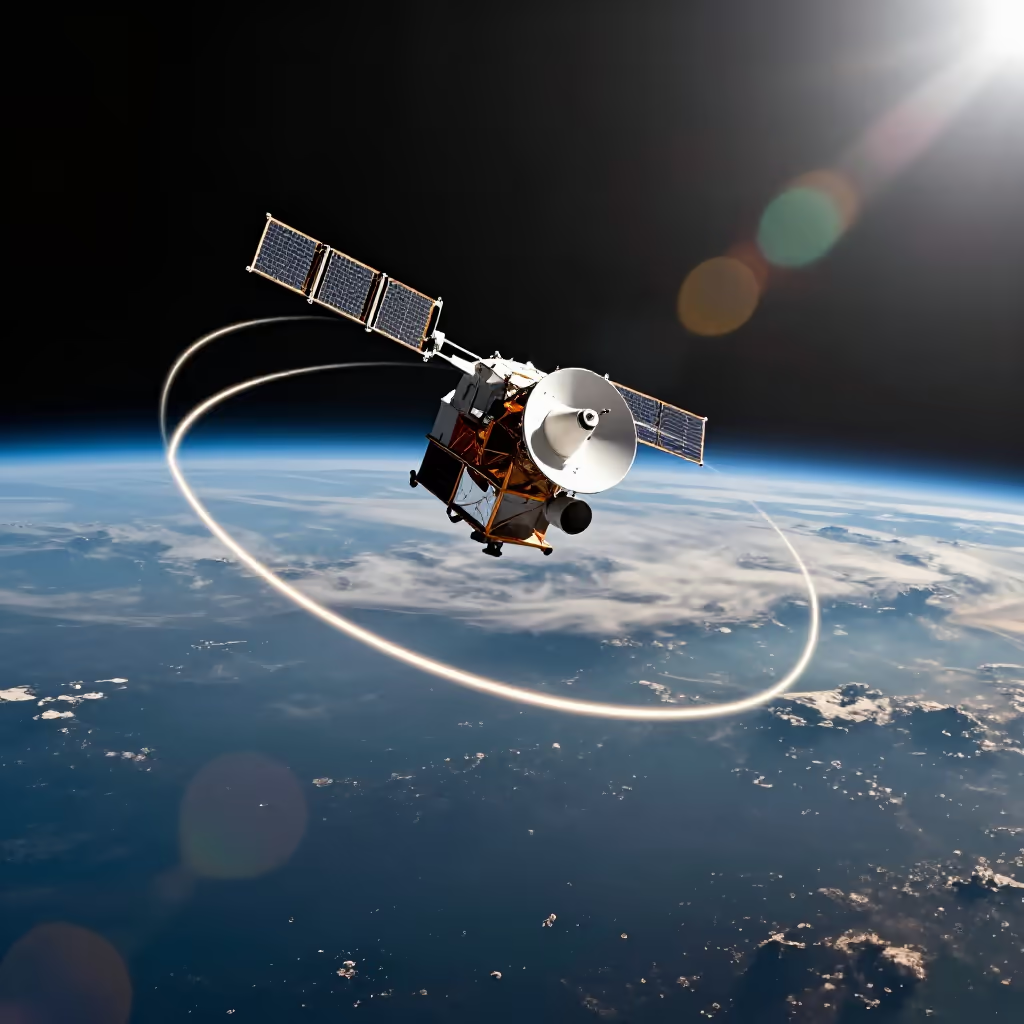
der Orbit
orbit
The path of a celestial body or spacecraft around a star, planet, or moon.
EXAMPLE
Die Internationale Raumstation ISS befindet sich in einem niedrigen Erdorbit.
The International Space Station ISS is in low Earth orbit.
orbit
Loading your saved state.
orbit
The path of a celestial body or spacecraft around a star, planet, or moon.
Die Internationale Raumstation ISS befindet sich in einem niedrigen Erdorbit.
The International Space Station ISS is in low Earth orbit.
'Orbit' is a technical term from astronomy and space travel. In everyday language, the German word 'Umlaufbahn' (orbit) is often used, but in the news or scientific texts, 'Orbit' is very common.
Der Satellit wurde erfolgreich in den Orbit gebracht.
The satellite was successfully put into orbit.
The preposition 'in' is used with the dative to describe a position ('im Orbit' = in orbit), and with the accusative to express movement toward it ('in den Orbit' = into orbit).
Das Teleskop befindet sich seit Jahren im Orbit.
The telescope has been in orbit for years.
Common combinations are 'einen Satelliten in den Orbit schießen' (to launch a satellite into orbit), 'den Orbit erreichen' (to reach orbit), or 'sich in einem stabilen Orbit befinden' (to be in a stable orbit).
Es kostet Millionen, eine Tonne Material in einen niedrigen Erdorbit zu transportieren.
It costs millions to transport one ton of material into low Earth orbit.
career / track / orbit
Laufbahn can generally refer to the path or orbit of a celestial body. Orbit, by contrast, specifically means its path around a star, planet, or moon and sounds more technical. For a general description, use „Laufbahn“; for the technical term, use „Orbit“.
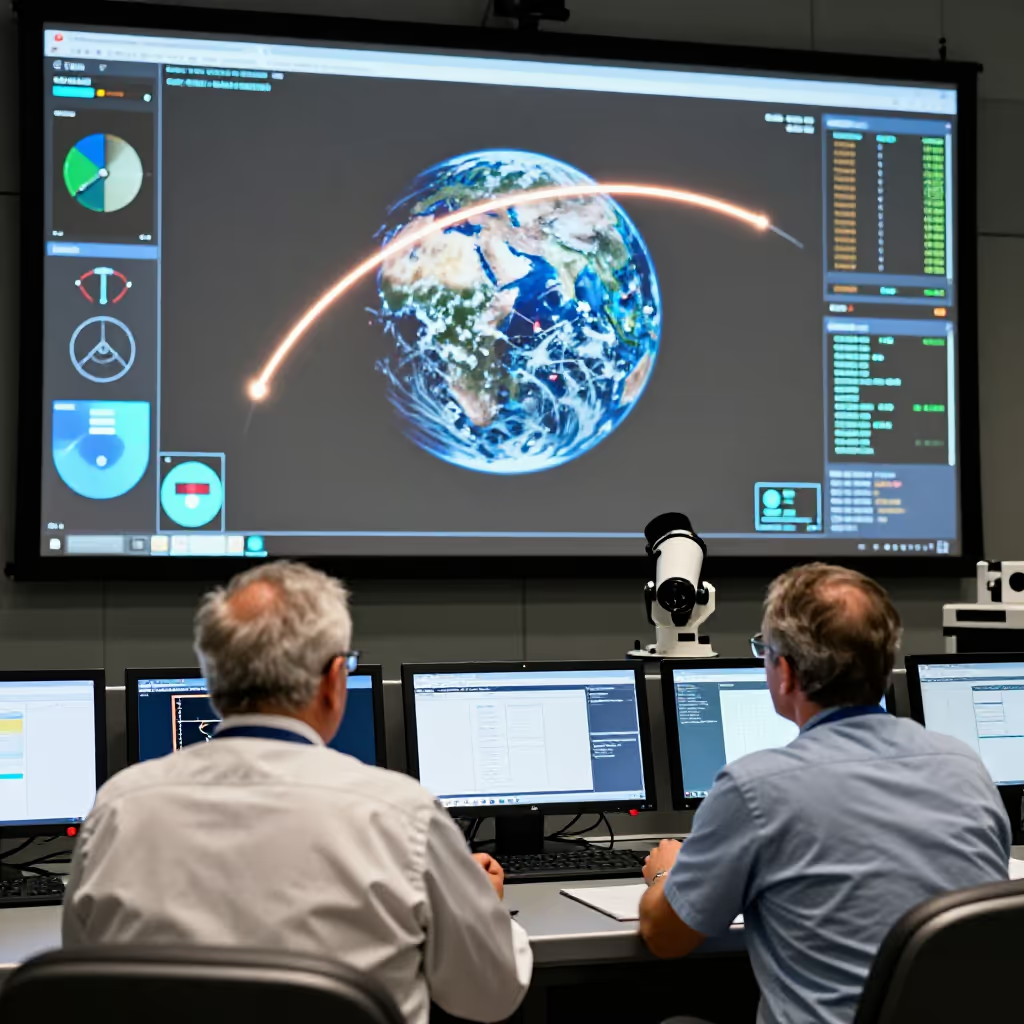
Das Raumfahrzeug erreichte den Orbit des Mars nach mehreren Monaten.
The spacecraft reached Mars’s orbit after several months.
Die Laufbahn des Kometen lässt sich mit neuen Beobachtungen genauer berechnen.
New observations make it possible to calculate the comet’s trajectory more precisely.