

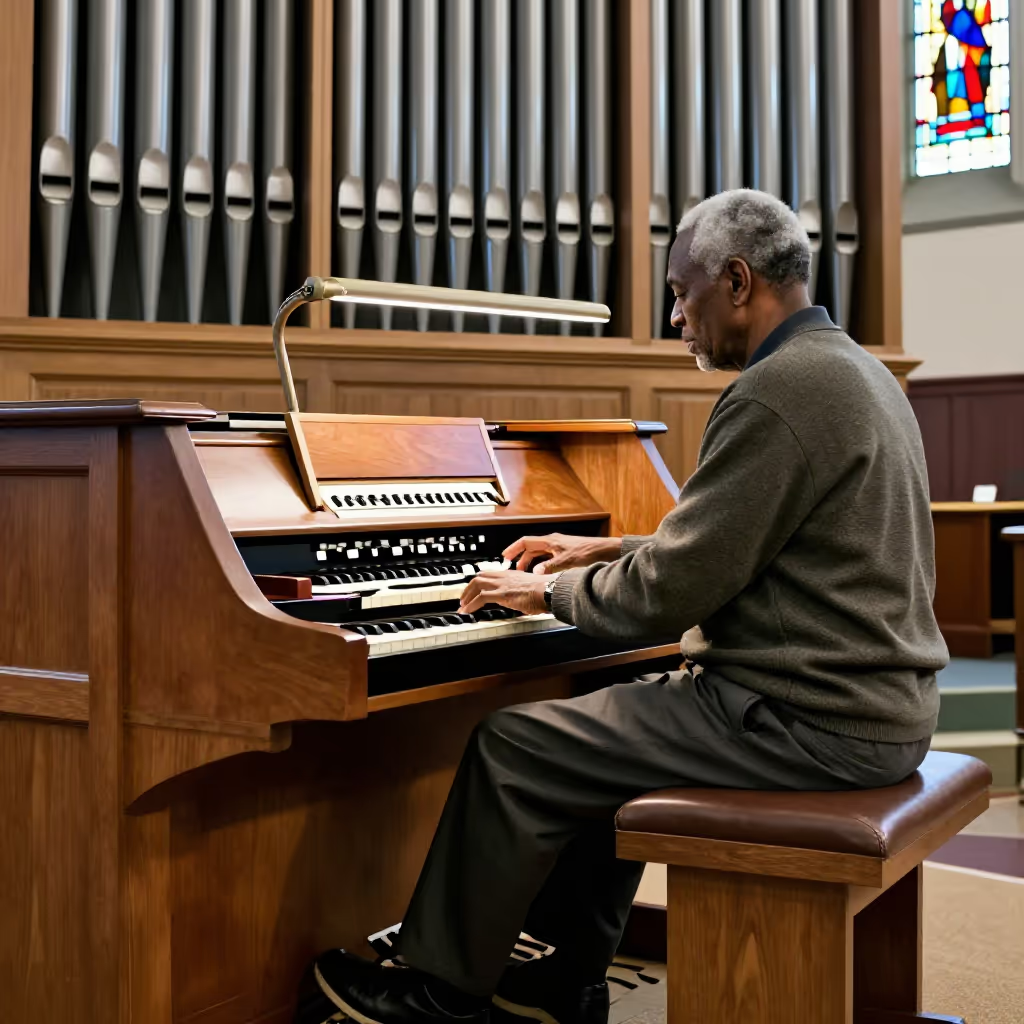
A person who plays the organ. The term usually refers to musicians who work professionally or as volunteers in churches or concert halls.
example
Der Organist spielte zum Abschluss des Gottesdienstes eine Fuge von Bach.
The organist played a Bach fugue at the end of the church service.
Usage tips
Word structure
The word is derived from the noun 'die Orgel' (the organ). The ending '-ist' often refers to a person who performs a particular activity professionally or with great skill, such as a pianist or a journalist.
EXAMPLE
Schon als Kind wollte er Organist werden.
Even as a child, he wanted to become an organist.
Typical context
An organist is almost always mentioned in connection with church music or classical concerts. The term implies a formal role in a church service or a concert hall.
EXAMPLE
Der Organist begleitet den Chor auf der großen Kirchenorgel.
The organist accompanies the choir on the large church organ.
Typical collocations
Common verbs used with 'Organist' (organist) are 'spielen' (to play), 'üben' (to practice), and 'begleiten' (to accompany). The piece being played or the location is also often mentioned.
EXAMPLE
Der Organist übt jeden Tag mehrere Stunden in der leeren Kirche.
The organist practices for several hours every day in the empty church.
Compare with
confusable
Organist vs Pianist
pianist
'Pianist' and 'Organist' both refer to musicians who play a keyboard instrument. The difference lies in the instrument: a 'Pianist' plays the piano, while an 'Organist' plays the organ. You often hear 'Organist' in connection with churches or concert halls, because organs are found there. The words can be confused because both people are connected with keyboard music and the words are formed in a similar way. So pay attention to the instrument: piano means 'Pianist', organ means 'Organist'.
Organist
Am Sonntag spielt der Organist in der Kirche ein ruhiges Stück.
On Sunday, the organist plays a calm piece in the church.