

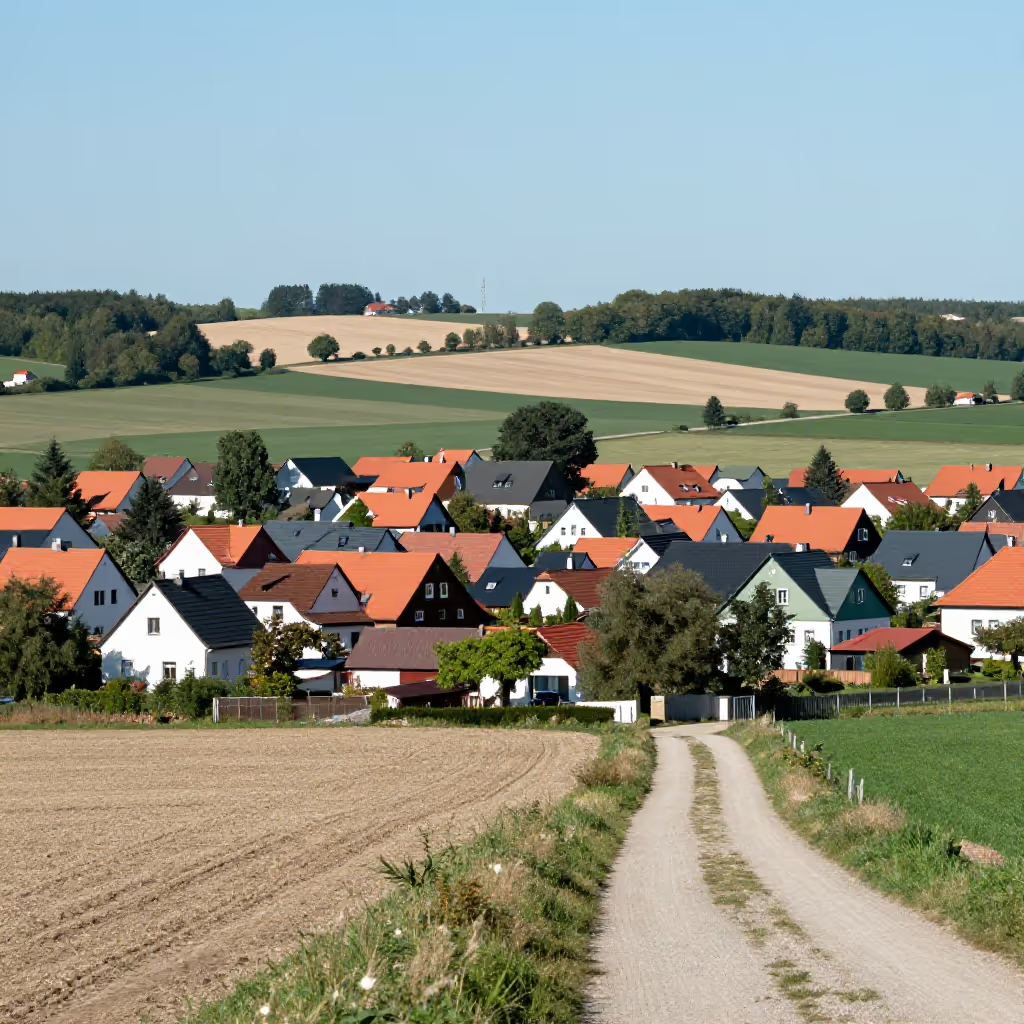
der Ortsrand
edge of town
The area where a town or village ends and the open countryside begins. It is the outer boundary of the built-up area.
Wir wohnen in einem Neubaugebiet am Ortsrand.
We live in a new housing development on the edge of town.
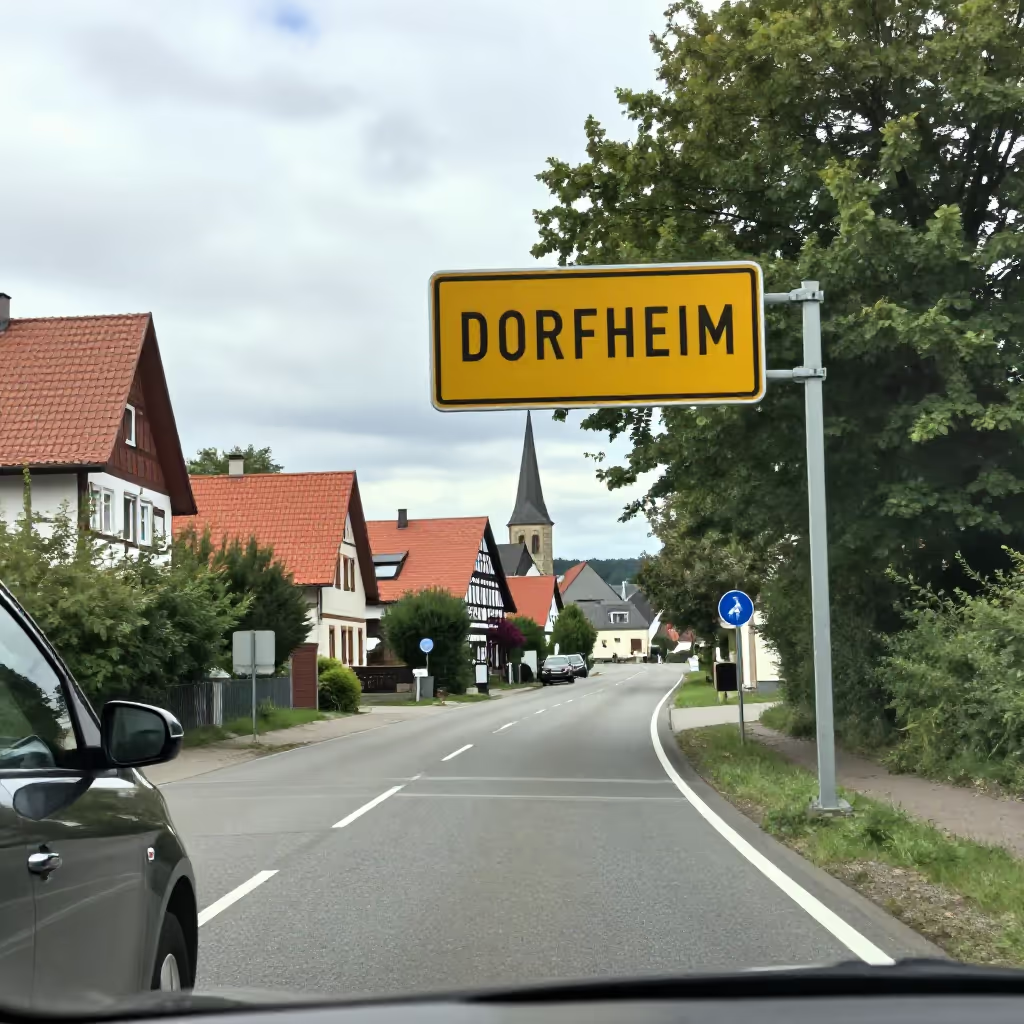
edge of town / outskirts
Loading your saved state.

edge of town
The area where a town or village ends and the open countryside begins. It is the outer boundary of the built-up area.
Wir wohnen in einem Neubaugebiet am Ortsrand.
We live in a new housing development on the edge of town.
The word is made up of 'Ort' (place/town) and 'Rand' (edge). The 's' in between is a linking s that connects the two words. Literally, it describes the edge of a place or town.
Am Ortsrand beginnt der Wald.
The forest begins at the edge of town.
To describe a position on the outer edge of a town or village, the preposition 'an' with the dative is almost always used: 'am Ortsrand' (on the edge of town).
Die neue Sporthalle wird am Ortsrand gebaut.
The new sports hall is being built on the edge of town.
Common verbs used with 'am Ortsrand' (on the edge of town) are 'wohnen' (to live), 'liegen' (to be located), 'sich befinden' (to be situated), or 'spazieren gehen' (to go for a walk).
Viele Familien mit Kindern wohnen gerne am Ortsrand.
Many families with children like living on the edge of town.
town entrance
Both words can describe a location at the beginning or end of a town or village. The „Ortsrand“ generally means the spatial boundary with the open countryside, while the „Ortseingang“ refers to the area on a road where you drive into the town. When you are talking about the approach road, „Ortseingang“ is the better choice.

Am Ortsrand endet die Bebauung und dahinter beginnen die Felder.
At the edge of town, the buildings end and the fields begin beyond them.
Am Ortseingang musste der Fahrer wegen der neuen Geschwindigkeitsbegrenzung langsamer fahren.
At the town entrance, the driver had to slow down because of the new speed limit.