


der Ost
east
The cardinal direction east. Often used in geographical, meteorological, or political contexts.
EXAMPLE
Die Fenster unseres Schlafzimmers gehen nach Ost.
Our bedroom windows face east.
east
Loading your saved state.
east
The cardinal direction east. Often used in geographical, meteorological, or political contexts.
Die Fenster unseres Schlafzimmers gehen nach Ost.
Our bedroom windows face east.
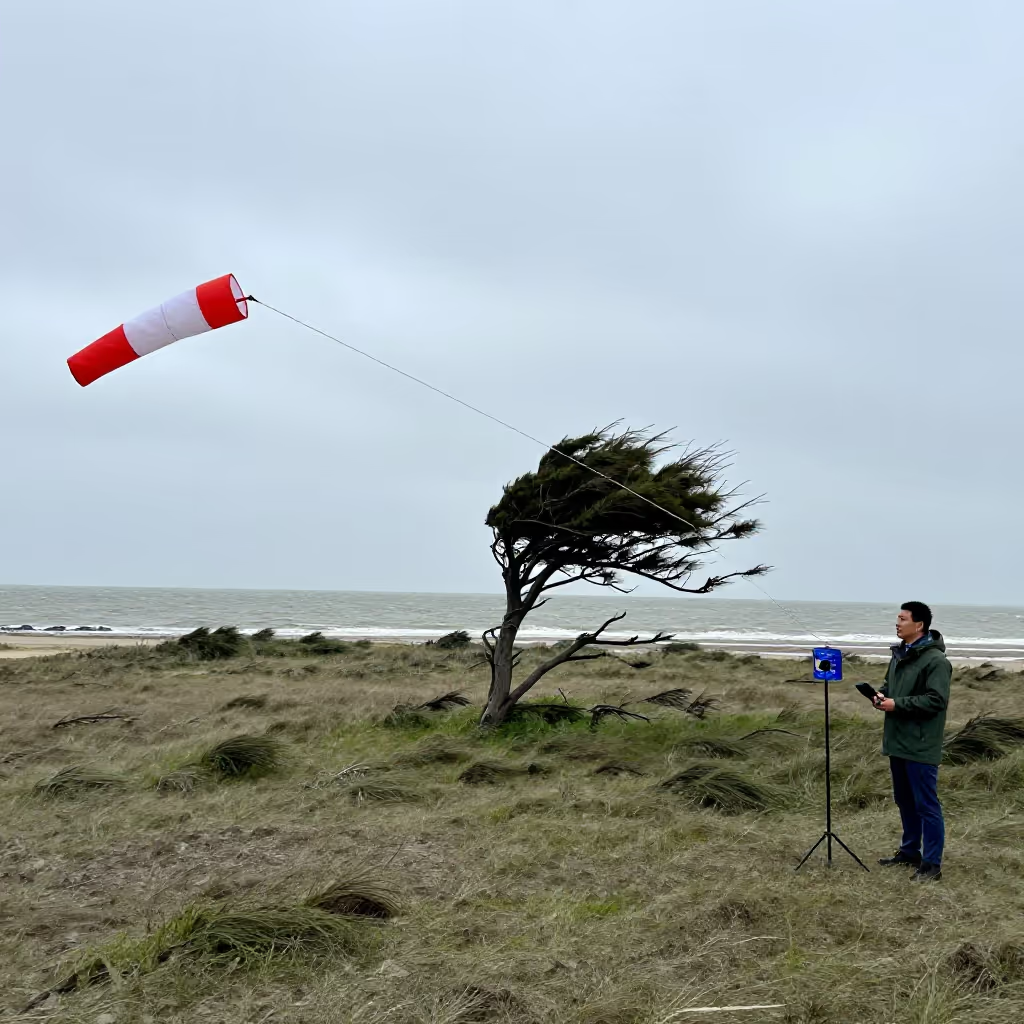
east wind
A term for the wind coming from the east.
Der kalte Ost brachte trockene Luft mit sich.
The cold east wind brought dry air with it.
'Ost' (east) is the basis for many geographical terms. It is found as the first part in compound words such as 'Osteuropa' (Eastern Europe), 'Ostsee' (Baltic Sea), or 'Ostküste' (east coast).
Die Ostsee ist ein beliebtes Urlaubsziel in Norddeutschland.
The Baltic Sea is a popular vacation destination in northern Germany.
As a cardinal direction, 'Ost' (east) is often used without an article after prepositions such as 'nach' (to/toward), 'aus' (from), or 'gegen' (against/toward). This is typical when giving directions, especially in seafaring or meteorology.
Das Schiff fährt genau nach Ost.
The ship is sailing due east.
When 'Ost' (east/east wind) refers to the wind, it almost always appears with the definite article 'der'. The cardinal direction, by contrast, is often used without an article after a preposition.
Der scharfe Ost brachte uns sehr kalte Tage.
The sharp east wind brought us very cold days.
east
Osten and Ost can refer to the same cardinal direction. Osten is the neutral standard form in everyday language. As a noun, Ost is more marked and occurs mainly in technical or elevated contexts.

Auf der Seekarte ist der Ost deutlich markiert.
East is clearly marked on the nautical chart.
Am Morgen fahren wir weiter nach Osten.
In the morning, we will continue eastward.