

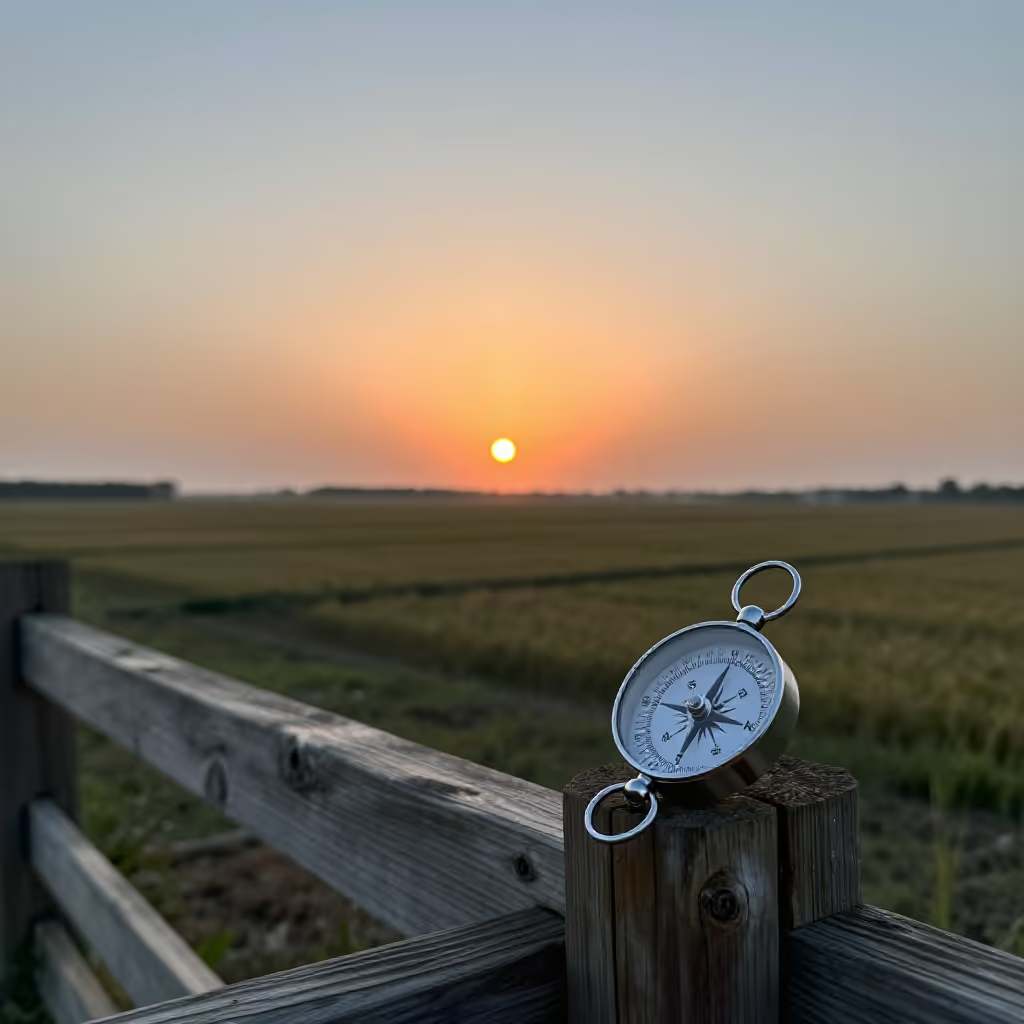
der Osten
east
One of the four cardinal directions, corresponding to the direction of the sunrise.
EXAMPLE
Unser Balkon ist nach Osten ausgerichtet, deshalb haben wir Morgensonne.
Our balcony faces east, so we get morning sun.
east
Loading your saved state.
east
One of the four cardinal directions, corresponding to the direction of the sunrise.
Unser Balkon ist nach Osten ausgerichtet, deshalb haben wir Morgensonne.
Our balcony faces east, so we get morning sun.
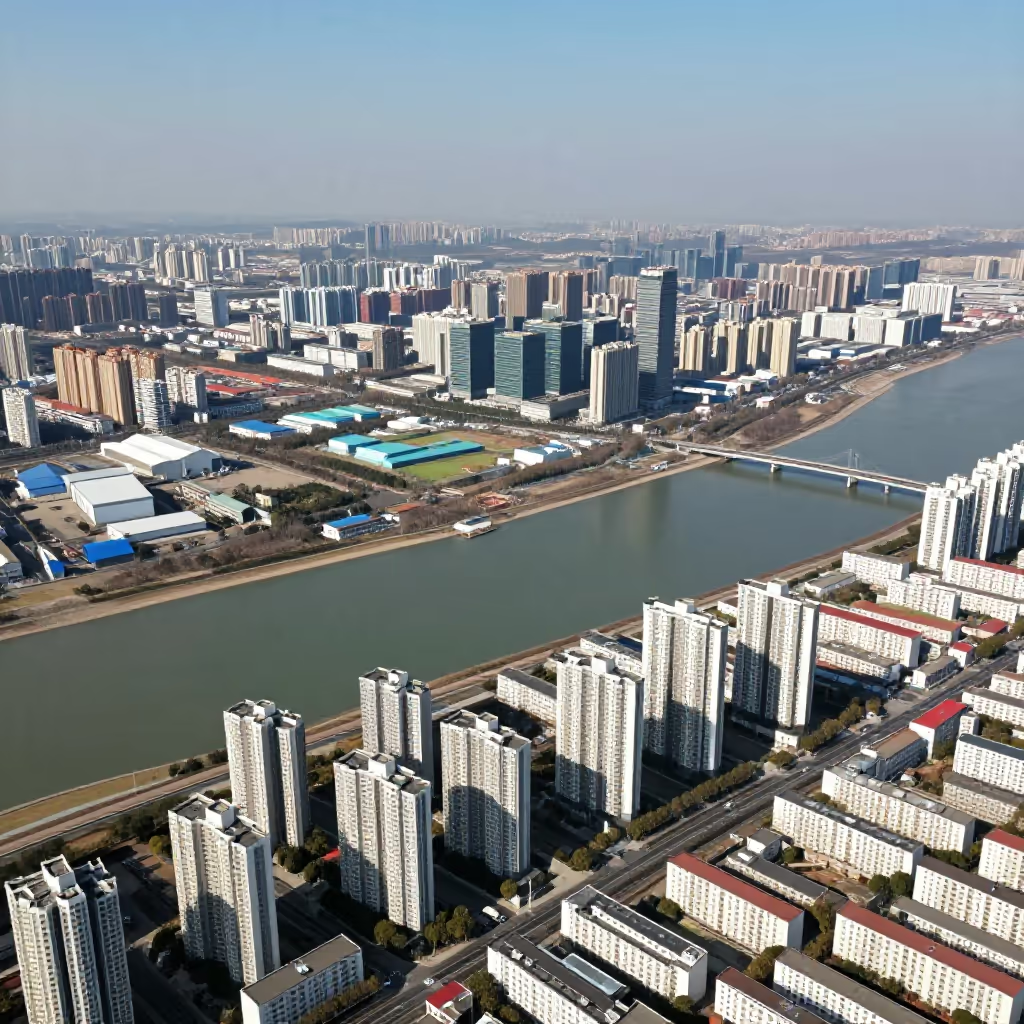
east
The eastern part of a geographic area, such as a country, region, or city.
Im Osten des Landes gibt es viele Seen und Wälder.
In the east of the country, there are many lakes and forests.
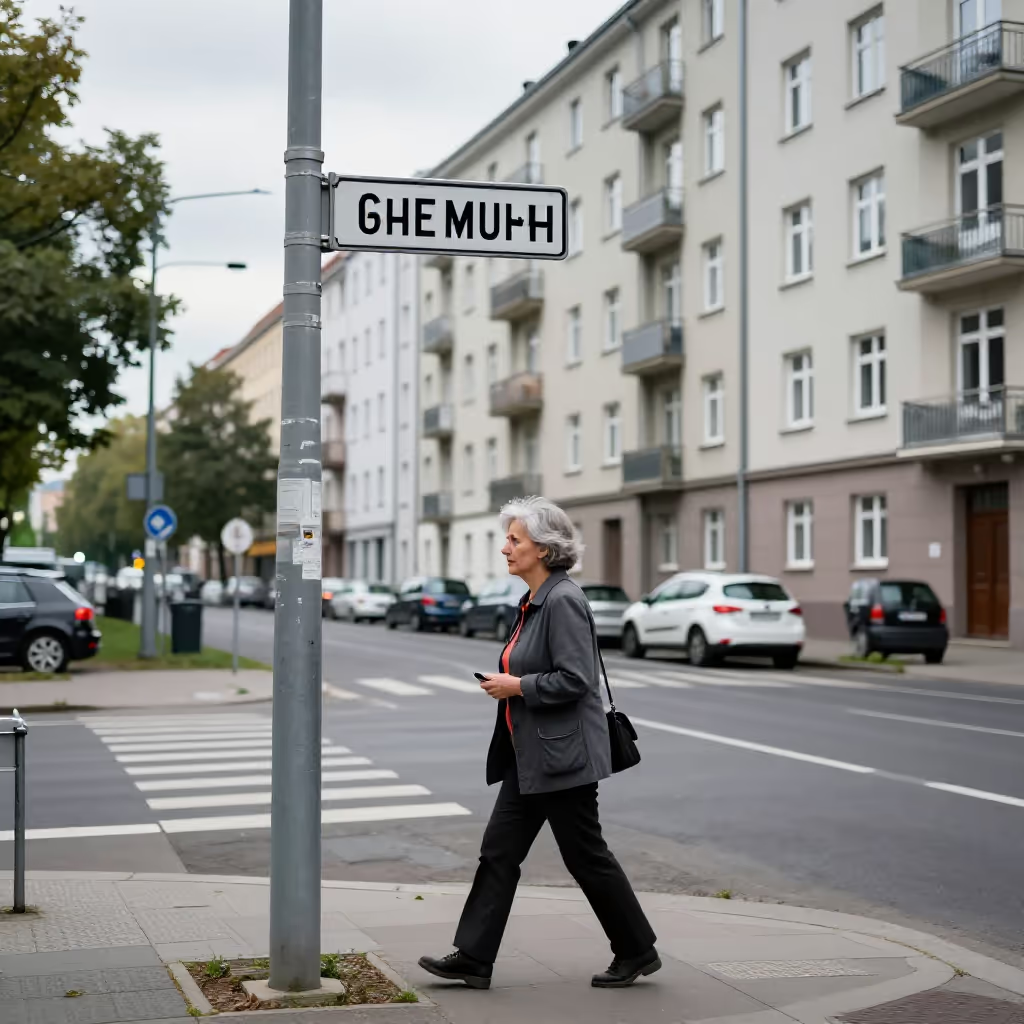
East Germany
Often refers to the new federal states of Germany, that is, the territory of the former GDR.
Viele junge Menschen sind nach der Wende vom Osten in den Westen gezogen.
After reunification, many young people moved from the East to the West.
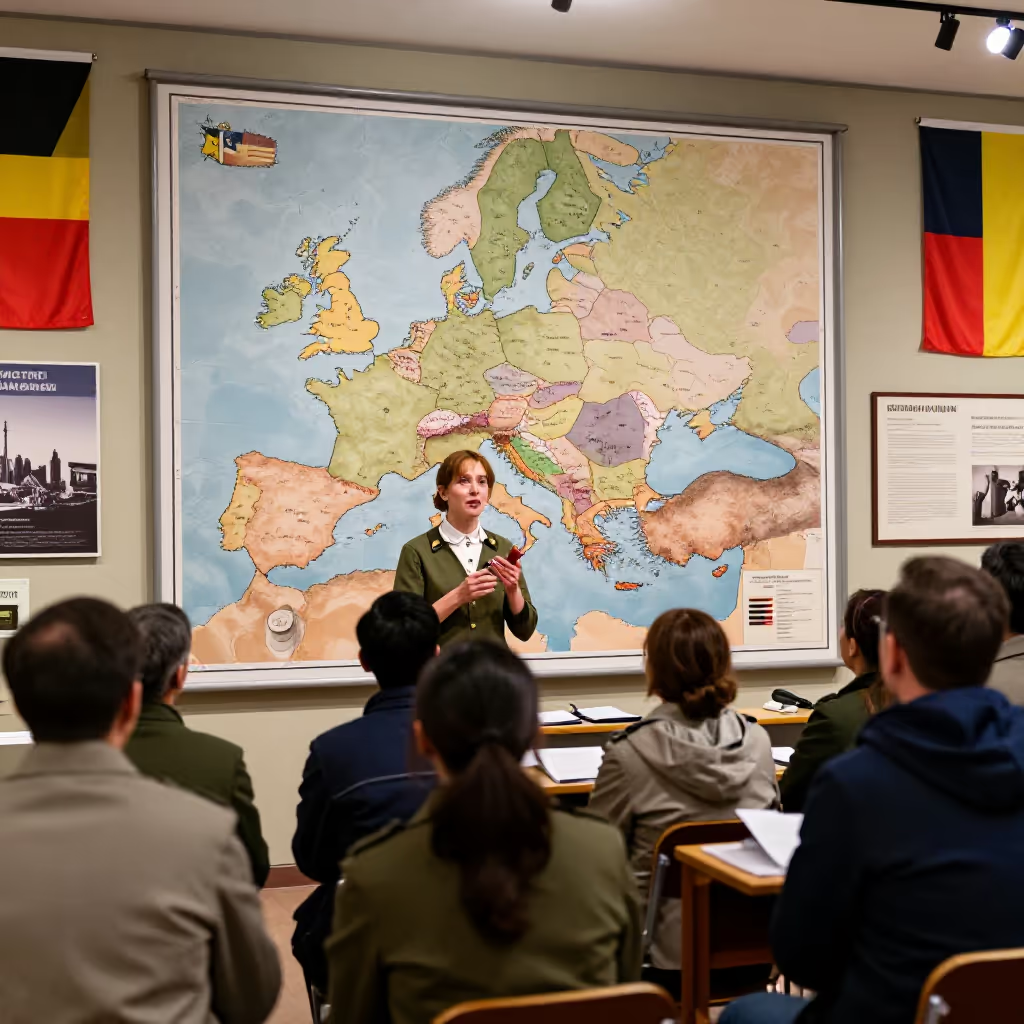
the East
In a historical and political context, the former socialist states of the Warsaw Pact during the Cold War.
Der Fall der Berliner Mauer symbolisierte das Ende der Spaltung zwischen Ost und West.
The fall of the Berlin Wall symbolized the end of the division between East and West.
The adjective 'östlich' (eastern) and the prefix 'ost-' (east-) are derived from the noun 'der Osten' (the east). These building blocks help you understand many geographic terms, such as 'Osteuropa' (Eastern Europe) or 'die östliche Küste' (the eastern coast).
Die östliche Region des Landes ist bekannt für ihre Weinberge.
The eastern region of the country is known for its vineyards.
For cardinal directions like 'Osten' (east), there are fixed prepositions: 'im Osten' (in the east; position), 'nach Osten' (eastward/to the east; direction of movement), and 'aus dem Osten' (from the east; origin).
Frankfurt liegt im Osten von Hessen.
Frankfurt is in the east of Hesse.
The use of the article provides an important clue. Without an article or with 'Richtung' (direction), 'Osten' usually refers to the pure cardinal direction. With the definite article 'der Osten' (the East), it often means a specific political or geographic region.
Wir fahren Richtung Osten.
We are driving eastward.
When German history after 1945 is being discussed, especially reunification ('Wende') or the Berlin Wall, 'der Osten' (the East) almost always refers to the territory of the former GDR (new federal states).
Meine Familie stammt ursprünglich aus dem Osten.
My family originally comes from the East.
In texts about the Cold War or 20th-century world politics, 'der Osten' (the East) is used as a political term for the Soviet Union and its allied states (the Warsaw Pact).
Der Konflikt zwischen Ost und West prägte die zweite Hälfte des 20. Jahrhunderts.
The conflict between East and West shaped the second half of the 20th century.
east
Osten and Ost can refer to the same cardinal direction. Osten is the neutral standard form in everyday language. As a noun, Ost is more marked and occurs mainly in technical or elevated contexts.

Am Morgen fahren wir weiter nach Osten.
In the morning, we will continue eastward.
Auf der Seekarte ist der Ost deutlich markiert.
East is clearly marked on the nautical chart.