

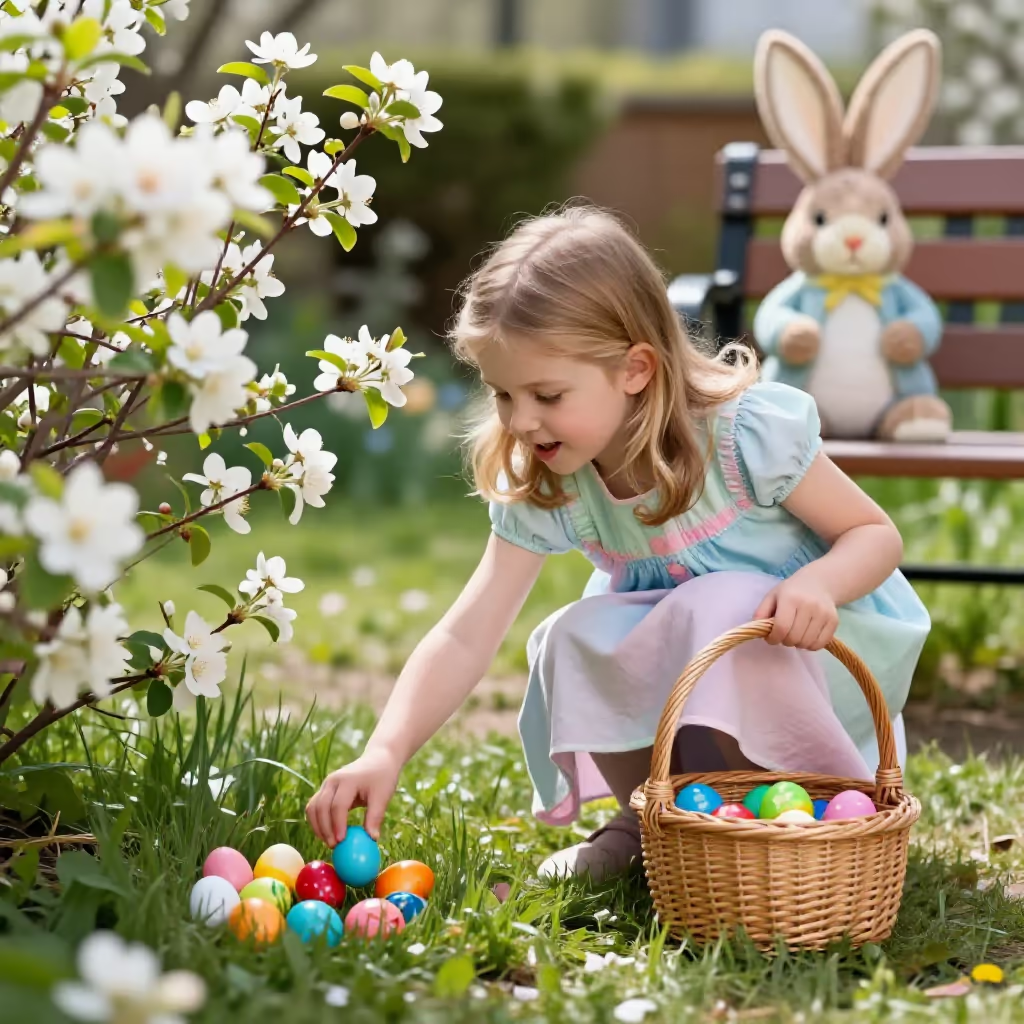
A symbolic figure of the Easter holiday who, in many children’s imagination, hides colorful eggs and sweets at Easter.
example
Die Kinder glauben fest daran, dass der Osterhase die Nester im Garten versteckt hat.
The children firmly believe that the Easter Bunny hid the nests in the garden.
Usage tips
Word composition
The word is made up of 'Ostern' (Easter, the holiday) and 'Hase' (hare/rabbit). So it describes the hare or rabbit that belongs to Easter.
EXAMPLE
Meine Nichte hat einen Schokoladen-Osterhasen bekommen.
My niece got a chocolate Easter Bunny.
Cultural context
The Easter Bunny is an important figure in German Easter customs. According to tradition, he brings the Easter eggs during the night before Easter Sunday and hides them together with sweets for the children.
EXAMPLE
Die Kinder suchen im Garten nach den Nestern, die der Osterhase versteckt hat.
The children are looking in the garden for the nests that the Easter Bunny hid.
Typical verbs
In connection with the Easter Bunny, the verbs 'verstecken' (to hide), 'bringen' (to bring), or 'bemalen' (to paint, for the eggs) are often used.
EXAMPLE
Mama, wann kommt der Osterhase und bringt die Eier?
Mom, when is the Easter Bunny coming and bringing the eggs?
Fixed expression
Children 'glauben an den Osterhasen' (believe in the Easter Bunny). The construction 'glauben an' is used here with the accusative.
EXAMPLE
Mein kleiner Bruder glaubt noch fest an den Osterhasen.
My little brother still firmly believes in the Easter Bunny.
Compare with
confusable
Osterhase vs Kaninchen
rabbit
'Kaninchen' and 'Osterhase' both have to do with an animal with long ears, but they do not mean the same thing. A 'Kaninchen' is a real animal that can be kept as a pet or live in the wild. The 'Osterhase' is a figure associated with the Easter holiday. In stories and for children, he hides eggs and sweets. Learners can confuse the words because the Easter Bunny is shown like a hare or rabbit. In everyday life, for the animal, you say 'Kaninchen'; for Easter, eggs, and sweets, you say 'Osterhase'.
Osterhase
Im Kindergarten malen die Kinder den Osterhasen mit einem Korb voller Eier.
In kindergarten, the children paint the Easter Bunny with a basket full of eggs.
Kaninchen
Adam hat gelesen, dass ein Kaninchen viel Platz zum Hoppeln braucht.
Adam read that a rabbit needs a lot of space to hop around.