

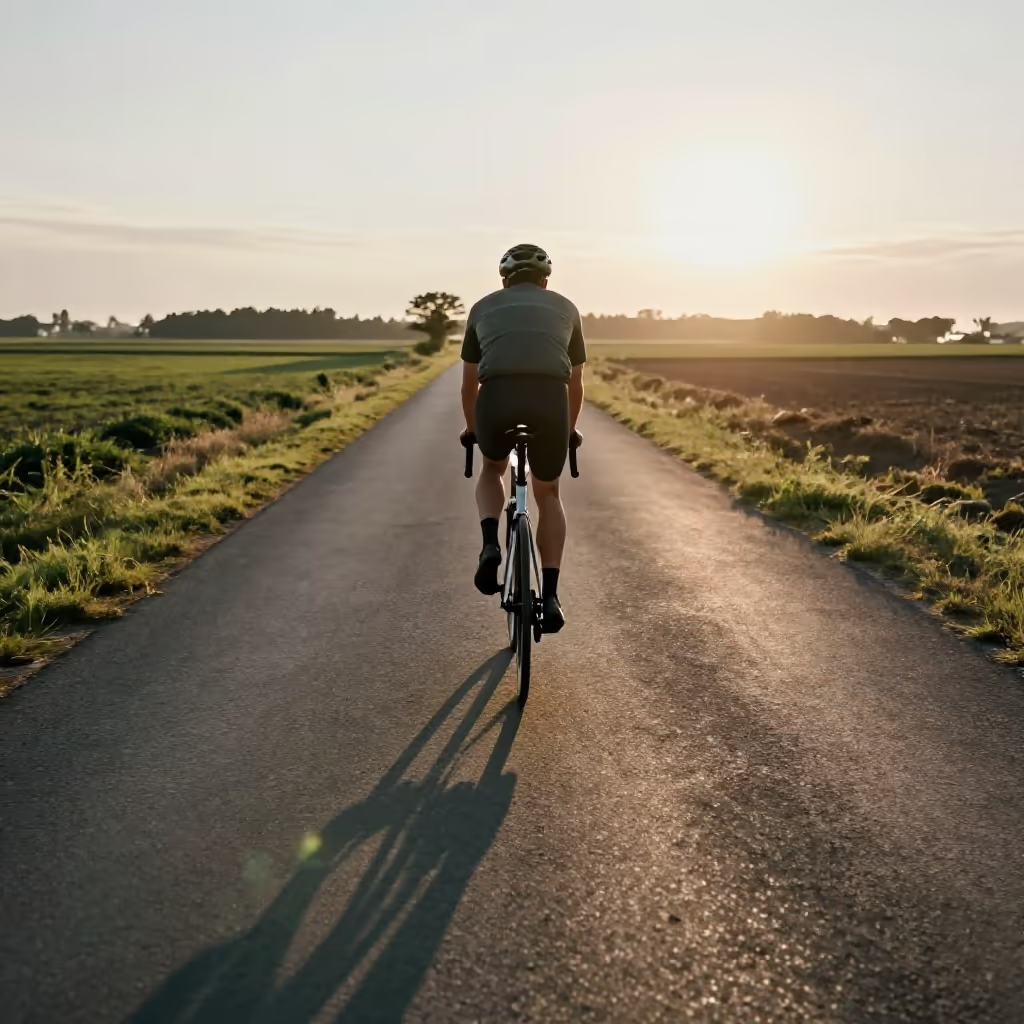
ostwärts
eastward
Indicates movement or direction toward the east.
EXAMPLE
Wir fuhren mit dem Zug immer weiter ostwärts in Richtung der polnischen Grenze.
We traveled by train farther and farther eastward toward the Polish border.
eastward
Loading your saved state.
eastward
Indicates movement or direction toward the east.
Wir fuhren mit dem Zug immer weiter ostwärts in Richtung der polnischen Grenze.
We traveled by train farther and farther eastward toward the Polish border.
The ending '-wärts' always indicates a direction. It can be attached to compass directions ('nordwärts' — northward, 'südwärts' — southward, 'westwärts' — westward) or other place-related words ('heimwärts' — homeward, 'abwärts' — downward).
Die Vögel fliegen im Herbst südwärts.
The birds fly southward in autumn.
As an adverb of direction, 'ostwärts' (eastward) usually comes after the conjugated verb and any objects. It answers the question 'Wohin?' (Where to?).
Die Expedition bewegte sich langsam ostwärts durch den Dschungel.
The expedition moved slowly eastward through the jungle.
The word 'ostwärts' (eastward) is often used in written language, in literary texts, or in more formal travel descriptions.
Der Roman beschreibt eine lange Reise ostwärts.
The novel describes a long journey eastward.
'Ostwärts' (eastward) is almost always combined with verbs of movement. Typical examples are 'fahren' (to drive/travel), 'gehen' (to go/walk), 'fliegen' (to fly), 'ziehen' (to move/migrate), or 'reisen' (to travel).
Die Familie fuhr mit dem Auto ostwärts in den Urlaub.
The family drove eastward by car for their vacation.
eastern / east of
Östlich describes the location of a place or object east of a reference point. Ostwärts, on the other hand, indicates the direction of movement toward the east. Östlich is therefore used for a position, while ostwärts is used for movement.
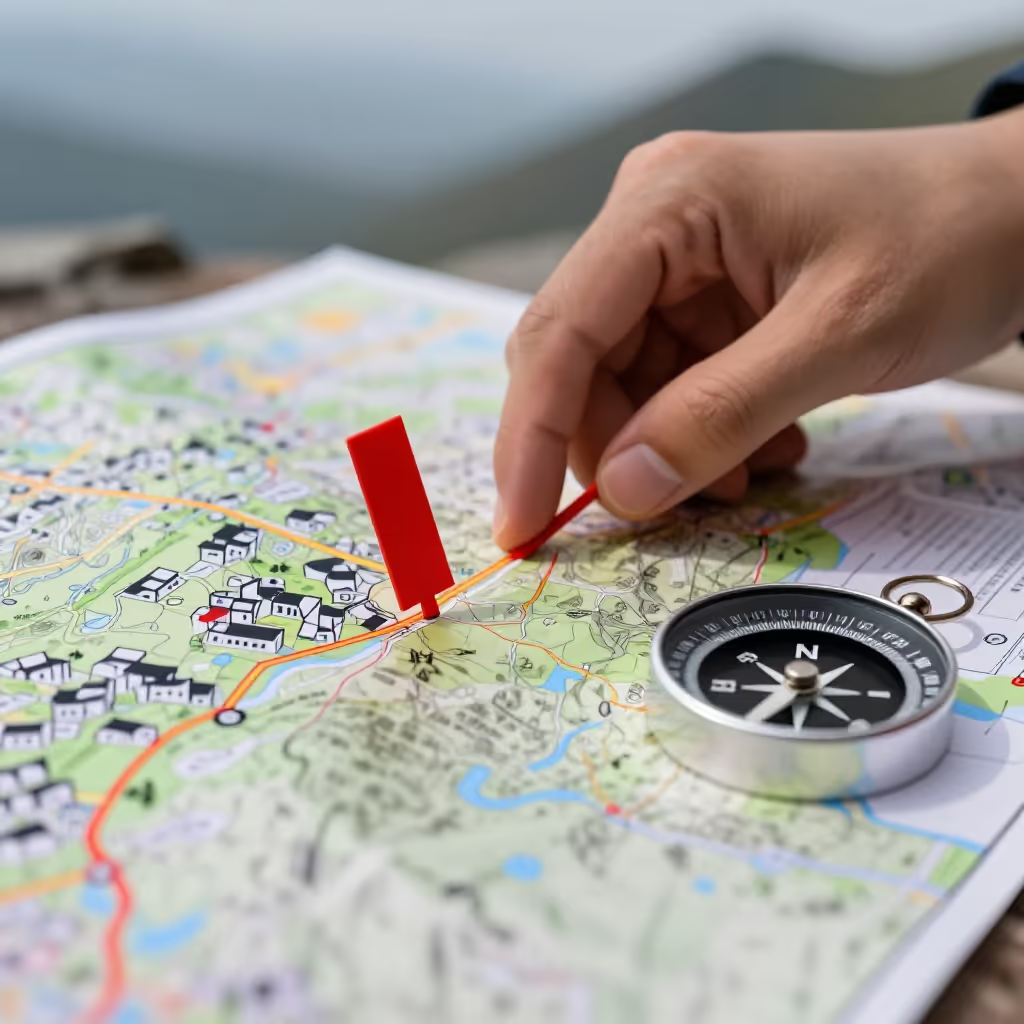
Vom Stadtzentrum fährt der Zug ostwärts.
The train travels eastward from the city center.
Der Bahnhof liegt östlich des Stadtzentrums.
The train station is east of the city center.