

ostfriesisch
East Frisian
Relating to the region of East Frisia in northwestern Germany, its inhabitants, or its culture.
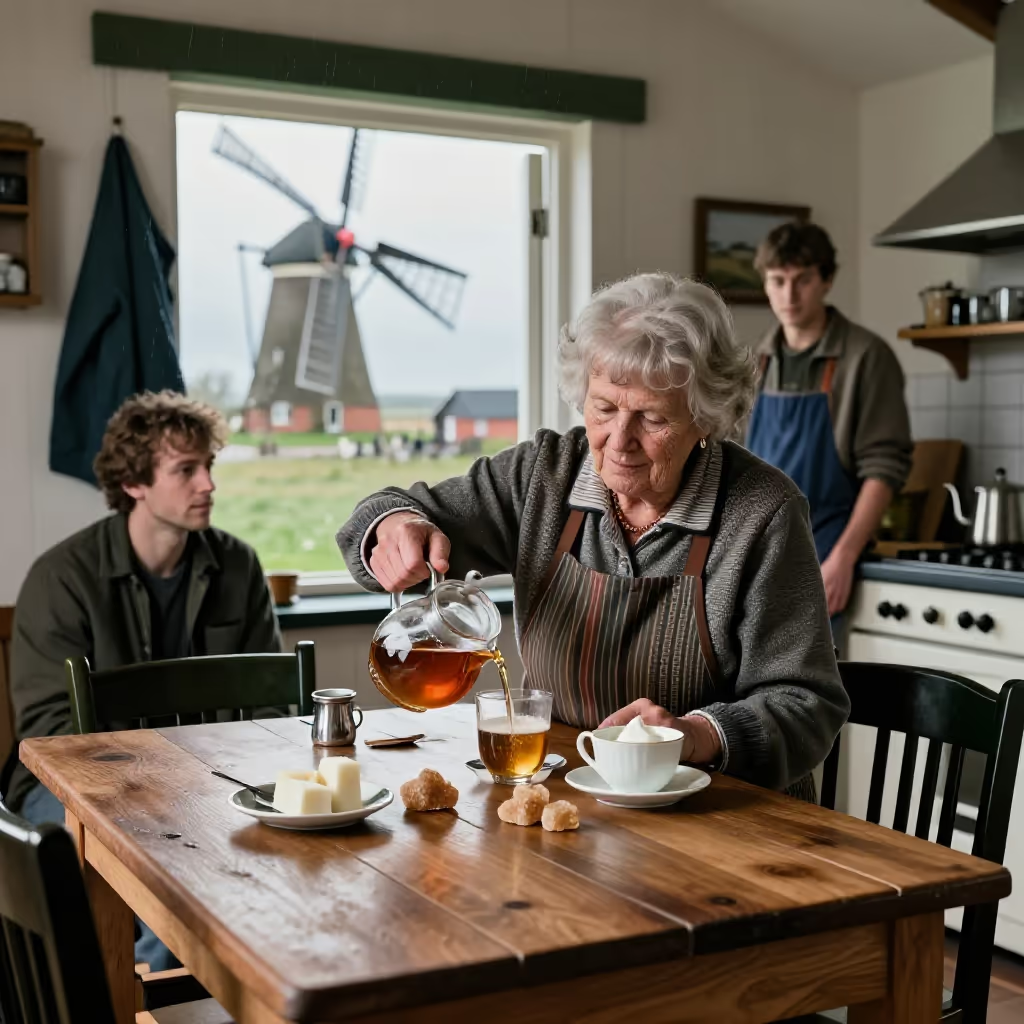
Eine ostfriesische Teezeremonie folgt ganz bestimmten Regeln.
An East Frisian tea ceremony follows very specific rules.

East Frisian
Loading your saved state.
East Frisian
Relating to the region of East Frisia in northwestern Germany, its inhabitants, or its culture.
Eine ostfriesische Teezeremonie folgt ganz bestimmten Regeln.
An East Frisian tea ceremony follows very specific rules.

The adjective 'ostfriesisch' (East Frisian) is derived from the name of the region 'Ostfriesland' (East Frisia). The ending '-isch' is a typical way to form adjectives from geographical names.
Die ostfriesische Küste ist bekannt für ihre weiten Strände.
The East Frisian coast is known for its wide beaches.
Although it is derived from a proper noun, the adjective 'ostfriesisch' (East Frisian) is written in lowercase. This applies to most adjectives that end in '-isch' and are derived from geographical names.
Er liebt den trockenen, ostfriesischen Humor.
He loves dry East Frisian humor.
You can tell from the context whether the region or the language is meant. If the word refers to culture, people, or things, it is about the region. In connection with verbs like 'sprechen' (to speak) or 'verstehen' (to understand), the dialect is meant.
Die ostfriesische Landschaft ist sehr flach.
The East Frisian landscape is very flat.
When the language is meant, the word can also be used as an adverb with the preposition 'auf' or as a nominalized adjective in the neuter.
Die beiden unterhielten sich auf Ostfriesisch.
The two of them talked to each other in East Frisian.
Low German
'ostfriesisch' and 'plattdeutsch' can both have to do with language and culture in northern Germany. 'Ostfriesisch' first refers to East Frisia, that is, to the region, its people, and its culture. It can also refer to the dialect spoken there. 'Plattdeutsch' refers more generally to the Low German language in northern Germany and can also be used as an adverb, for example 'plattdeutsch sprechen' (to speak Low German). The words can be confused because Low German is also spoken in East Frisia. Remember: 'ostfriesisch' is more regionally specific, while 'plattdeutsch' is broader in terms of language.

Mein Nachbar erzählt gern ostfriesische Geschichten aus seiner Kindheit.
My neighbor likes telling East Frisian stories from his childhood.
Im Sommer sprechen viele ältere Leute im Dorf noch plattdeutsch miteinander.
In the summer, many older people in the village still speak Low German with each other.