


Pardon
pardon
A polite formula used to apologize for a small inconvenience or mistake. It is used as an exclamation like 'excuse me'.
EXAMPLE
Pardon, ich habe Sie nicht gesehen.
Pardon me, I didn't see you.
pardon / mercy
Loading your saved state.
pardon
A polite formula used to apologize for a small inconvenience or mistake. It is used as an exclamation like 'excuse me'.
Pardon, ich habe Sie nicht gesehen.
Pardon me, I didn't see you.
mercy
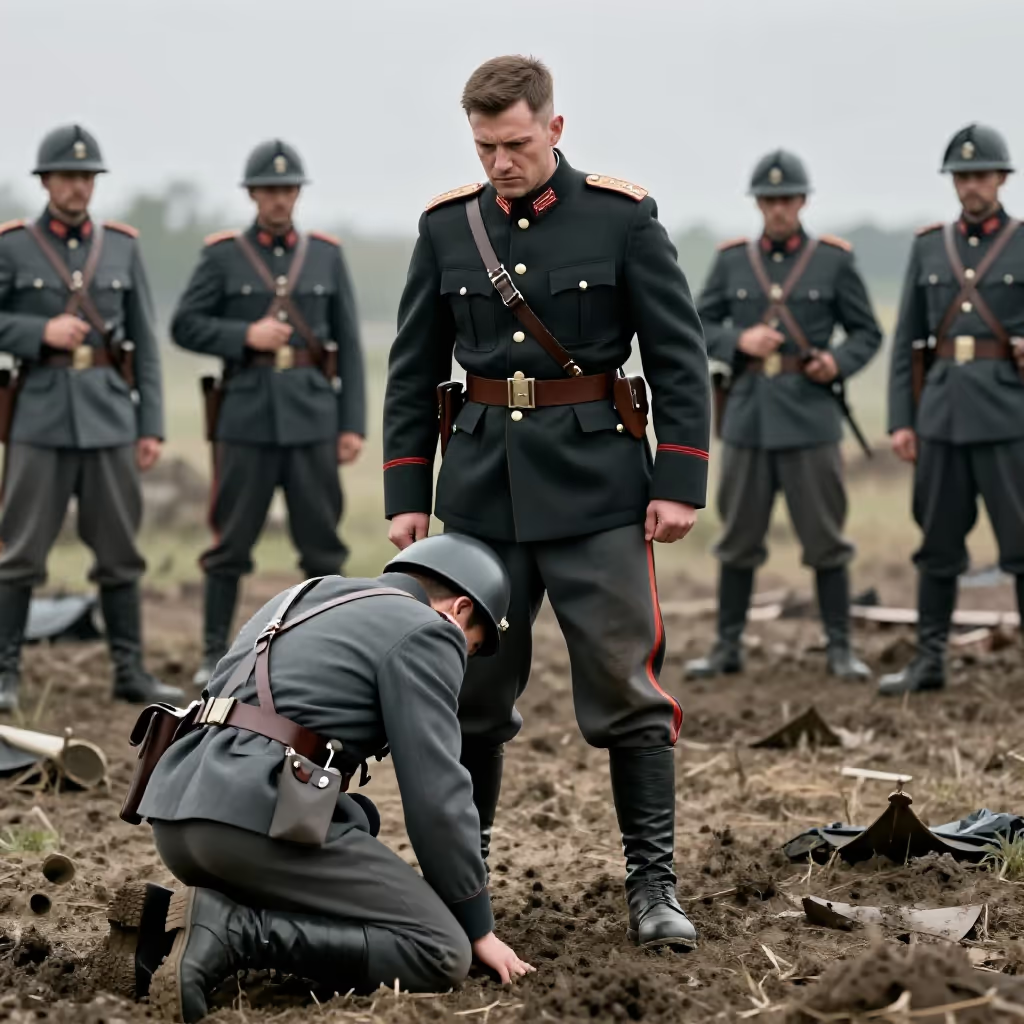
Elevated or outdated for the granting of forgiveness or mercy, especially in military or legal contexts. Often in the expression 'keinen Pardon geben' (to show no mercy).
Der General war bekannt dafür, dass er seinen Feinden keinen Pardon gab.
The general was known for showing his enemies no mercy.
In the meaning 'Entschuldigung' (excuse me/sorry), 'Pardon' is used as a standalone exclamation, usually at the beginning of a sentence and followed by a comma. It is a direct and polite way to briefly get someone's attention or apologize for a small mistake.
Pardon, könnten Sie das bitte wiederholen?
Pardon me, could you please repeat that?
Using 'Pardon' as an apology often sounds somewhat more formal or slightly old-fashioned. It comes from French and is perceived in German as a polite but not everyday gesture.
Pardon, ich wollte Sie nicht stören.
Pardon me, I didn't mean to disturb you.
In the meaning 'Gnade' (mercy) or 'Vergebung' (forgiveness), the word is used almost exclusively in the fixed expressions 'keinen Pardon geben' (to show no mercy) or 'keinen Pardon kennen' (to know no mercy). This means that someone acts relentlessly and without pity.
Der Trainer kennt bei Disziplinlosigkeit keinen Pardon.
The coach shows no mercy when it comes to lack of discipline.
apology / excuse
Entschuldigung and Pardon can both be used as polite exclamations after a minor inconvenience. Entschuldigung is neutral and commonly used today, while Pardon usually sounds formal or old-fashioned. In a normal everyday situation, Entschuldigung is therefore usually the more appropriate choice.

Nach dem kleinen Stoß sagte sie etwas altmodisch: „Pardon!“
After the minor bump, she said, somewhat old-fashionedly, “Pardon!”
Nach dem kleinen Stoß sagte sie sofort: „Entschuldigung!“
After the minor bump, she immediately said, “Sorry!”